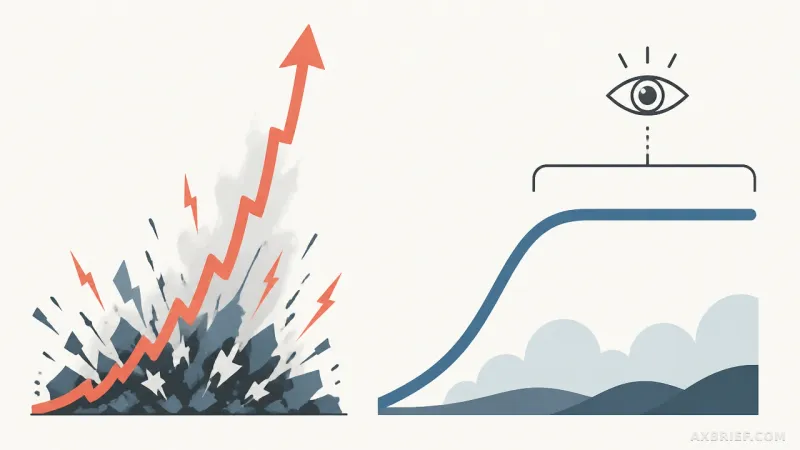
The modern battlefield is currently undergoing a violent recalibration. For decades, the main battle tank was the undisputed king of land warfare, but the proliferation of low-cost FPV drones and loitering munitions has turned these steel giants into vulnerable targets. In the current operational climate, the gap between a drone's detection and its impact is often too narrow for human reaction times to bridge. This tension has created an urgent demand for defense systems that can think and act at machine speed, shifting the burden of survival from the crew's reflexes to the system's algorithms.
The Multi-Layered Architecture of AI Defense
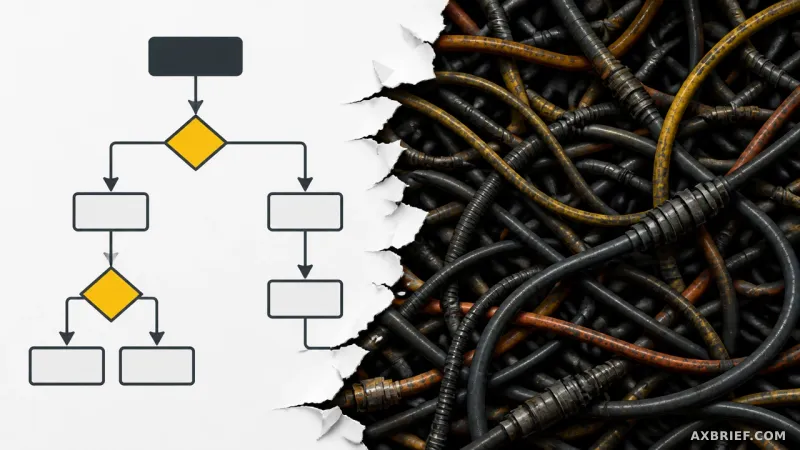
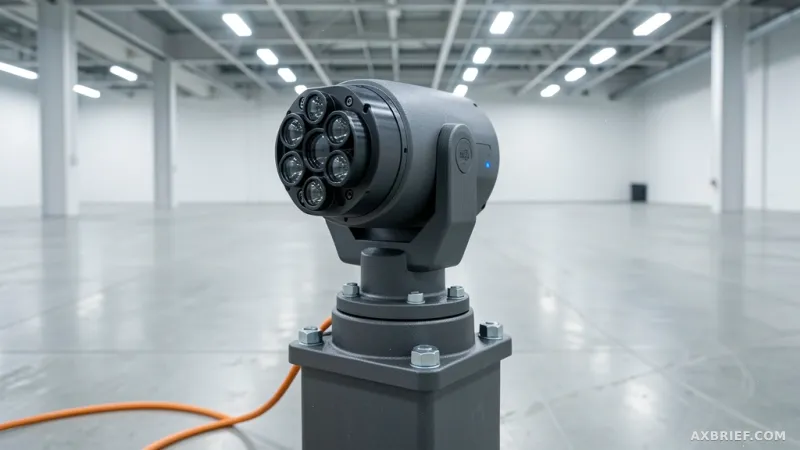
At Eurosatory 2026 in Paris, held from June 15 to 19, Hyundai Rotem addressed this vulnerability by debuting its AI-based unmanned turret Counter-Unmanned Aircraft System (C-UAS). The exhibition, which hosted over 2,100 companies from 70 nations, served as the launchpad for a multi-layered defense framework designed to automate the entire kill chain. The core of this system is an AI detection and identification algorithm that does not merely spot a target but analyzes the specific scenario, including the type of threat, its distance, and its altitude, to autonomously determine the optimal response sequence.
This defense strategy is split into two distinct phases: soft-kill and hard-kill. The process begins when long-range radar and reconnaissance drones detect a potential threat. The AI immediately classifies the threat level in real-time, triggering the first line of defense: the jammer. This soft-kill approach attempts to neutralize the drone via electronic interference, severing its command link or GPS guidance. If the soft-kill fails or the threat is deemed too critical for electronic warfare alone, the system escalates to hard-kill measures. This physical interception is executed through a combination of collision drones, direct fire from the unmanned turret, and an Active Protection System (APS) to physically destroy the incoming projectile.
To demonstrate the practical application of this technology, Hyundai Rotem showcased a concept model of the export-version K2 tank. This model integrates a Remote Controlled Weapon Station (RCWS), the aforementioned APS, and drone jammers into a single cohesive unit. Additionally, the company presented a wheeled armored vehicle model and conceptual footage illustrating the automated pipeline from detection and identification to final engagement, proving that the system is platform-agnostic and scalable across different vehicle classes.
From Standalone Turrets to the MUM-T Ecosystem
While the unmanned turret solves the immediate problem of drone interception, the broader strategic shift lies in the transition toward Manned-Unmanned Teaming (MUM-T). The C-UAS turret is not designed to operate as an isolated shield but as a node within a larger AI network. In a MUM-T structure, manned combat systems and unmanned platforms share real-time data, allowing them to collaborate on target acquisition and threat suppression. This network-centric approach ensures that a single detection by a remote sensor can trigger a response from the nearest available effector, significantly increasing the survivability of ground forces and expanding their operational reach.
Central to this ecosystem is the HR-SHERPA, a multi-purpose unmanned vehicle capable of both remote control and full autonomous driving. The HR-SHERPA is designed with a modular hardware architecture, allowing it to be configured for various roles depending on the mission. By swapping out mission-specific equipment, the platform can be transformed into a reconnaissance unit, a drone carrier, or an anti-tank missile platform. This flexibility allows the HR-SHERPA to act as the vanguard for manned units, absorbing risk and providing the sensor data necessary for the AI turret systems to operate with maximum precision.
Interestingly, the utility of the HR-SHERPA extends beyond the theater of war. Hyundai Rotem is expanding the platform's application into the civilian sector, specifically developing a series of unmanned firefighting robots. By utilizing the same autonomous base and simply replacing the weapon systems with fire-suppression equipment, the company is applying military-grade Physical AI to high-risk disaster environments. This pivot demonstrates that the core value of the system is not the weaponry, but the autonomous mobility and situational awareness framework that supports it.
By replacing manual response loops with AI-driven automation, Hyundai Rotem is addressing the fundamental limitation of traditional defense: the speed of decision-making. The sequential execution of soft-kill and hard-kill measures, dictated by real-time scenario analysis, reduces human error and minimizes casualties.
The evolution of ground warfare is no longer about the thickness of the armor, but the intelligence of the network protecting it.