The robotics industry has long been haunted by the gap between the controlled environment of a laboratory and the unpredictable chaos of the real world. For years, the public has been fed polished videos of humanoids walking on flat floors or robotic arms sorting blocks in sterile rooms. However, the conversation in the engineering community is shifting. The focus is no longer on whether a robot can perform a task in a vacuum, but whether it can survive the environment while doing so. This transition from theoretical capability to operational reliability is where the current frontier of Physical AI resides, moving the goalpost from simple movement to complex, adaptive survival.
The Scale of AI-Robot Convergence at ICROS 2026
The magnitude of this shift became evident at the 41st Conference of the Institute of Control, Robotics, and Systems, known as ICROS 2026. Held from July 1 to July 4 at the Daegu EXCO, the event served as a massive convergence point for approximately 1,400 researchers, academics, and industry leaders from across the nation. The sheer volume of academic output was significant, with 589 research papers presented across a wide spectrum of disciplines. These papers spanned the critical pillars of modern robotics, including control engineering, artificial intelligence, humanoid development, autonomous driving, and machine vision. The scope extended further into smart manufacturing and the specialized fields of medical and rehabilitation robotics, signaling a holistic approach to how AI integrates with physical hardware.
Beyond the academic papers, the industrial exhibition featured 22 companies and institutions. These exhibitors showcased a range of tangible products, from advanced controllers and sensors to simulation software and end-to-end AI solutions. This presence of industry players indicates that the theories discussed in the 589 papers are rapidly moving toward commercialization and practical application. The exhibition served as a bridge, proving that the mathematical models for control and the neural networks for perception are now being baked into hardware that can be bought, sold, and deployed. The event established a clear baseline for the current state of the art, where the integration of AI is no longer an add-on feature but the core operating system of the machine.
The Pivot to High-Stakes Disaster Response
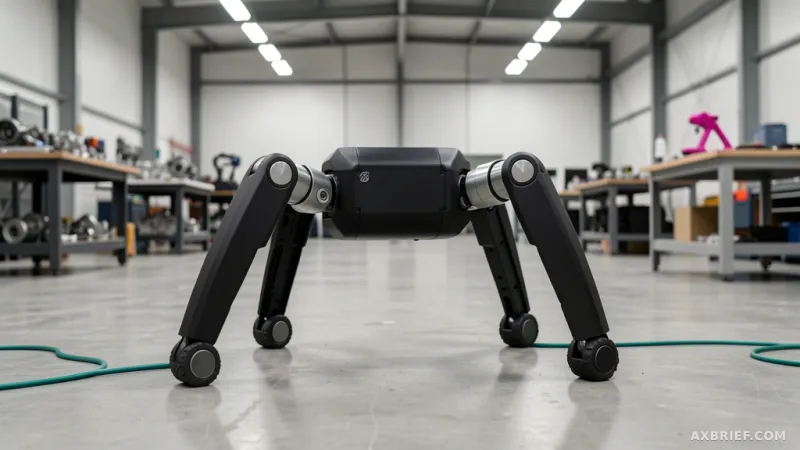
While the general sessions covered a broad array of robotics, the most telling insight came from the firefighting and disaster response special session. Organized in collaboration with the National Fire Agency, this session presented 24 research papers that focused on the most hostile environments imaginable. The core of the discussion centered on the deployment of quadruped robots, which offer a level of stability and terrain adaptability that wheeled robots cannot match. Researchers examined the efficacy of these four-legged systems in forest fire response and the precision of their gait control in unstable debris. The integration went beyond simple movement, showcasing fusion technologies that combined unmanned remote special fire trucks with robotic scouts.
One of the most critical advancements was the development of autonomous water-spraying systems capable of tracking the exact point of ignition, reducing the risk to human firefighters. This was paired with thermal imaging technology designed for life detection, allowing robots to find survivors through smoke and heat. The tension here is not about the hardware of the robot, but the sophistication of the control systems. The real challenge is not building a robot that can walk, but building an AI that can perceive a collapsing building or a shifting fire line and adjust its behavior in milliseconds. The shift is clear: the industry is moving away from the demo video and toward field-proven data. The efficacy of these robots is no longer measured by their ability to follow a pre-programmed path, but by their ability to handle the extreme variables of a disaster zone.
This focus on real-world deployment sets the stage for the next iteration of the conference. The 42nd academic conference is scheduled to take place from June 30 to July 3, 2027, at the Goseong Sonokam Delpino in Gangwon State. The transition from the urban center of Daegu to the rugged terrain of Goseong mirrors the technological transition of the field itself, moving from the city to the wild.
The trajectory of ICROS 2026 suggests that the next era of robotics will be defined by the ability of AI to master the unpredictable variables of the physical world.