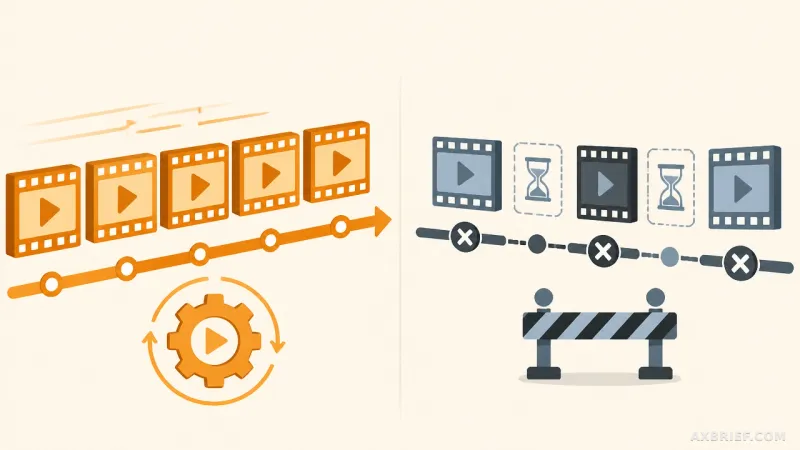
The honeymoon phase of the simple AI chatbot is over. For the past two years, developers have lived in a world of basic API wrappers—scripts that send a prompt to an LLM and hope the response is usable. But as these prototypes move toward production, a recurring wall has appeared. In a real-world business process, a chatbot that forgets the previous step or fails to recover from a tool error is not a product; it is a liability. The community is now pivoting away from the magic of the prompt and toward the discipline of the architecture. We are seeing a fundamental shift where the focus is no longer on how the model thinks, but on how the system manages the model.
The 2026 Agent Landscape: From Wrappers to Orchestrators
By 2026, the definition of an agent framework has expanded. It is no longer just about facilitating a conversation; it is about managing state, memory, tool precision, and deployment lifecycles. The current market has fragmented into specialized tools, each solving a different tension between autonomy and control. For those needing granular state control and complex loops, LangGraph has become the standard. When the goal is role-based collaboration that mirrors a human organization, CrewAI dominates. For developers who want a lightweight entry point into tool-use without heavy orchestration, the OpenAI Agents SDK provides the most frictionless path.
In the enterprise sector, the battle is between ecosystem lock-in and flexibility. Google ADK (Agent Development Kit) leverages the Gemini and Vertex AI stack, offering a code-first toolkit that integrates deeply with Google Cloud Run. Meanwhile, the Microsoft Agent Framework is carving out a niche by prioritizing corporate governance, focusing on complex permission management and security policy compliance over raw developer velocity. For the Python purists who view type safety as a non-negotiable requirement for production, PydanticAI has emerged as the primary choice. On the other end of the spectrum, smolagents from Hugging Face caters to the experimental crowd, allowing models to execute Python code directly rather than relying on structured JSON outputs. Finally, for full-stack teams building in the TypeScript ecosystem, Mastra provides a bridge between the flexibility of AI agents and the deterministic nature of Next.js and React applications.
The Tension Between Autonomy and Determinism
The critical divide in these frameworks is not the language they are written in, but how they handle the trade-off between agent autonomy and developer control. LangGraph treats an application as a state machine. By modeling workflows as graphs with nodes and edges, it allows developers to define exactly where a model can be creative and where it must follow a strict path. The introduction of checkpoints is the game-changer here; if a long-running agent fails on step 40 of a 50-step process, it does not need to restart. It resumes from the last saved state. This transforms the agent from a volatile session into a durable piece of software.
Contrast this with CrewAI, which operates on a social architecture. Instead of a graph, it uses roles, tasks, and crews. By assigning a model the persona of a Researcher or a Quality Assurance Analyst, the framework creates a collaborative loop. This is highly effective for business automation where the process is easy to explain to a non-technical stakeholder, but it introduces a different kind of risk: the danger of redundant work and the difficulty of validating the final output when multiple agents have touched the data. The tension here is between the ease of organizational modeling and the difficulty of technical verification.
Then there is the radical approach of smolagents. While most frameworks force the LLM to output a JSON object that a Python script then parses and executes, smolagents lets the model write the Python code itself. This reduces the overhead of wrapping and unwrapping data, making the agent significantly more efficient at complex data manipulation. However, this autonomy creates a massive security surface. Running model-generated code requires strict sandboxing and network isolation. The shift here is from the framework as a guardrail to the framework as a runtime, placing the burden of security squarely on the infrastructure design.
Engineering Reliability into the Agentic Loop
As agents move into high-stakes environments like finance or healthcare, the industry is realizing that autonomy without verification is dangerous. This is where PydanticAI changes the conversation. By forcing the model's output into typed Python objects via Pydantic schemas, it treats LLM responses as untrusted input that must be validated before it hits the next stage of the pipeline. This is the application of software engineering principles to AI; if a field is missing or a type is wrong, the system catches it immediately rather than letting a hallucination propagate through the entire workflow. It turns the agentic loop into a verifiable pipeline.
For the web-native developer, Mastra addresses the conflict between the unpredictable nature of AI and the rigid requirements of a production UI. By strictly separating agents (the flexible decision-makers) from workflows (the predictable sequences), Mastra ensures that the user experience remains stable even when the AI is exploring different paths to a solution. This distinction is vital for any product where the AI is a feature of the app, rather than the app itself.
In the cloud-native space, Google ADK is solving the data access problem through the Model Context Protocol (MCP). By standardizing how agents access external data sources, it reduces the amount of custom glue code developers have to write. When combined with a local development UI that allows for pre-deployment testing, the ADK transforms agent development from a cycle of prompt-and-pray into a structured build-and-test workflow. Similarly, the OpenAI Agents SDK simplifies the complexity of multi-agent systems through the handoff pattern. Instead of one giant model trying to do everything, a primary agent can hand off a session to a specialized agent, mirroring how a human receptionist transfers a call to a technical expert.
The Path to Production-Ready Intelligence
For practitioners deciding which tool to adopt, the choice depends entirely on the desired level of control. If the project requires a long-running process that spans days or weeks with human-in-the-loop approvals, LangGraph is the only viable option due to its state management and checkpointing. If the goal is to quickly demonstrate value to executives through a simulated team of AI experts, CrewAI provides the fastest path to a believable prototype.
Teams deeply embedded in the Google Cloud ecosystem will find the most efficiency in Google ADK, particularly when leveraging MCP for data integration. Full-stack TypeScript teams should look toward Mastra to avoid the friction of bridging a Python backend with a React frontend. For those building mission-critical systems where a single type error could result in financial loss, PydanticAI is the necessary choice for ensuring data integrity.
Ultimately, the evolution of these frameworks signals the end of the prompt engineering era. We are entering the era of agentic architecture. The goal is no longer to find the perfect string of words to trigger a correct response, but to build a system where the model is just one component in a larger, governed, and verifiable software machine. The winners of this transition will be the developers who stop treating AI as a magic box and start treating it as a modular piece of software that requires rigorous state management, type safety, and security boundaries.