Every developer in the autonomous driving and robotics space knows the nightmare of the long tail. It is the grueling process of hunting for edge cases—those rare, chaotic moments like a pedestrian suddenly darting from behind a parked car or a freak weather event that triggers a system failure. For years, the only way to solve this was through brute-force data collection, spending millions of dollars and thousands of man-hours driving fleets in circles hoping for a near-miss. The industry has been stuck in a cycle of manual labor, where researchers spend more time stitching together disparate simulation tools than actually improving the intelligence of their models.
The Architecture of Automated Physical Intelligence
At CVPR 2026 in Denver, NVIDIA introduced a systemic solution to this bottleneck with the launch of Cosmos 3 and the Alpamayo 2 Super model. At the center of this ecosystem is NVIDIA Cosmos 3, an omni-model designed to integrate visual reasoning with world and action generation. Rather than acting as a single-purpose tool, Cosmos 3 automates the entire physical AI workflow, spanning from scene reconstruction and synthetic data generation to policy learning and evaluation. This integration eliminates the fragmented process where researchers previously had to manually link separate tools to create a training loop.
Supporting this is Alpamayo 2 Super, a Vision-Language-Action (VLA) model boasting 32 billion parameters. This model is engineered to handle reasoning, planning, and execution simultaneously, providing the cognitive backbone for Level 4 autonomous driving. By processing environmental context and outputting direct actions, Alpamayo 2 Super aims to increase both the safety and scalability of autonomous stacks. To facilitate the deployment of these models, NVIDIA updated Isaac Sim to version 6.0, introducing agent-friendly connectors. These connectors allow AI agents to autonomously execute simulation sessions, author scenes, and capture data, effectively removing the time lag between a model's theoretical reasoning and its physical manifestation.
To fuel these models, NVIDIA released the GRAIL dataset, which contains approximately 50 hours of high-fidelity human-object interaction data. The scale of NVIDIA's commitment to open data is evident in the NVIDIA Physical AI Dataset on Hugging Face, which has already surpassed 15 million downloads. This massive influx of accessible data is designed to lower the entry barrier for developers who previously lacked the resources to build large-scale physical datasets.
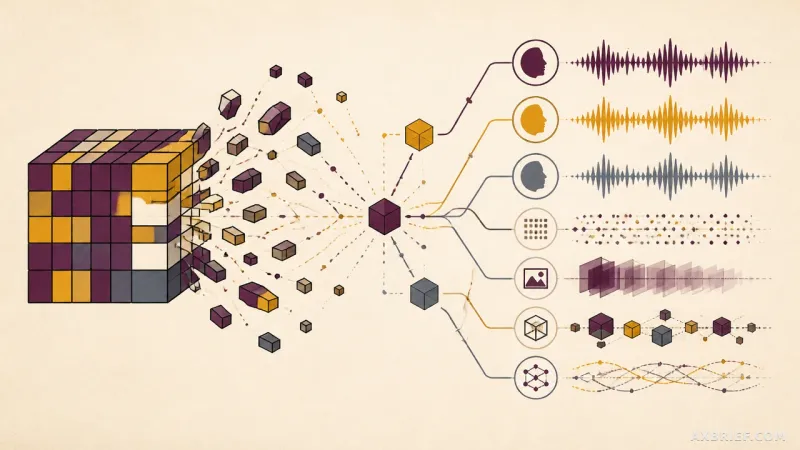
Under the hood, Cosmos 3 utilizes a Mixture-of-Transformers (MoT) architecture that separates reasoning from generation. In this setup, a reasoning transformer analyzes the input observations, which are then passed to a generation tower that converts those insights into specific instructions for building a physical environment. This allows for the mass production of virtual worlds that are grounded in physical reality. The precision of these worlds is maintained through neural reconstruction skills. Specifically, InstantNuRec allows for the immediate reconstruction of 3D Gaussian road scenes using only image data, bypassing complex optimization cycles. When combined with Omniverse NuRec, Harmonizer, and the HiGS renderer, the system can generate new views from various angles, exponentially increasing the volume of available training data. Researchers can now take a slice of a real-world road, port it into a virtual space, and modify its geometry to create a precise long-tail scenario.
From Manual Tool-Chaining to Agentic Loops
The true shift here is not just the release of a new model, but the transition from manual tool-chaining to agent-based automation. In the traditional pipeline, a researcher acted as the glue between software: they would reconstruct a scene in one tool, generate a scenario in another, train a policy in a third, and evaluate the behavior in a fourth. NVIDIA has replaced this human-led sequence with AI agents that operate directly within Isaac Sim. These agents now handle session execution, scene authoring, and simulation control autonomously.
This automation extends deep into the reinforcement learning (RL) process. Through Isaac Lab skills, the configuration, training, and evaluation of RL policies are now automated. Even the development of custom environments, which previously required extensive manual coding, is now handled by agents. This allows developers to stop worrying about software compatibility and API connections and instead focus entirely on the learning strategy itself.
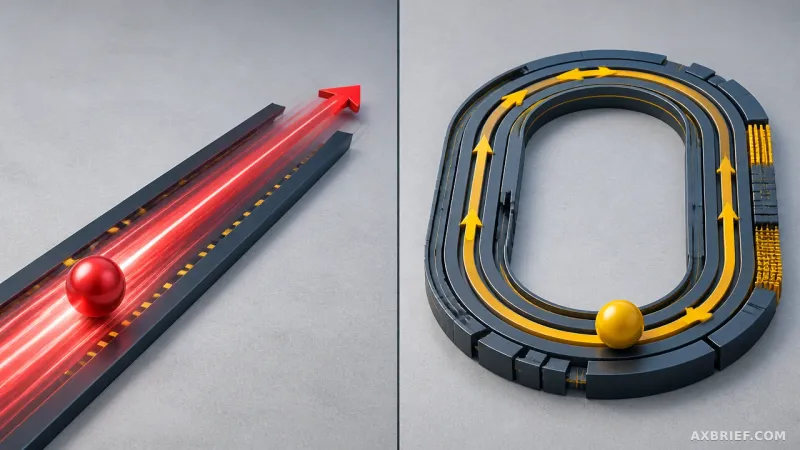
To solve the feedback loop problem, NVIDIA introduced OmniDreams, an action-conditional generative world model. OmniDreams generates photorealistic camera frames that react in real-time to the policy's actions. This means the virtual world's physical movements are instantly converted into high-resolution video and fed back into the learning loop. This capability allows VLA models to validate tens of thousands of rare scenarios efficiently, significantly lowering the cost of the Sim-to-Real transition—the process of moving a learned behavior from a simulator to a physical robot.
This logic extends beyond robotics into general vision AI. The Metropolis skills address the data wall by synthesizing images of anomalies or product defects, providing controlled cases for model training. This workflow integrates Isaac Sim, Cosmos 3, and OSMO, which handles the orchestration. By overlaying synthetic defects onto real images, researchers can immediately evaluate how a model responds to rare failures. Furthermore, the Metropolis VSS (Video Search and Summarization) Blueprint automates the analysis of massive video datasets, using NVIDIA TAO and video augmentation skills to automate the fine-tuning and evaluation loop.
Even the high-stakes field of medical robotics is seeing this shift. The Cosmos-H-Surgical-Simulator learns from actual surgical data to bridge the gap between simulation and the operating room. By moving away from manually designed physical models and toward data-driven learning, NVIDIA is reducing the Sim-to-Real gap in environments where precision is a matter of life and death.
For the global AI community, the implication is clear: the competitive edge in physical AI is shifting. The primary bottleneck is no longer the size of the model's parameters, but the rotation speed of the learning loop. The ability to rapidly generate an edge case, train a policy, and validate it in a photorealistic environment determines how quickly a product reaches the market. By unifying perception, judgment, and control into a single VLA framework like Alpamayo 2 Super, the latency and interface errors inherent in modular stacks are eliminated.
The era of manually hunting for data is ending. The future belongs to those who can automate the cycle of synthetic generation and physical validation.