The modern enterprise is currently trapped in a state of fragmented productivity. Most teams use AI as a series of isolated checkpoints—a prompt here to summarize a meeting, a query there to debug a snippet of code—but the actual workflow remains a manual relay race of human intervention. The industry is reaching a tipping point where the goal is no longer to find a better chatbot, but to build a system where AI can autonomously determine the next step in a complex business process and execute it without a human hand-off. This shift from generative assistance to autonomous agency requires more than just faster chips; it requires a fundamental redesign of the environment where these models live and breathe.
The Vera Rubin Platform and the Full-Stack AI Factory
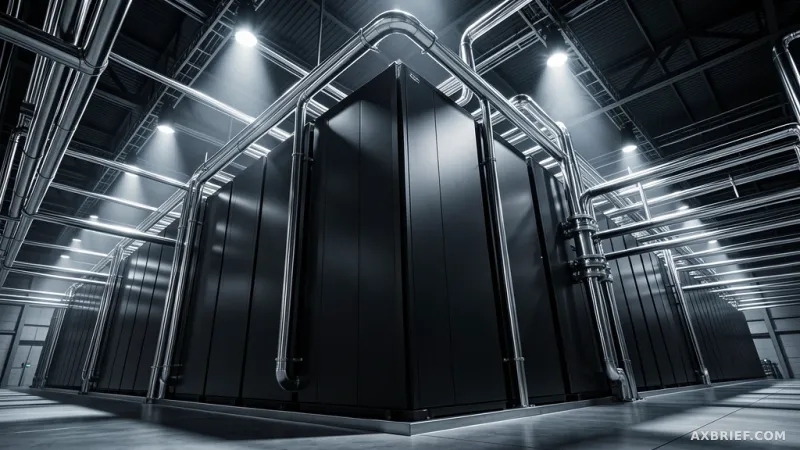
For years, the prevailing wisdom in the AI race was that the company with the most GPUs won. NVIDIA is now challenging that narrative by moving beyond the role of a component supplier to become an architect of entire industrial ecosystems. The introduction of the Vera Rubin platform signals this transition, pivoting the conversation from raw compute power to the concept of the AI Factory. This is not a mere marketing term but a full-stack infrastructure strategy that integrates accelerated computing, high-speed interconnects, liquid cooling systems, and inference software into a single, cohesive unit.
NVIDIA is not building these factories in isolation. The company has established a deep integration layer with global system partners including Cisco, Dell, HPE, Lenovo, and Supermicro. These partners are tasked with transplanting the Vera Rubin architecture directly into enterprise data centers, ensuring that the hardware is not just present, but optimized for the specific workloads of the client. This ecosystem allows companies to maintain flexibility in their model selection, whether they choose to deploy proprietary closed-source models or lean into the open-source community. The software layer provided by NVIDIA acts as the connective tissue, transforming a collection of servers into a functional production line for intelligence.
To prove the viability of this model, NVIDIA has already deployed this architecture internally. The company currently utilizes hundreds of autonomous AI agents to support its own software engineering and operations teams. These agents do not simply suggest code; they manage workflows and handle operational tasks that previously required manual oversight. When scaling this to gigawatt-level AI factories, NVIDIA employs the DSX reference design to integrate design, simulation, and operational technology. The primary objective here is the aggressive minimization of token costs relative to power consumption, ensuring that the massive energy requirements of frontier models do not erase the economic gains of automation.
From Hardware Specs to Digital Twin Optimization
The critical realization for any infrastructure team is that the most powerful hardware can become a liability if the physical environment cannot support it. In a traditional data center deployment, cooling inefficiencies or power bottlenecks are often discovered only after millions of dollars have been spent on physical installation. This creates a massive risk of sunk costs and operational downtime. The twist in NVIDIA's strategy is the use of the Omniverse DSX Blueprint to eliminate this physical uncertainty before a single server rack is bolted to the floor.
By leveraging NVIDIA Omniverse, a real-time 3D collaboration platform, and OpenUSD (Universal Scene Description), NVIDIA creates a high-fidelity digital twin of the entire AI factory. This environment incorporates SimReady assets, which are simulation-optimized components that allow engineers to model the precise flow of coolant, the distribution of power, and the physical placement of hardware. Instead of guessing how a gigawatt-scale facility will behave, engineers can simulate the entire lifecycle of the data center in a virtual space. They can identify the exact point where the token cost per megawatt is minimized, effectively treating power efficiency as a primary architectural constraint rather than an afterthought.
This digital twin approach transforms the data center from a static warehouse of servers into a dynamic, programmable entity. OpenUSD ensures that data remains compatible across different design tools, while the simulation environment allows for the testing of how physical hardware characteristics interact with software control logic. Once the design is validated in the virtual world, it serves as the absolute blueprint for physical construction, removing the trial-and-error phase from the deployment process. The digital twin continues to provide value after the factory is live, as real-time operational data is fed back into the model to continuously refine performance and energy efficiency.
This shift represents a move toward agentic AI and physical AI. The AI factory is designed to support workloads where the AI is not just processing text, but controlling physical devices or managing complex software deployments. As the control mechanism moves from a developer entering specific commands to an agent understanding a high-level objective and designing its own execution path, the underlying infrastructure must be capable of supporting these unpredictable, high-load bursts of activity. The AI factory becomes a production tool that shortens the development cycle by automating the bridge between virtual simulation and physical execution.
As this model spreads, industries such as financial services, life sciences, and manufacturing are beginning to move away from renting generic cloud compute toward building or leasing dedicated AI factories. The strategy for most enterprises is a phased rollout: starting with a small business unit to automate a specific workflow and then scaling to a full-scale inference and training infrastructure. By integrating the DSX reference design and Omniverse blueprints, these companies can avoid the physical collisions and power failures that typically plague rapid scaling. The goal is to transform the data center from a cost center into a core production base that defines the company's competitive edge.
This evolution suggests that the future of enterprise AI will not be defined by the models themselves, but by the efficiency of the factories that run them. When power, cooling, and software are treated as a single integrated system, AI ceases to be an experimental tool and becomes the operating system of the modern corporation.