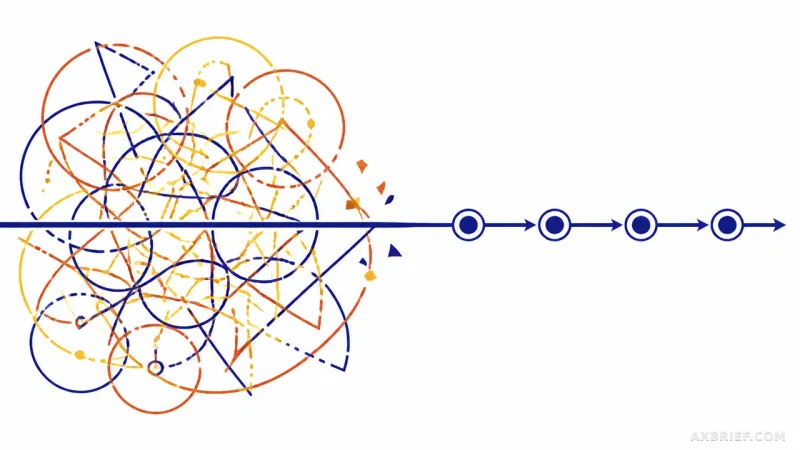
The most expensive part of a cloud service is rarely the monthly bill; it is the silence that follows a user's request. In the high-stakes world of generative AI, a sudden spike in traffic often triggers an auto-scaling event that, on paper, adds more compute power to the cluster. In reality, however, this process often introduces a devastating lag known as the cold start. For a developer, this is the gap between the system deciding it needs a new instance and that instance actually serving its first token. When this gap stretches into several minutes, users do not wait; they leave. This friction has long been the Achilles' heel of scaling large language models, where the sheer size of the environment makes rapid elasticity feel like a contradiction in terms.
The Architecture of Rapid Scaling
Amazon SageMaker AI has addressed this bottleneck with the release of a new container image caching feature designed to slash end-to-end latency during instance expansion by up to two times. To understand the impact, one must look at the standard lifecycle of a SageMaker inference endpoint. Traditionally, when the system scales out, it must pull a container image from the Amazon Elastic Container Registry (ECR). This image contains the entire software environment—the OS, the drivers, and the inference server—required to run the model. Only after the image is pulled can the system begin loading the actual model weights.
This new caching mechanism effectively removes the image pulling step from the critical path. By storing the container images in a local cache, SageMaker AI allows new instances to bypass the network request to ECR entirely. This functionality is now available across all commercial AWS regions where SageMaker AI inference is supported. It is specifically optimized for accelerator instance types, such as those utilizing GPUs, which are the primary workhorses for generative AI workloads. Crucially, this update requires zero changes to existing code or container configurations. Whether a team is using a standard AWS image or a highly customized proprietary build hosted on ECR, the caching layer operates transparently in the background.
The Bandwidth War and Tenant Isolation
The true insight behind this update lies in the resolution of a hidden conflict: network bandwidth competition. In a typical cold start, the system attempts to perform two massive data transfers simultaneously. First, it pulls the container image (which can be tens of gigabytes). Second, it downloads the model artifacts, including the weights and configuration files. Because both operations compete for the same network pipe, they create a bottleneck that slows down both processes. By eliminating the image pull through caching, SageMaker AI clears the lane, allowing the network to dedicate 100% of its bandwidth to the model weights. This shift transforms the startup process from a congested struggle into a streamlined sequence.
To ensure this performance gain does not compromise security, AWS implemented a strict tenant isolation model. Each customer endpoint is assigned its own dedicated cache. This means that images are never shared between different AWS accounts or even between different endpoints within the same account. When a user deletes a SageMaker AI endpoint, the associated image cache is automatically purged to prevent storage waste and eliminate any possibility of data leakage. For environments utilizing inference components—where multiple models or versions are deployed on a single endpoint—the system manages the unique container images for each component individually.
Reliability is further bolstered by a built-in fallback mechanism. If a requested image is not present in the cache, the system automatically reverts to pulling the image from Amazon ECR. This ensures that the scaling process never fails; it simply reverts to the previous speed. The result is a system that provides the best possible performance without sacrificing the absolute availability of the underlying registry.
Benchmarking the 51 Percent Gain
Theoretical improvements are one thing, but the empirical data reveals the scale of the problem. In a controlled test using an `ml.g6.2xlarge` instance, AWS deployed the Qwen3-8B model. The model weights themselves occupied 16GB, while the LMI (Large Model Inference) container—a vLLM-based optimization library—measured 17.7GB in its compressed state. In the legacy workflow, the parallel download of the 17.7GB image and the 16GB model created a massive network collision, resulting in a total startup latency of 525 seconds.
With container caching enabled, the image pulling time was reduced to effectively zero. The instance was able to jump immediately to the model loading phase. Under the exact same conditions, the total startup latency plummeted to 258 seconds. This represents a 51% reduction in the time it takes for a new server to become operational. This performance leap is not limited to LMI; it extends to other professional inference servers like NVIDIA Triton. For workloads involving massive containers, the delta between cached and non-cached startups becomes the deciding factor in whether a service can maintain its Service Level Agreement (SLA) during a traffic surge.
The Three-Tier Optimization Stack
Reducing the startup time of a single instance is a significant win, but Amazon SageMaker AI is positioning this as part of a broader, three-layer strategy to eliminate generative AI downtime. The first layer focuses on detection. By utilizing Amazon CloudWatch metrics with sub-minute granularity, the system can detect traffic spikes and trigger scaling commands up to six times faster than traditional mechanisms. This moves the decision-making process from the realm of minutes into the realm of seconds.
The second layer is data caching for existing instances. When a new inference component replica is placed on an instance that is already provisioned, the system reuses the container images and model artifacts already stored on that local disk. This bypasses the network entirely for existing hardware, allowing for near-instantaneous scaling within the current fleet.
The third and final layer is the newly introduced container image caching for brand-new instances. By removing the image pull bottleneck, AWS has addressed the final and most stubborn part of the cold start problem. When these three layers—fast detection, existing-instance data reuse, and new-instance image caching—work in tandem, the infrastructure moves from a reactive state to a predictive one. The result is a generative AI pipeline where the transition from a traffic spike to a fully operational server is no longer a source of anxiety, but a predictable technical event.