
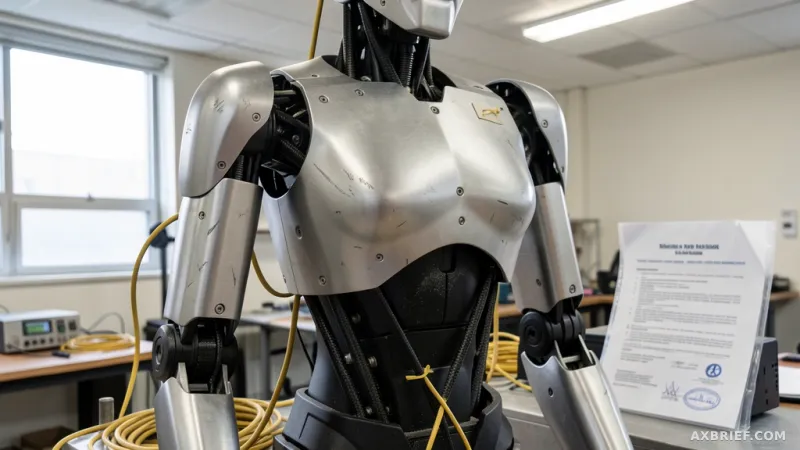
Imagine a sophisticated humanoid robot attempting to catch a falling glass. In the current paradigm of artificial intelligence, the robot captures a visual frame, sends that data to a powerful remote cloud server, waits for a large language model or a neural network to process the trajectory, and then receives a command to move its arm. In those few milliseconds of round-trip latency, the glass has already shattered. This gap between digital thought and physical action is the primary bottleneck of modern robotics, where the brain is centralized in a data center while the body is stranded in the real world.
The Architecture of the NRL 2.0 Initiative
To bridge this divide, the Seoul National University (SNU) Robotics Lab is pivoting away from centralized AI toward a paradigm known as Physical AI. This ambitious shift is backed by a massive institutional commitment. The lab has been selected for the 2026 National Research Laboratory (NRL 2.0) project, a joint initiative by the Ministry of Science and ICT and the Ministry of Education designed to cultivate university-affiliated research centers capable of global leadership in frontier technologies. This designation secures the lab a funding pipeline of approximately 10 billion KRW annually for up to ten years, providing the financial and infrastructural runway needed to redefine how machines interact with the physical world.
At the heart of this effort is the transition from centralized processing to distributed intelligence. Traditional robotic systems rely on a single, massive AI controller that handles every calculation, from high-level path planning to the minute adjustments of a finger joint. This creates an immense computational burden and a dangerous reliance on constant connectivity. SNU is replacing this with a biological model of control. Just as the human body does not send every reflexive twitch to the cerebral cortex but instead relies on the spinal cord and peripheral nerves for immediate reactions, the lab is developing a system where intelligence is embedded directly into the robot's limbs and joints.
This vision is being realized through two primary pillars: MOSAIC Intelligence and the MORPHI Body. MOSAIC Intelligence serves as the software framework that orchestrates this distributed network, allowing peripheral components to make autonomous, real-time decisions without waiting for a signal from the central processor. Complementing this is the MORPHI Body, a hardware platform designed specifically to house and support this decentralized intelligence. Together, these platforms aim to reduce the computational load on the cloud and enable robots to adapt to their environments with organic fluidity.
The Shift Toward Material-Based Intelligence
While distributed software solves the latency problem, the SNU team argues that software updates alone cannot solve the fundamental limitations of physical adaptation. The true breakthrough lies in the concept of Physical Intelligence, where the intelligence is not just in the code, but in the material and structure of the robot itself. This is the critical twist in their approach: instead of using a GPU to calculate the exact physics of a grip, the lab is designing hardware that uses its own physical properties to achieve the desired outcome. By embedding intelligence into the materials, the robot can control its movements through physical characteristics rather than complex numerical simulations.
This approach leads to a drastic reduction in energy consumption and operational costs. When the hardware itself handles the basic physics of movement, the need for high-performance computing units at every joint vanishes. This allows for the development of modular reconfiguration technology, where a robot can physically alter its shape and function based on the task at hand. Rather than being a static machine programmed for one purpose, the robot becomes a dynamic entity that optimizes its own physical structure to overcome environmental constraints, combining biomimetic principles with advanced engineering to maximize real-time responsiveness.
This transition from calculating movement to embodying movement changes the economic equation of robotics. By lowering the dependency on expensive, power-hungry processors, Physical AI makes the mass commercialization of robots viable. The success of a robot in the real world will no longer be judged solely by the parameters of its model, but by the efficiency of its physical intelligence and its ability to operate without a constant tether to a server farm.
Scaling from Clinical Trials to Global Standards
To ensure these theories translate into utility, the lab is focusing on Human-centered Physical AI, ensuring that human values and needs are baked into the design phase. The research is divided into three high-impact domains. First, the development of Life Companions—robots designed for daily assistance and hyper-personalized services—which will drive the expansion of Robotics-as-a-Service (RaaS). Second, the creation of wearable robots that augment human strength and extend physical capabilities. Third, the pursuit of intra-body medical robots capable of performing diagnostics and treatment from within the human body.
To validate these technologies, the lab has integrated a clinical pipeline with Seoul National University Hospital. This partnership allows wearable and medical robots to move from the prototype stage to clinical trials in a controlled, professional environment. This interdisciplinary effort is massive in scope, involving a convergence of over 80 professors across mechanical engineering, electrical and computer engineering, materials science, medicine, public health, brain and cognitive sciences, sports science, and sociology. By mimicking the human sensory and motor nervous system, the lab aims to build a care safety net for an aging society, directly improving the quality of life through embodied intelligence.
However, the ultimate goal is not just local application, but the establishment of a global standard. The SNU Robotics Lab is collaborating with world-leading institutions, including the MIT Media Lab, Carnegie Mellon University's Robotics Institute (RI), Stanford University, and the University of Oxford, as well as industry giant NVIDIA. The objective is to build a Next-Generation Physical Control Model Library—a standardized set of software tools for controlling physical movement. By leading the standardization process, the lab ensures that domestic companies can reduce their development cycles and enter the global market without facing insurmountable technical barriers.
To accelerate the transition from the laboratory to the economy, the lab is implementing a Lab-to-Market startup ecosystem. In partnership with the SNU Technology Holdings, the lab is establishing dedicated venture funds and operating a company builder to support startups from inception to growth. An industry-academic startup support center has also been installed within the lab, granting early-stage companies access to expensive, high-end equipment and infrastructure. As Director Kyujin Cho notes, Physical AI and distributed intelligence are the strategic keys for South Korea to secure a competitive edge in the global robotics race, transforming the lab into a world-class knowledge community that defines the future of machine intelligence.



