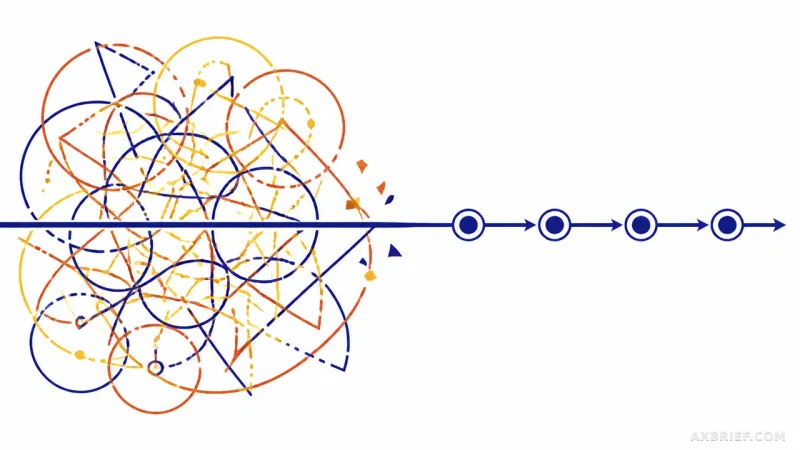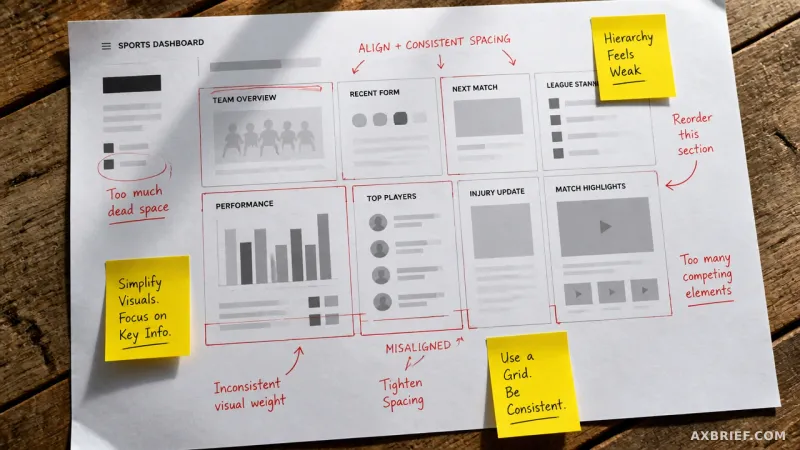
The corporate world is currently trapped in the demo phase of generative AI. For the past two years, teams have built impressive prototypes using simple API wrappers and basic prompts, but as these features migrate toward production systems, a critical gap has emerged. The industry is realizing that the distance between a successful chat demo and a reliable enterprise product is not bridged by better prompts, but by a new discipline of engineering. This shift has given rise to the LLM Engineer, a role distinct from the traditional Machine Learning Engineer, focused not on the creation of the model, but on the rigorous optimization and orchestration of existing foundation models.
The Architecture of the LLM Engineer
While a traditional ML Engineer spends their time designing architectures and training models from scratch, the LLM Engineer operates on the assumption that the foundation model is a given. Their primary objective is to adapt these pre-trained giants to specific product requirements and ensure they can be served at scale. By 2026, the technical maturity of an LLM Engineer is measured across a five-stage roadmap: foundational knowledge, prompting and tool calling, retrieval strategies, fine-tuning and alignment, and finally, serving and operations.
The journey begins with the standard environment of PyTorch and the Hugging Face ecosystem, specifically the `Transformers` and `Datasets` libraries. A professional in this field must move beyond the API call to understand the underlying mechanics of tokenization, the forward pass, and the decoding loop. Practical mastery starts with loading a small open-source model via the `Transformers` library and manually implementing a text generation loop to observe how the model predicts the next token in real-time.
Once the foundations are set, the focus shifts to controlling model behavior. Prompting is no longer treated as a soft skill or an art, but as the first lever of system control. This involves the systematic design of system messages and the strategic placement of few-shot examples to guide the model's reasoning. When the model needs to interact with the physical or digital world, the LLM Engineer implements tool calling. By providing the model with function signatures, the engineer creates a loop where the model selects a tool, the system executes the API call, and the result is fed back into the model for a final response. To move away from the fragility of manual prompt tuning, frameworks like DSPy are being adopted to treat prompt optimization as a programmatic problem, ensuring that the system remains reproducible and stable across different model versions.
From Naive RAG to Production-Grade Alignment
The real divergence between a hobbyist and a professional LLM Engineer appears in the transition from naive implementations to optimized pipelines. Most early adopters implemented a basic Retrieval-Augmented Generation (RAG) flow: chunking documents, converting them to vectors, and performing a similarity search. However, production environments demand more. The modern stack now integrates hybrid search, combining keyword-based retrieval with embedding-based search to capture both exact matches and semantic meaning. To further refine this, rerankers are introduced to re-evaluate the relevance of the initial search results, significantly increasing precision.
As data sources multiply, the LLM Engineer employs semantic routing to classify the intent of a query and direct it to the most appropriate data source, preventing the noise that occurs when a model is overwhelmed with irrelevant context. While FAISS and Chroma serve as the vector database layer, and LangChain or LlamaIndex handle orchestration, complex relational data is increasingly managed through GraphRAG. The peak of this evolution is the self-reflection system, where the model evaluates the quality of its own retrieved context and autonomously rewrites the query if the initial results are insufficient.
When RAG and prompting hit a ceiling, the engineer turns to fine-tuning. The goal here is not to teach the model new facts, but to instill a specific tone, style, or domain-specific vocabulary. To avoid the prohibitive cost of full parameter updates, the industry has standardized on Low-Rank Adaptation (LoRA) and its quantized version, QLoRA. These techniques allow for efficient adaptation by training only a small subset of weights. For alignment, the complex reinforcement learning of PPO is being replaced by Direct Preference Optimization (DPO), which aligns model behavior with human preferences using paired datasets.
In this phase, the bottleneck shifts from compute to data curation. The ability to construct high-quality preference pairs is now the most valuable skill in the stack, as the quality of the dataset directly dictates the model's output. Engineers utilize the PEFT and TRL libraries to implement these adaptations, proving that data cleanliness outweighs model size in specialized tasks.
The final stage of maturity is the transition to serving and observability. Running a model in production requires maximizing throughput and minimizing latency. Tools like vLLM have become essential, utilizing advanced batching techniques to maximize token generation per second. To fit larger models into limited GPU memory, the `bitsandbytes` library is used for quantization, reducing numerical precision to lower the memory footprint without sacrificing significant performance.
True operational maturity, however, is found in LLMOps. This involves tracking token consumption and costs while building quantitative evaluation frameworks using tools like Ragas or Phoenix. Phoenix, in particular, provides the necessary observability to trace the root cause of a hallucination or a failed retrieval, allowing engineers to catch defects before they reach the end user. The role of the LLM Engineer is thus completed when they can move beyond anecdotal evidence and prove the reliability of their system through hard metrics.
Success in the 2026 AI landscape is no longer about who can train the biggest model, but about who can most efficiently optimize and serve the models that already exist.