The race for artificial intelligence supremacy is no longer just about who has the best weights or the most parameters; it is a war of raw wattage. In Memphis, Tennessee, this struggle has manifested as a sprawling industrial gamble known as Colossus, the massive data center powering xAI. For months, the site has operated in a state of regulatory limbo, relying on a fleet of temporary gas turbines to keep the GPUs humming while the formal grid struggled to keep pace. This makeshift approach to energy has created a volatile intersection of cutting-edge compute and old-world industrial friction.
The 2.8 Billion Dollar Energy Pivot
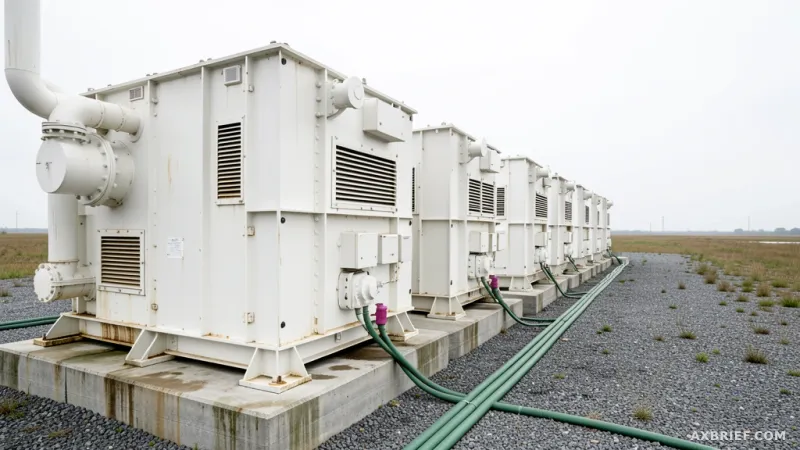
SpaceX has now formalized a plan to transition from this makeshift power arrangement to a permanent, industrial-scale energy solution. By July 2027, the company will remove 69 unauthorized gas turbines currently operating at the Colossus site. In their place, SpaceX will construct a permanent natural gas power plant capable of generating 1.2GW of electricity. This shift represents a move from tactical, temporary power sourcing to a strategic, self-sufficient energy ecosystem designed to support the immense load of xAI's training clusters.
The financial scale of this transition is staggering. According to SpaceX's IPO filing, the company intends to invest a total of 2.8 billion dollars over the next three years specifically for the procurement of gas turbines for its data center operations. This investment underscores a broader strategy to decouple AI infrastructure from the limitations of public utility timelines.
Technical specifications detailed in permits issued by the state of Mississippi reveal that the new plant will utilize 41 gas turbines, with individual capacities ranging from 16.48MW to 50MW. These units differ in model and performance from the 69 turbines currently in use, indicating a refined engineering approach to power stability and output. This infrastructure build-out follows a series of aggressive corporate moves, including SpaceX's acquisition of xAI in February and Elon Musk's acquisition of APR Energy. APR Energy specializes in rapid-deployment temporary power solutions, providing the exact kind of agility required to stand up a data center like Colossus before permanent permits are finalized. While the APR Energy assets are likely separate from the 41 turbines listed in the official permits, they provide a critical buffer for other undisclosed projects in the pipeline.
The Collision of AI Ambition and Environmental Law
This rapid expansion has not occurred without significant legal and social blowback. The primary point of contention is the environmental impact of burning natural gas at this scale. The proposed operations are expected to emit more than 2,000 tons of nitrogen oxides (NOx) annually, a potent smog-forming pollutant. This is particularly contentious given that the region south of Memphis is already recognized as one of the most polluted areas in the United States.
The NAACP and the Southern Environmental Law Center have filed lawsuits against xAI, arguing that the operation of unauthorized gas turbines exacerbates existing environmental injustices and degrades local air quality. The legal battle highlights a growing tension in the AI era: the conflict between the urgent need for compute power and the health of the communities hosting the hardware.
However, the resolution of this conflict has revealed a surprising priority shift within the US government. In a pivotal move, the US Department of Justice (DOJ) intervened to support SpaceX's position. The DOJ's reasoning transcends simple administrative compliance, framing the operation of the turbines not as a regulatory lapse, but as a matter of national and economic security. By siding with SpaceX, the federal government has effectively signaled that the strategic value of maintaining a lead in AI infrastructure outweighs the immediate environmental concerns raised by local advocacy groups. This creates a precedent where AI compute is treated as a national strategic asset, granting it a level of immunity from standard environmental hurdles.
Despite this federal backing, the transition to a permanent 1.2GW plant acknowledges a hard truth: the trailer-mounted, temporary power strategy has a ceiling. While temporary solutions can bypass initial local zoning, they cannot indefinitely circumvent federal regulations regarding facility scale and long-term usage.
SpaceX is effectively building its own utility company to ensure that the hunger of Colossus is never unmet.