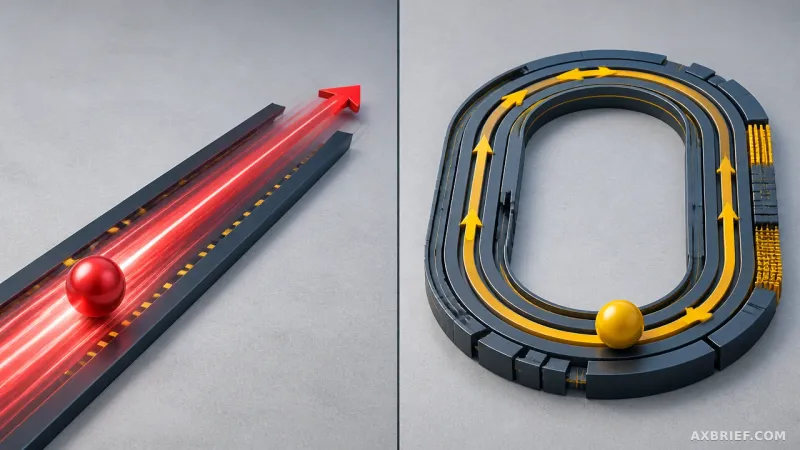
Industrial automation is currently locked in a battle for every millimeter of available chassis space. In high-precision manufacturing environments, the limiting factor is rarely the power of the motor itself, but rather the sprawling infrastructure required to keep it running. Engineers frequently find themselves staring at control panels that have become a chaotic web of cables, where the volume of the wiring and the size of the external drivers dwarf the actual actuators they serve. This physical congestion does more than just occupy space; it introduces signal noise, increases the risk of wiring errors, and extends the time it takes to move a prototype from the drawing board to the factory floor.
The Hardware Architecture of the IBIX57
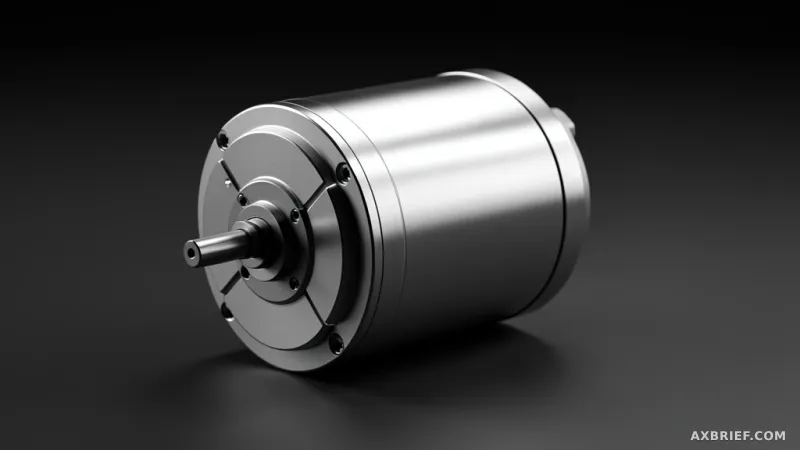
Delta Line has addressed this structural inefficiency with the release of the IBIX57, a brushless DC (BLDC) motor that collapses the traditional divide between the actuator and its brain. The core of the device is a compact 57mm diameter motor, a size specifically chosen to fit into the tight apertures of precision automation equipment. By utilizing a BLDC architecture, the motor eliminates the mechanical wear associated with brushes, extending maintenance cycles while maintaining a minimal physical profile. However, the defining characteristic of the IBIX57 is not its size, but its internal integration of a motion controller.
In a standard motion system, the motor is a passive component that relies on an external driver to interpret commands and regulate current. The IBIX57 replaces this fragmented setup by embedding the Integrated Motion Controller directly within the motor housing. This design choice effectively removes the need for a separate external control box for each axis. By housing the control logic and the drive hardware in a single package, Delta Line has created a module that can be dropped into a system without the need for the tedious process of selecting and matching separate drivers to specific motors.
Recognizing that industrial requirements for torque, rotational speed, and input voltage vary wildly across applications, Delta Line has launched the IBIX57 in four distinct versions. Rather than offering a single, compromised specification, this four-tier lineup allows designers to select a hardware configuration that matches the specific precision and power balance of their application. This variety ensures that the benefits of integration do not come at the cost of versatility. Detailed technical specifications for each of these four versions are available through the official Delta Line website.
The Shift from Component Matching to Modular Integration
To understand why this integration matters, one must look at the hidden costs of the separated control model. In a traditional setup, the signal path travels from a high-level controller to a driver, and then through a harness of wires to the motor. Every centimeter of that cable acts as a potential antenna for electromagnetic interference (EMI) and a point of potential voltage drop. In high-speed precision environments, these micro-fluctuations in signal integrity are the primary cause of jitter and reduced control accuracy. The IBIX57 solves this by shortening the signal path to nearly zero, as the control logic sits physically adjacent to the motor coils.
This shift transforms the assembly process from a complex wiring project into a modular installation. When the controller is integrated, the external interface is stripped down to only the essential power supply and communication lines. This reduction in physical connection points directly correlates to a lower failure rate during assembly, as there are fewer connectors to miswire and fewer cables to fatigue over time. The tension in the design process shifts from managing hardware compatibility to optimizing motion logic.
Furthermore, the IBIX57 eliminates the matching phase of engineering. Traditionally, an engineer must cross-reference data sheets to ensure a driver's current output matches the motor's requirements, often leading to iterative sample testing and potential redesigns if the pairing is suboptimal. Because the IBIX57 is pre-optimized by the manufacturer, the matching is handled at the factory. The developer simply inputs software parameters, bypassing the low-value labor of hardware validation. This modularity allows for rapid scaling; if a system needs more axes, the engineer adds more IBIX57 modules rather than redesigning the entire control rack to accommodate additional drivers.
Redefining the Footprint of Smart Factories
The implications of the IBIX57 extend beyond the individual machine to the layout of the entire production line. In the context of smart factories and small-scale robotics, the density of the hardware determines the overall efficiency of the facility. When the control logic is moved inside the 57mm motor housing, the physical footprint of the equipment shrinks. This allows for a higher density of axes within the same square footage, enabling the creation of more complex, multi-axis robots that can operate in spaces where traditional separate-driver systems would be physically impossible to install.
This integration also drives down the total cost of ownership by reducing the bill of materials for the control cabinet. The expense of large metal enclosures, cable trays, and complex wire harnesses is significantly reduced when the drivers are distributed at the point of actuation. By removing the need for a centralized driver rack, manufacturers can reduce the overall volume of their machinery, which in turn lowers shipping costs and installation time. The reduction in wiring complexity also simplifies long-term maintenance, as technicians can isolate and replace a single integrated module rather than tracing a fault through a massive bundle of cables back to a central panel.
Ultimately, the IBIX57 represents a transition in industrial design where the physical interface is treated with the same importance as the software control. By erasing the distance between the command and the execution, Delta Line has removed the primary bottleneck of precision motion systems. The result is a hardware environment where the constraints of the physical world no longer dictate the limits of the machine's precision.
This move toward total hardware integration signals a future where the control cabinet disappears entirely, leaving only the intelligent actuators to define the architecture of the factory.