Warehouse floors are the final frontier of manual labor, where the human body remains the most flexible but most fragile component of the supply chain. For years, the industry has chased the dream of the powered exoskeleton—heavy, battery-dependent suits that promise superhuman strength but often deliver cumbersome weight and short runtimes. The tension in the logistics sector has shifted from a desire for raw power to a need for sustainable, lightweight support that does not require a charging station every four hours. This is the gap where the intersection of passive hardware and active intelligence is now emerging.
The Architecture of StepUp NEO and the MOTIE Initiative
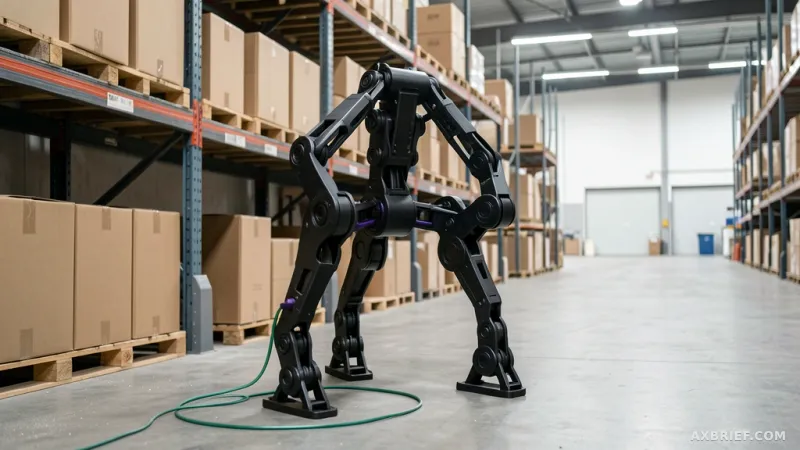
FRT Robotics has entered this space with StepUp NEO, an ultra-lightweight industrial exoskeleton that defies the traditional powered-suit narrative. Launched in February, StepUp NEO operates entirely without batteries or external power sources, relying instead on a sophisticated physical structure to redistribute weight and reduce the musculoskeletal burden on a worker's waist during heavy lifting. To scale this technology, the company has been selected for the AI Applied Product Rapid Commercialization Support Project, an initiative led by the Ministry of Trade, Industry and Energy (MOTIE).
The deployment is not a closed-loop laboratory test but a wide-scale industrial validation. Lotte Global Logistics and Lotte Hi-Mart are serving as the primary demand companies, integrating the devices directly into their logistics centers and transportation hubs. The technical ecosystem supporting this rollout is equally comprehensive, involving I&CT, Sungkyunkwan University, and Kyungpook National University for robot design and AI algorithm development, while the Korea Conformity Laboratories (KCL) handles the critical testing, certification, and commercialization phases. The goal is to move beyond the prototype phase and establish a standardized, certified tool for the modern workforce.
From Simulation to Physical AI
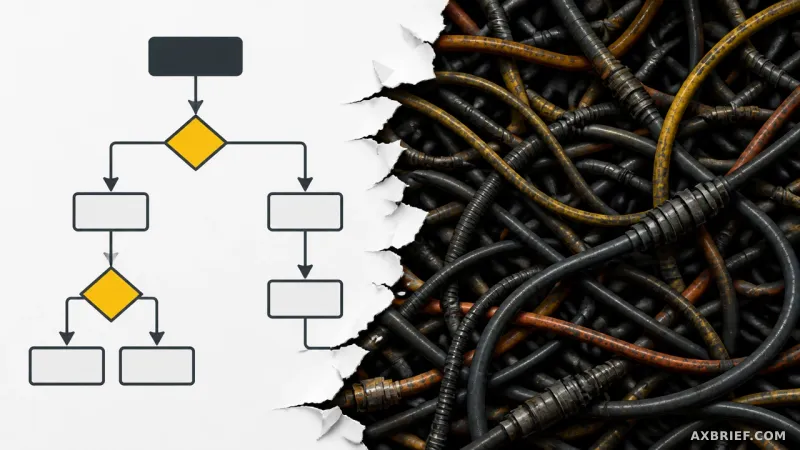
While the hardware of StepUp NEO is passive, the strategy behind its evolution is aggressively digital. The core shift in FRT Robotics' approach is the transition from simulation-centric development to a Physical AI framework. For too long, robotics has relied on digital twins and simulated environments that fail to capture the chaotic, non-linear movements of a human worker in a high-pressure warehouse. Physical AI seeks to bridge this gap by using the exoskeleton as a data collection node, capturing the precise movement patterns, muscle assistance effects, and fatigue reduction metrics of actual workers in real-time.
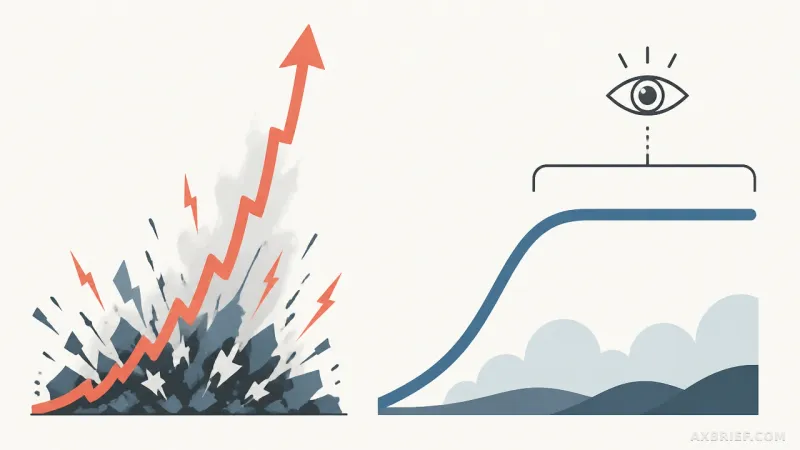
This creates a compelling paradox: a battery-less device is being used to fuel a high-compute AI strategy. By analyzing the quantitative data from Lotte's logistics sites, FRT Robotics is not just refining a brace, but building a platform that understands how the human body interacts with physical loads in a professional environment. The insight here is that the true bottleneck in wearable robotics is not the strength of the motor, but the density of the movement data. When the error margin between a virtual simulation and a physical warehouse floor is closed, the economic viability of the robot increases because the assistance becomes intuitive rather than intrusive.
This data accumulation serves a larger purpose beyond the current exoskeleton. The movement libraries being built today are the training sets for tomorrow's humanoid robots. By mastering the nuances of human ergonomics through Physical AI, FRT Robotics is creating a blueprint for humanoid machines that can navigate and operate in industrial spaces with human-like efficiency. The transition from a waist-support device to a full-scale autonomous humanoid is a trajectory mapped by data, moving from simple load-bearing to complex environmental interaction.
The evolution of industrial automation is moving away from the rigid isolation of robotic arms and toward a symbiotic relationship where AI learns from the physical constraints of the human body.