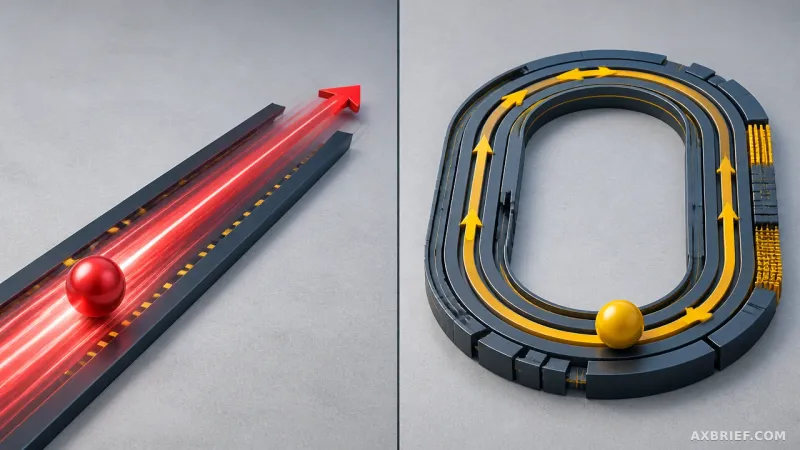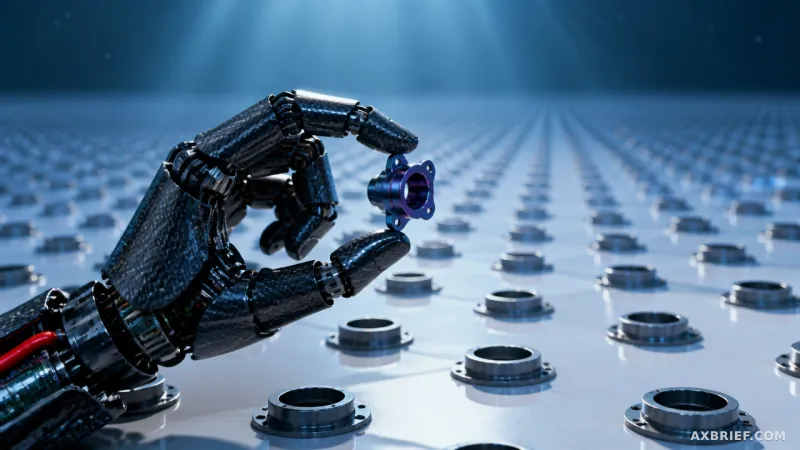
The global robotics industry is currently caught in a paradox of high ambition and fragile foundations. While the vision of humanoid assistants and autonomous factories dominates boardroom presentations, the actual deployment of these machines is often throttled by a hidden bottleneck: the supply chain. For many developers, the dream of a scalable robot fleet is frequently deferred by the exorbitant cost and limited availability of high-precision reducers, actuators, and sensors. This tension between software capability and hardware accessibility is where the battle for the next industrial era is being fought, and it is the exact problem South Korea is now attempting to solve at scale.
The Infrastructure of a National Robot Ambition
South Korea has set an aggressive trajectory for its robotics sector through the 4th Intelligent Robot Basic Plan. The government aims to grow the industry to a valuation of 20 trillion KRW and deploy one million robots across various sectors by 2030. To orchestrate this transition, the Korea Institute of Robot Convergence (KIRO) serves as the national R&D control tower. Established in March 2012 under Article 42 of the Industrial Technology Innovation Promotion Act, KIRO was designed to bridge the gap between theoretical research and industrial application. Over the last 14 years, the institute has evolved into the primary entity responsible for ensuring that national policy translates into tangible hardware on the factory floor.
As of May 2026, KIRO employs approximately 200 specialists operating across a strategic network of regional hubs. While the headquarters are located in Pohang, the institute maintains research centers in Seoul, Busan, Gumi, and Andong to ensure proximity to different industrial clusters. This geographic distribution is paired with specialized validation centers designed to test robots in high-stakes environments. The Pohang Safety Robot Validation Center opened in October 2019, followed by the Andong Agricultural Robot Validation Center in October 2020, and the Gumi Robot Job Innovation Center in December 2022. Most recently, in March 2025, the Andong Agricultural Logistics Validation Center was launched, extending the institute's reach into the critical intersection of farming and supply chain logistics.
These facilities allow KIRO to secure lead technologies through massive national projects, including the development of underwater construction robots and public safety robotics. By maintaining a collaborative network with roughly 200 companies, the institute ensures that research outcomes are not confined to academic papers but are instead funneled directly into commercialization pipelines.
The Pivot to Physical AI and Execution Platforms
Despite the impressive infrastructure, the industry faced a structural ceiling. South Korean robot manufacturers have historically struggled with a heavy reliance on foreign-made core components. This dependency creates a price floor that makes mass production economically unviable for many domestic firms, effectively capping the growth of the local ecosystem. The realization is simple: you cannot deploy a million robots if you are importing the most expensive parts of every single unit.
This realization triggered a fundamental shift in KIRO's operational philosophy. Following the appointment of Kang Ki-won as the fifth president on October 14, 2025, the institute underwent a significant organizational restructuring. The goal was to move away from traditional research cycles and toward an execution-oriented platform. This new model integrates industrial demand and market viability directly into the planning phase, drastically reducing the time it takes for a technology to move from the lab to the market.
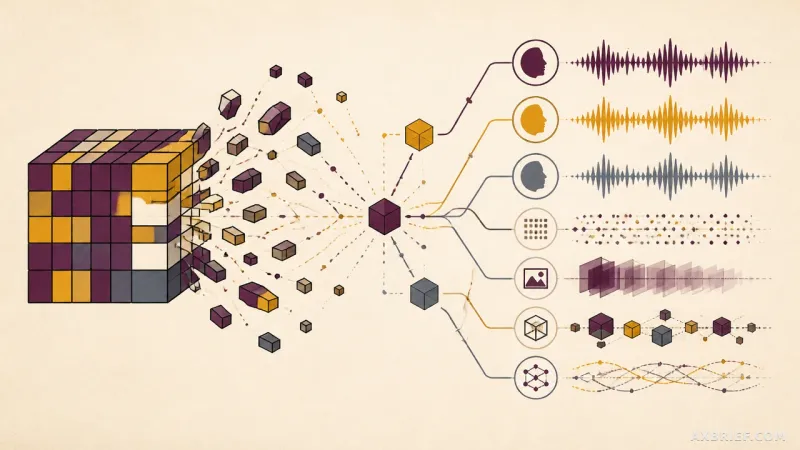
Central to this shift is the concept of Physical AI and Manufacturing AX (AI Transformation). While the world has focused on the cognitive abilities of AI in digital spaces, Physical AI focuses on the embodiment of intelligence—how an AI perceives, judges, and acts within a physical environment. KIRO is now prioritizing the localization of the most critical hardware elements of this embodiment, specifically focusing on humanoid robot hands and high-efficiency drive modules. By emphasizing modularization and standardization, KIRO is attempting to lower the risk for private companies that cannot afford the massive R&D costs or the potential failure of developing these components in isolation.
This strategy is being implemented through deep-tier partnerships rather than simple project contracts. KIRO has established joint research centers with industry giants such as POSCO, LIG Nex1, Daedong, and Neuromeka. These centers allow for a seamless flow from planning to validation and eventual commercialization. Furthermore, the KIRO Family Company program and the regular KIRO Family Day events have created a feedback loop where small and medium-sized enterprises can inject their real-world technical requirements directly into the national research agenda.
To ensure these robots actually work in the wild, KIRO is building a specialized performance verification infrastructure for Physical AI. This involves creating quantitative testing environments where a robot's ability to perceive and act can be measured in hard numbers. By establishing a data loop—where validation data is used to refine the AI, which is then re-validated—the institute is accelerating the evolution of intelligent robotic systems. This technical push is being matched by a regulatory one, as KIRO works to establish safety standards, liability frameworks, and certification systems that allow AI-driven robots to collaborate safely with human workers.
The success of the 2030 goal now depends on whether this cycle of component independence, rigorous validation, and market formation can outpace the global competition. If KIRO can successfully decouple the Korean robot industry from its foreign hardware dependencies, the million-robot target moves from a political ambition to a technical inevitability.