The Shift from Conversational AI to Autonomous Agents
For years, the public perception of artificial intelligence was defined by the chatbot—a digital assistant designed to converse and provide information. That era is rapidly closing. We are currently witnessing a transition toward Agentic AI, where systems move beyond mere text generation to autonomously executing complex, multi-step tasks. This shift is best exemplified by the rise of tools like Claude Code, OpenFlow, and Genspark Flow, which represent a fundamental change in how software interacts with human workflows.
On May 21, at the CEO Summit Forum held at the Riverside Hotel in Seoul, Ryu Jung-hye, a member of the National AI Strategy Committee, outlined this transition. Addressing an audience of 70 industry leaders, including Chairman Park Bong-kyu and Forum Chairman Lee Man-ee, Ryu argued that the global AI landscape has moved past the initial OpenAI-dominated phase of 2022. While OpenAI set the stage with ChatGPT, the market has since fractured into a multi-polar competition, with Google’s Gemini and Anthropic’s Claude emerging as critical players in a race for ecosystem dominance.
The Rise of Execution-Oriented Models
The core of this new competition is no longer about which model can produce the most fluent prose, but which can best function as an agent. Anthropic’s Claude has gained significant traction by demonstrating superior capabilities in coding and business process automation. Unlike earlier models that required constant human prompting, these agentic systems are designed to plan, execute, and iterate on tasks independently.
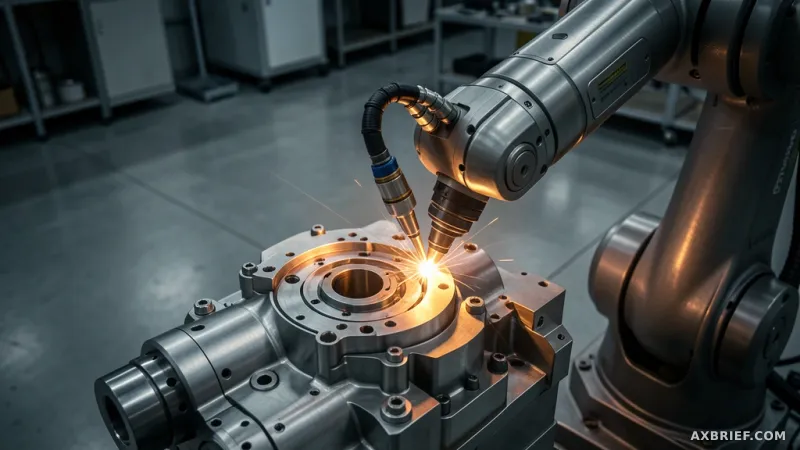
This evolution is marked by a clear three-stage progression. The first stage was conversational AI, focused on text and image generation. The second stage, where we currently reside, is Agentic AI—systems that can navigate file systems, call APIs, and manage entire project lifecycles. The third stage, which industry leaders are now targeting, is Physical AI. This involves integrating the decision-making capabilities of software agents with hardware, such as humanoids and industrial robots, to interact with the physical world. For a nation like South Korea, with its deep-rooted manufacturing and robotics infrastructure, this third stage represents a significant strategic opportunity to leapfrog global competitors.
Why Ecosystems Outperform Benchmarks
In the early days of the AI boom, success was measured by parameter counts and benchmark scores. Today, those metrics are secondary to the ability to integrate AI into existing industrial workflows. The current market dynamic shows that the most valuable AI is the one that can be "plugged in" to solve real-world problems.
Tools like Claude Code are changing the developer experience by automating the tedious aspects of software maintenance, such as debugging and code modification. By allowing AI to take control of the development environment, human engineers are freed to focus on high-level architecture rather than syntax or routine errors. This is not just a productivity boost; it is a structural change in how companies manage IT infrastructure. The competitive advantage now lies in the ability to build a robust ecosystem where AI acts as a team member rather than a passive tool.
A National Strategy for Physical AI
As AI moves from the screen to the factory floor, the focus for national policy must shift accordingly. Ryu Jung-hye emphasized that for South Korea to secure its position as one of the world's top three AI powers, it must bridge the gap between software intelligence and physical hardware. The logic is clear: if an AI can autonomously manage a software workflow, it can, in theory, manage a robotic arm or an automated logistics system.
By leveraging its existing strengths in manufacturing and robotics, South Korea is uniquely positioned to lead in the development of Physical AI. This requires a unified national strategy that integrates policy, investment, and talent development to ensure that the intelligence developed in digital labs is effectively deployed in the physical world. The race is no longer about who has the smartest model, but who can best translate that intelligence into physical action.