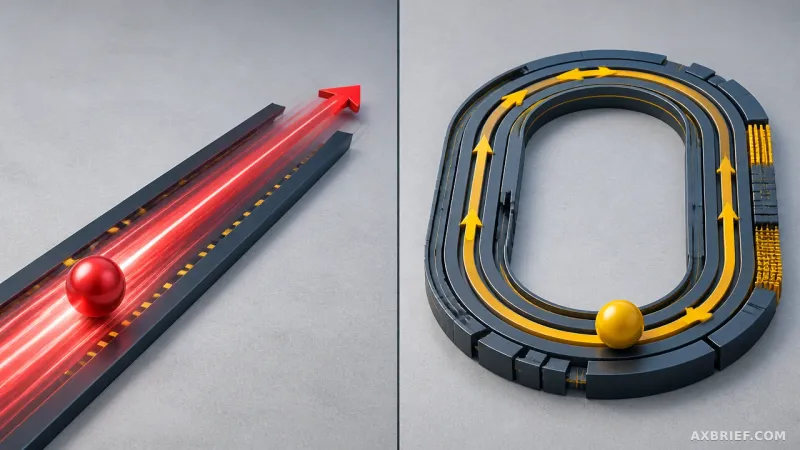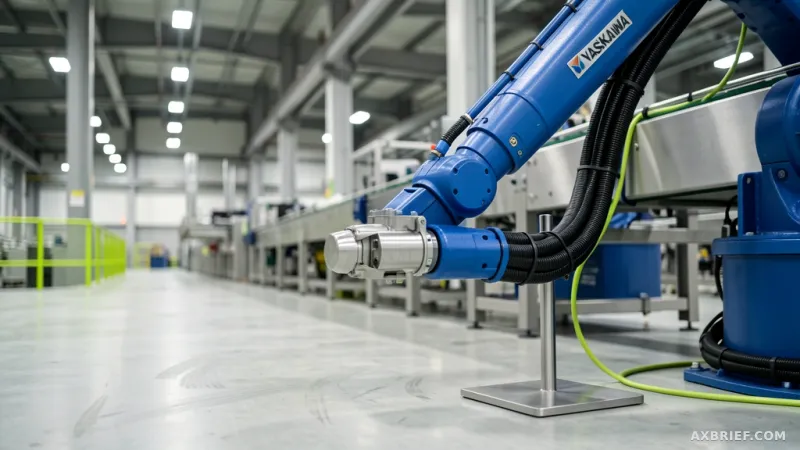
The modern factory floor has long been defined by a rhythmic, predictable choreography. For decades, industrial robots have operated on a simple premise: execute a pre-programmed trajectory with absolute precision, repeating the same motion millions of times without deviation. This reliability built the global automotive and electronics industries, but it also created a ceiling. These machines are blind to change; if a part is shifted by a few centimeters or a new variable enters the environment, the system fails. The industry is now hitting a wall where traditional automation can no longer solve the labor shortages or the complexity of modern logistics.
The Financial Blueprint of Dash 35
Yaskawa Electric is attempting to shatter this ceiling by redefining the robot not as a tool, but as an intelligent agent. The company recently unveiled its 2035 Vision and a corresponding mid-term management plan titled Dash 35, covering the period from 2026 to 2029. This is not merely a product roadmap but a fundamental restructuring of the company's financial DNA. Yaskawa has set an aggressive target for its operating profit margin, aiming to exceed 20% by 2035. To understand the scale of this ambition, one only needs to look at the baseline: for the 2025 fiscal year, the operating profit margin stood at 8.7%. The company is essentially betting that it can more than double its profitability over the next decade by shifting its value proposition.
Between now and the end of the Dash 35 period in 2029, the company has established concrete financial milestones. Yaskawa is targeting annual revenues of 650 billion yen and an operating profit of 100 billion yen. This trajectory would bring the operating profit margin to 15.4% by 2029, serving as the critical stepping stone toward the ultimate 20% goal. These numbers signal a move away from the low-margin hardware commodity race and toward a high-margin ecosystem of autonomous solutions.
From Rigid Hardware to Physical AI
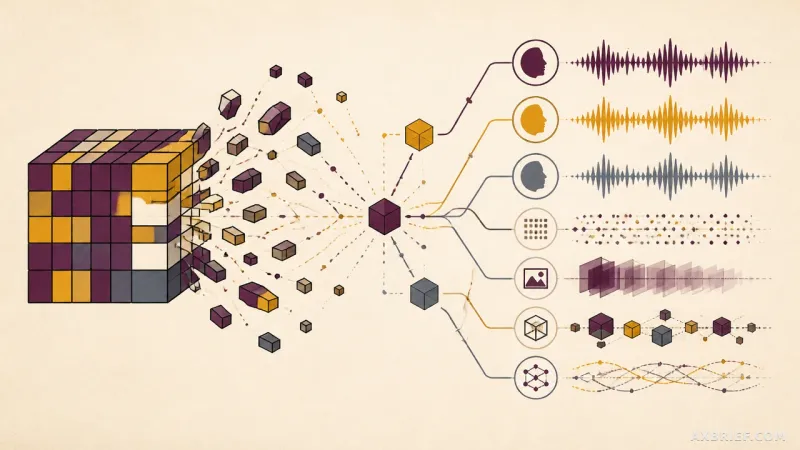
The core of this transition is a concept Yaskawa calls Physical AI—intelligence that does not just process data in a cloud but interacts dynamically with the physical world. The primary vehicle for this shift is MOTOMAN NEXT, an autonomous AI robot platform designed specifically for unstructured tasks. Unlike traditional robots that require a rigid environment, MOTOMAN NEXT is engineered to perceive, judge, and act in spaces where the variables are constantly changing. This represents a shift from deterministic programming to probabilistic autonomy, where the robot decides the best path to a goal rather than following a fixed line.
This intelligence requires a new kind of body. Yaskawa is expanding its hardware portfolio to include evolved actuators and core components specifically designed for humanoid robots. By porting its legacy motion control expertise into humanoid-grade drive units, Yaskawa is positioning itself as the primary supplier of the muscles and joints for the next generation of embodied AI. The goal is to ensure that as the world moves toward humanoid labor, the underlying physical control remains a Yaskawa standard.
On the software side, the company is integrating AI and data technologies into its existing i³-Mechatronics platform. This evolution is being driven by YDX, or Yaskawa Digital Transformation, a strategy designed to merge digital twins with real-world execution. The culmination of this effort is i³-Singularity, a system intended to automate not just the movement of a single arm, but the entire production process and management optimization. This creates a closed loop where the AI optimizes the factory layout, the robot executes the task, and the data feeds back into the system to improve efficiency in real-time.
This strategic pivot extends the company's reach far beyond the traditional factory walls. Yaskawa is now targeting sectors plagued by acute labor shortages, most notably agriculture, where automation must deal with the inherent unpredictability of nature. The company is also moving into the food and medical sectors, aiming to digitize and automate the complex, delicate processes of laboratory research and experimental trials. By applying mechatronics to professional service domains, Yaskawa is transforming from a manufacturer of industrial arms into a provider of autonomous control solutions.
By decoupling its growth from the sale of static hardware and tying it to the intelligence of Physical AI, Yaskawa is attempting to solve the fundamental paradox of robotics: creating a machine that is as flexible as a human but as precise as a computer.