Text-based large language models have reached a plateau where their foundational intelligence feels largely standardized across the industry. Moving beyond simple chatbot interfaces, artificial intelligence is now entering the realm of real-time integrated sensory processing, allowing systems to see, hear, and respond much like humans do. Recent developments surrounding OpenAI's Astra, Google's Omni 1.1 Flash, and Anthropic's Fable 5.1 indicate that the competitive axis has completely shifted from text generation to advanced multimodal interaction.
The Shift to Real-Time Sensory AI Systems
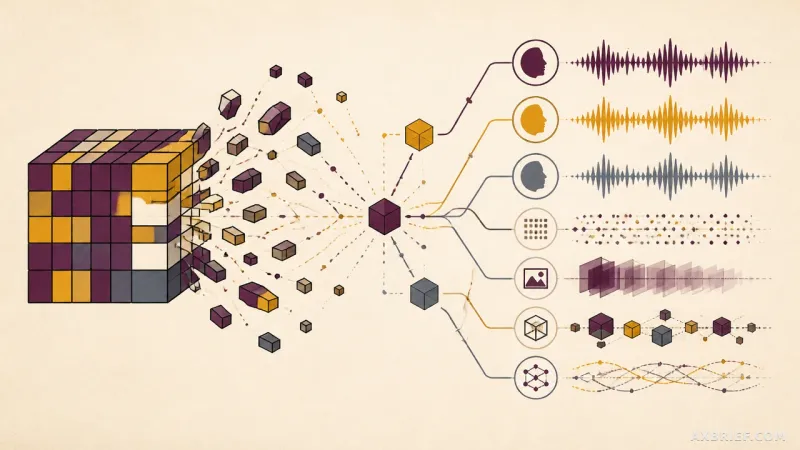
The interface changes experienced by everyday users will be striking, shifting away from static screens and text-prompt entry toward continuous acoustic and visual engagement. In this new paradigm, an AI system shares the user's visual environment in real time while communicating via voice. This level of multimodality is far more than a minor feature addition. It represents the construction of foundational world models capable of understanding spatial-temporal flows and physical cause-and-effect relationships, serving as a critical gateway toward artificial general intelligence.
Code-Named Ultima Alpha and the Coming Astra Release
OpenAI is currently putting the final touches on its next-generation model, bearing the internal code name Ultima Alpha and widely referred to as Astra, through private testing with select partners ahead of a public rollout window. The symbolic combination of Ultima and Alpha within the project name signals OpenAI's intent to establish a completely new generational benchmark rather than a routine incremental update. By closing the multimodal gap that competitors have actively targeted, OpenAI aims to reclaim firm market leadership. When Astra officially debuts, the fundamental mechanics of human-AI interaction are expected to undergo an immediate redefinition.
Google Omni 1.1 Flash and the Leap to 4K Video Understanding
Google is countering these moves with practical advancements in its generative video pipeline through the update to Omni 1.1 Flash. A major highlight of this release is a dramatic leap in output resolution capabilities. Omni 1.1 Flash initially generates a draft preview at 360p resolution before executing a final upscale to 4K. Even more significant than the raw fidelity boost is the integration of scene extension support, which allows the AI to analyze preceding and succeeding context to seamlessly elongate video segments. This proves that the model possesses an underlying physical understanding of spatial structures and object motion, accelerating Google's progress toward building robust video-based world models.
Anthropic Quietly Deploys Claude Fable 5.1
In contrast to the high-profile launch strategies favored by OpenAI and Google, Anthropic has adopted a more covert evolutionary approach. Users interacting with Claude Fable 5 models have recently noticed their queries being progressively routed to the updated Fable 5.1 framework. Rather than staging massive public events or publishing formal press releases, Anthropic relies on gradual, internal system replacements. This tactical pattern demonstrates the company's preference for fine-tuning reasoning capabilities to elevate user-perceived performance organically. Ultimately, despite differing deployment philosophies, all major labs are converging on the exact same destination: deeper reasoning paired with broader modal integration.
The Roadmap Toward Internal AGI Systems by Late 2026
These seemingly fragmented updates across the industry are converging toward a single monumental target. OpenAI CEO Sam Altman has previously noted that OpenAI expects to have an internal system it would call artificial general intelligence before the end of 2026. The AGI defined here extends far beyond a traditional instrumental Q&A assistant. The real-time interactive capabilities pursued by Astra, the 4K spatial comprehension demonstrated by Omni 1.1 Flash, and the refined inference engines of Fable 5.1 represent the exact building blocks of this upcoming paradigm. Video and real-time sensory inputs are emerging as the most efficient textbooks for AI to master the physical world, making 2026 the pivotal juncture where these technological fragments coalesce into fully autonomous systems.