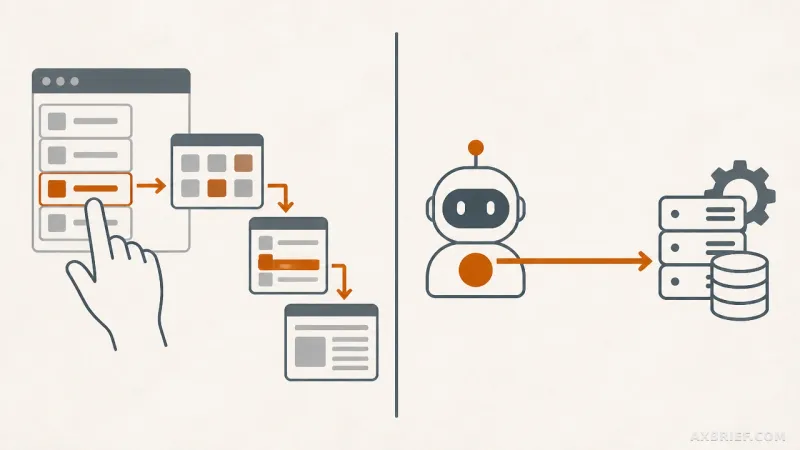
Enterprise developers are currently hitting a wall with AI agents. While large language models possess immense general reasoning capabilities, they remain functionally blind to the idiosyncratic nuances of corporate data. To make an agent useful, engineers typically spend weeks manually mapping database schemas, writing exhaustive prompts to explain column meanings, and curating static knowledge bases. This manual labor creates a brittle bridge between the model's intelligence and the company's actual data, where a single schema change can break the entire agentic workflow.
The Context Intelligence Stack
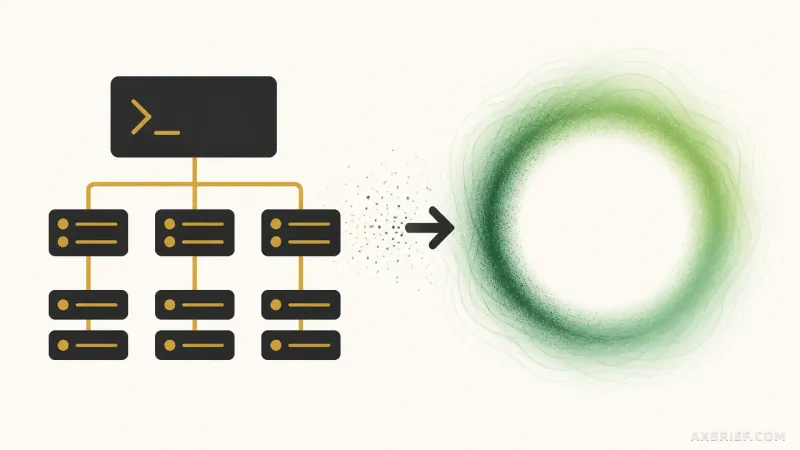
AWS is attempting to dissolve this friction with the introduction of a Context Intelligence Stack, a suite of tools designed to automate the context layer between AI agents and enterprise storage. At the center of this architecture is AWS Context, a managed service that builds and maintains a knowledge graph without requiring manual curation. Unlike traditional knowledge graphs that require a predefined ontology, AWS Context evolves by analyzing the actual usage history of the agents interacting with the data.
Supporting this central engine are two critical auxiliary services: Amazon S3 Annotations and AWS Glue Data Catalog skill assets. Amazon S3 Annotations allows teams to attach rich, business-centric metadata directly to individual S3 objects, ensuring that the raw files carry their own meaning. Simultaneously, AWS Glue Data Catalog skill assets link domain-specific knowledge—such as operational runbooks, common query patterns, and usage rules—directly to data assets at the catalog level. AWS Context synthesizes the data from these two sources, transforming fragmented metadata into a cohesive knowledge graph that agents can query in real-time during execution.
From Manual Mapping to Automated Inference
The fundamental shift here is the move from static documentation to dynamic inference. AWS Context does not wait for a human to define relationships; it automatically maps which tables exist, what specific columns signify, and which data sources hold the most authority. By combining semantic search with graph-level reasoning, the system derives relationships from both structured databases and unstructured documents, effectively building a map of the enterprise's information architecture on the fly.
What separates this from a standard indexing tool is the implementation of a self-learning feedback loop. AWS Context monitors which sources yield the most accurate results for the agent and which specific data points are actually utilized to solve a task. Over time, the knowledge graph optimizes itself based on successful outcomes. This shifts the role of the data steward from a manual architect to a high-level auditor. Through the AWS Management Console, stewards can review the inferred relationships, promote them to production, or append specific business definitions to refine the system's logic.
To ensure this doesn't become another proprietary silo, AWS has built the stack on open standards. All metadata is stored in Amazon S3 Tables using the Apache Iceberg open table format. This architectural choice means the knowledge graph is accessible via Athena, Redshift, Spark, or any Iceberg-compatible engine without needing a specialized API. For the agents themselves, access is streamlined through Bedrock AgentCore, Amazon Elastic Kubernetes Service (EKS), or frameworks compatible with the Model Context Protocol (MCP), allowing the graph to function as a set of MCP tools for agentic retrieval.
This approach targets the most painful part of AI deployment: data movement. By layering context over existing S3, Glue, and Lake Formation deployments, AWS is pursuing a zero-integration friction strategy. There is no need to replicate data into a new vector database or a separate graph store. Furthermore, the system inherits existing security frameworks, meaning every query made by an agent is governed by the caller's existing IAM and Lake Formation permissions. The result is a system where the security model remains unchanged while the agent's ability to understand the data expands.
The industry is moving toward a future where the burden of data explanation shifts from the human developer to the infrastructure itself.