The hand-off between a designer and a developer has long been the most fragile point in the product development lifecycle. For years, this process has relied on static specification documents or tools that attempt to translate visual pixels into CSS, often resulting in a game of telephone where the final product barely resembles the original vision. Developers spend hours hunting for the correct hex code or padding value, while designers watch their meticulously crafted systems erode during implementation. This friction is not a failure of talent, but a failure of translation.
The Infrastructure of Brand Consistency
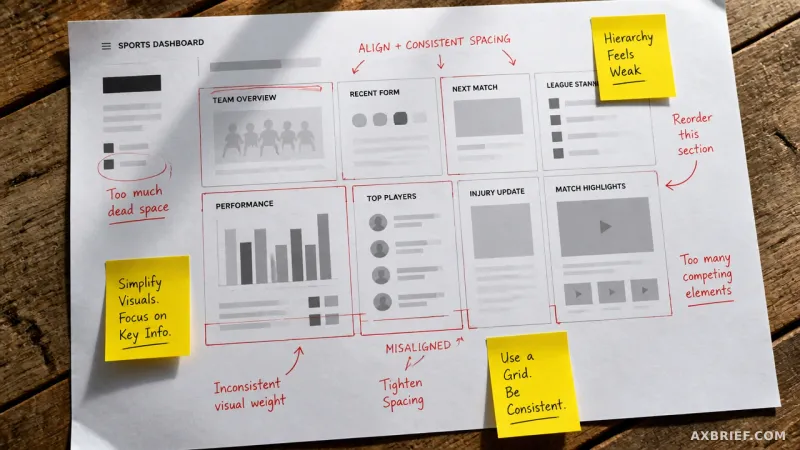
Anthropic is attempting to eliminate this friction by transforming Claude Design from a creative sandbox into a systemic enforcement tool. The latest update introduces the ability to import external design systems directly into the environment. Users can now pull their established design languages from GitHub repositories, upload specific design files, or import them manually. Once these systems are ingested, Claude Design does not simply use them as references; it uses them as a set of hard constraints. The AI now generates components based on these imported systems and runs an automated verification process to ensure the output aligns perfectly with the established rules, correcting any deviations in real time.
For enterprise environments, Anthropic has introduced a dedicated Admin role to prevent the fragmentation that often occurs in large teams. Administrators can now approve standard systems and restrict the editing capabilities of individual users. This ensures that every AI-generated asset adheres to the corporate brand guidelines, effectively turning the AI into a brand guardian that prevents the proliferation of non-compliant styles.
This systemic approach extends deep into the developer's workflow through a bidirectional integration with Claude Code. By executing the `/design-sync` command in the terminal, developers can pull the design system from their local codebase directly into Claude Design. Conversely, the `/design` command allows users to create, edit, and synchronize design projects without ever leaving their development environment. To support this increased utility, Anthropic has overhauled its resource management. Token consumption is no longer handled via separate quotas; instead, users now share a unified limit across Chat, Claude Cowork, and Claude Code. This shift is paired with a reduction in average token consumption per turn and a lower error rate, which minimizes the need for costly regenerations.
Solving the Lossy Translation Problem
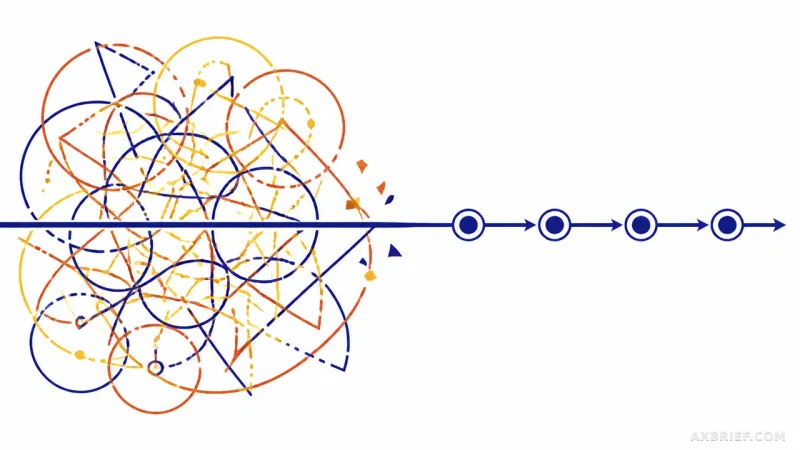
What makes this update significant is the shift from a generative approach to a compliance-based approach. Previous iterations of AI design tools operated on a blank canvas model, where the AI attempted to guess the desired style based on a prompt. This often led to inconsistent results that required extensive manual tweaking. Anthropic has replaced this with a Compliance Layer. The pipeline now follows a strict logic: the system takes design system components—such as buttons, typography, color tokens, and spacing rules—as input, processes them through a verification and auto-correction engine, and produces a brand-compliant asset as the output.
This architecture directly addresses the problem of lossy translation. Traditional tools like Figma's Dev Mode or Zeplin act as intermediaries that provide a specification for a human to implement. In contrast, Claude Design and Claude Code share the same underlying AI intelligence and the same component library. When a developer uses `/design-sync`, the actual local components become the starting point for the prototype. When a design is finalized, it is passed to Claude Code as a structural reality rather than a visual suggestion, removing the need for screenshots or manual reconstruction.
Furthermore, Anthropic has recognized that the high token cost of generative design—which must simultaneously calculate layout, typography, and responsiveness—can be a barrier to productivity. To mitigate this, they have introduced a direct editor that supports dragging, resizing, and alignment. By allowing users to make minor adjustments through a UI tool rather than a model prompt, the system reduces the total token drain. This acknowledges a critical reality in AI development: the most efficient way to use a model is to know when to stop prompting it and start editing manually.
This shift in tooling also redefines the value of the individual contributor. After analyzing approximately 400,000 Claude Code sessions, Anthropic found that domain expertise is a more significant driver of success than raw coding proficiency. Because designers can now move fluidly between visual prototyping and code implementation via `/design` and `/design-sync`, the ability to solve design problems becomes more valuable than the ability to write the syntax to implement them. The technical barrier to entry is lowering, but the requirement for high-level architectural thinking is increasing.
However, the economic reality of these tools remains a challenge for those on the Pro plan. The architectural complexity of generative design means that token consumption remains inherently high. Some early users reported consuming 80% of their weekly limit within just 25 minutes of intensive work. While shared quotas and efficiency improvements help, the iterative nature of complex layout design means that high-frequency users will likely find the Team or Enterprise plans necessary to avoid hitting usage ceilings.
The boundary between the design file and the production codebase is no longer a wall, but a permeable membrane.