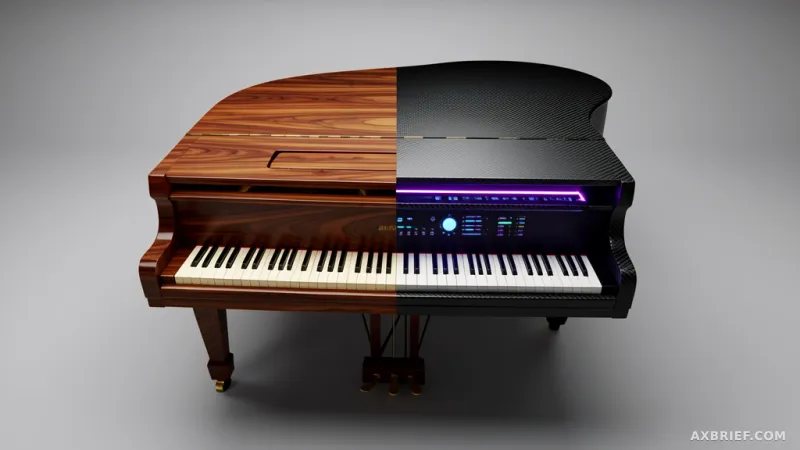
For the past year, creating music with artificial intelligence has largely felt like playing a high-stakes lottery. A producer enters a prompt like sad jazz with a melancholic trumpet, hits generate, and hopes the model captures the right mood. If the result is mostly correct but fails in the final thirty seconds, the only real solution is to generate a dozen more versions and hope for a better roll of the dice. The process is monolithic; once the AI commits to a style, it stays in that lane until the track ends. To achieve a complex arrangement with shifting moods, creators are forced to generate fragmented clips and manually stitch them together in a digital audio workstation, treating the AI as a sample generator rather than a composer.
The Architecture of Fluidity and Precision
ElevenLabs has attempted to break this monolithic cycle with the release of Music v2. The core breakthrough is the ability to execute abrupt, natural genre transitions within a single continuous track. In a demonstration of this capability, the model can pivot from the sweeping, dramatic vocals of an opera to the distorted aggression of heavy metal without a jarring break in the audio signal. This is made possible because Music v2 treats the time axis of a song as a dynamic map, allowing the system to shift style parameters at specific timestamps while maintaining the underlying coherence of the piece.
This control extends beyond mere genre hops. The model maintains high fidelity in complex vocal deliveries, such as rapid-fire rap, where lyrics and pronunciation remain crisp and consistent regardless of the tempo or style shift. Furthermore, ElevenLabs has integrated the ability to layer non-musical auditory elements, such as the sound of applause or a door closing, directly into the composition. This transforms the AI from a simple melody generator into a tool capable of producing fully realized sonic environments.
Perhaps the most significant shift for professional workflows is the introduction of audio inpainting. Rather than regenerating an entire song because of a few off-key notes or a weird lyrical inflection, users can now select a specific segment of a few seconds and re-prompt only that section. This mirrors the inpainting tools found in AI image editors, where a user can change a specific object in a photo without altering the rest of the image. By isolating the edit, creators can iteratively polish a track toward commercial quality without losing the elements they already love.
To further move away from the lottery system, Music v2 supports a modular assembly process. Instead of generating a full song in one go, users can design a track piece by piece, creating separate sections for the intro, verse, and chorus. The system ensures that the waveform at the end of one section aligns with the energy and frequency of the next, allowing these disparate blocks to be fused into a single, organic flow. This modularity mimics the traditional songwriting process, where a composer builds a structure measure by measure rather than hoping a single prompt captures a three-minute narrative.
The Legal Moat and the Battle for the Production Pipeline
While the technical leap is impressive, the strategic positioning of Music v2 reveals a deeper conflict within the AI music industry. The current landscape is a battlefield between giants like Google and nimble startups like Suno and Udio. Google has recently showcased Flow Music, a tool designed to transform existing songs into different styles and automatically generate accompanying music videos. Google's strategy is to consolidate the entire production pipeline—audio, visual, and editing—into a single ecosystem to capture the professional market.
However, the biggest threat to AI music is not technical, but legal. Suno and Udio are currently embroiled in massive legal battles with major record labels over the unauthorized use of copyrighted data for training. For a corporate marketing team, using an AI-generated track is a gamble; a hit song could lead to a devastating copyright infringement lawsuit. ElevenLabs has countered this risk by centering its training strategy on licensed data. By paying for the rights to the music used in its training sets, ElevenLabs has built a legal moat that allows its users to utilize generated content for commercial purposes with significantly lower risk.
This focus on enterprise safety is integrated into a broader product ecosystem. Branding teams can now use ElevenCreative to generate background music that aligns with specific brand identities, while independent creators can refine their work on the ElevenMusic platform. The roadmap culminates in the upcoming release of the ElevenAPI, which will allow these music generation capabilities to be embedded directly into third-party video editing software or internal corporate applications. By moving the engine into the tools that professionals already use, ElevenLabs is positioning itself as the infrastructure of AI audio rather than just another standalone website.
As the boundaries between genres blur, the role of the creator is shifting from that of a prompt-engineer to that of a director. Music v2 proves that the value of AI music lies not in the ability to generate a random song, but in the ability to precisely manipulate a sonic vision. The genre of a song is no longer a fixed constraint defined at the start of a prompt, but a fluid variable that can be toggled in real-time to serve the emotional arc of the story.