Warehouse managers have long dealt with a frustrating paradox in automation. They can deploy a robot that is world-class at sorting rigid boxes, but that same machine becomes a liability the moment the product line shifts to soft textiles or fragile glassware. For years, the industry has chased the dream of the general-purpose humanoid—machines that look like us and can theoretically do everything—yet these designs often remain trapped in high-cost research labs or limited by a rigid physical form that cannot adapt to the gritty, shifting needs of a real-world loading dock.
The Architecture of Modular Automation
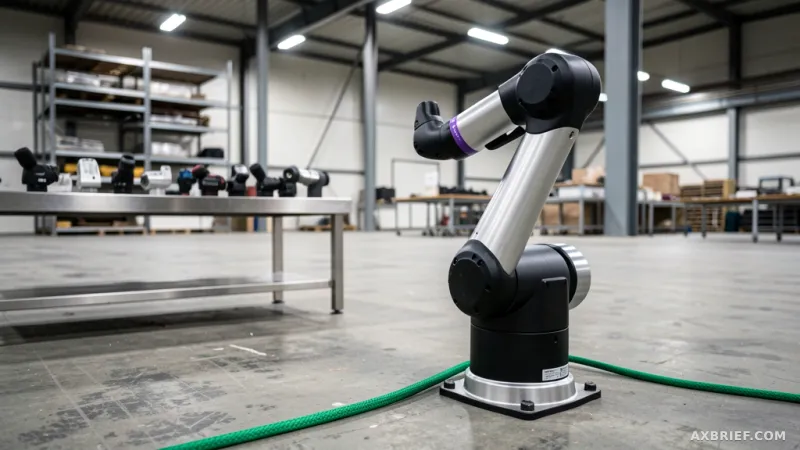
Barcelona-based AI robotics startup Theker is challenging this rigidity with a fundamental shift in hardware philosophy. Rather than building a fixed-form robot, Theker has developed a reconfigurable system where arms, hands, and the overall chassis can be swapped or adjusted based on the specific nature of the task. In a package sorting environment, the robot utilizes a configuration optimized for grip and speed. When the workflow shifts to clothing packaging or the handling of bottles and cans, the hardware is swapped or resized to match the physical requirements of the object. This approach eliminates the need for companies to purchase entirely new robotic fleets for every new process, replacing capital-intensive hardware replacement with agile configuration changes.
This technical flexibility has triggered a massive response from the capital markets. Theker recently secured $85 million in a Series A funding round, marking the largest Series A investment in the history of European robotics. The round was led by the US-based venture capital firm CRV, but the composition of the other investors reveals a strategic alignment across diverse industries. Samsung and Aglaé Ventures—the investment vehicle for LVMH Chairman Bernard Arnault—both participated in the round. The presence of a global electronics giant and a luxury goods conglomerate suggests that the demand for modular robotics extends from high-tech manufacturing to the precise, high-touch requirements of the luxury retail sector.
Beyond the Innovation Lab Trap
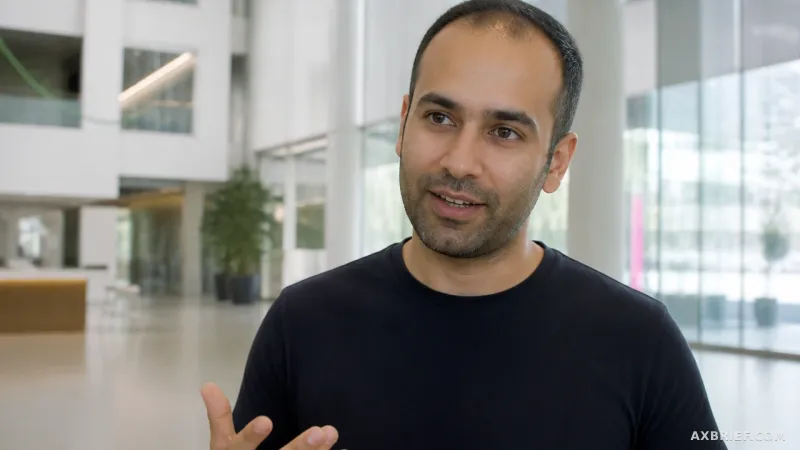
While many robotics firms spend years in the pilot phase, Theker is executing a commercial strategy designed to bypass the corporate innovation lab entirely. Co-founder Jiaqiang Ye Zhu has explicitly steered the company away from the typical cycle of endless proofs-of-concept. Instead of pitching to internal innovation departments, Theker targets the operational leaders—the logistics and operations managers who hold the budgets and face the daily pressures of throughput and efficiency. By contracting directly with the teams responsible for actual transactions and decision-making, Theker shortens the timeline from deployment to revenue.
To bridge the gap between technical claims and operational trust, the company operates a physical showroom in the center of Barcelona. This space serves as a living laboratory where potential clients can witness the hardware swaps in real-time, proving that reconfigurability is a functional reality rather than a theoretical roadmap. The company intends to replicate this model by opening additional showrooms across Europe, the United States, and Asia to lower the barrier to entry for global clients.
This strategy is already yielding results in the retail sector. Inditex, the parent company of Zara, joined as an early supporter, providing a critical testing ground for the robots in the fast-paced world of apparel logistics. However, the long-term trajectory for Theker extends far beyond clothing. The company is positioning its modular framework as a precursor to entering heavy industrial manufacturing, where the complexity of manual labor is higher and the environments are significantly more punishing. The goal is to take the flexibility proven in retail and scale it to the most demanding sectors of global industry.
The most significant strategic pivot, however, lies in the relationship between Theker and its investors. Samsung is not merely providing capital; the two entities are currently engaged in deep discussions to evolve their partnership. Theker is pursuing a tripartite relationship where Samsung acts as an investor, a customer, and a hardware supplier simultaneously. This integration provides the startup with an immediate revenue stream while granting it access to the rigorous quality standards and supply chain scale of one of the world's largest manufacturers. By embedding itself into the ecosystem of a global leader, Theker transforms from a standalone vendor into a critical component of a larger industrial infrastructure.
While the industry continues to marvel at the balance and aesthetics of fixed-form humanoids, the real battle for the factory floor is shifting toward adaptability. Theker is betting that the winner of the robotics race will not be the machine that looks most like a human, but the one that can change its shape to fit the job.