The hesitation is familiar to anyone handling proprietary code or sensitive corporate strategy. You hover the cursor over the send button of a cloud-based LLM, wondering exactly where that prompt travels and whether your trade secrets are currently becoming training data for the next version of a frontier model. This systemic anxiety has turned data leakage from a theoretical risk into a primary bottleneck for enterprise AI adoption. The industry is now witnessing a quiet but aggressive pivot toward local AI, where the goal is not just efficiency, but the total elimination of the external server from the equation.
The Hardware Bridge to Private Intelligence
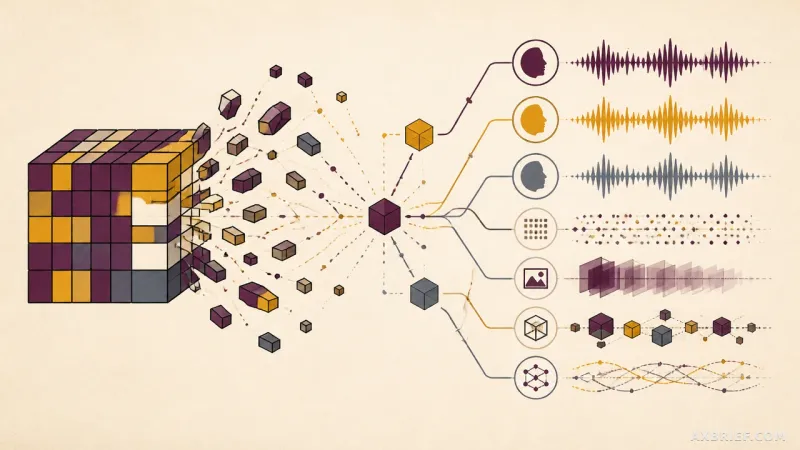
Local AI transforms the LLM from a remote service into a closed-loop system where data never leaves the physical confines of the machine. The technical feasibility of this shift rests on quantization, a process that intentionally reduces the precision of a model's weights to shrink its overall footprint. By compressing these weights, developers can fit models that once required massive server farms into the memory of a consumer-grade workstation. This compression is the engine driving the democratization of local LLMs, moving the point of execution from the cloud to the desk.
However, the actual performance of a local model is not governed by the raw clock speed of the CPU, but by the availability and speed of VRAM or unified memory. VRAM acts as the primary workspace where the model is loaded; if the model size exceeds the available VRAM, the system either fails to launch or falls back to system RAM, resulting in a catastrophic drop in inference speed. This creates a hard physical limit on intelligence. For instance, the Qwen model family has gained significant traction by offering a 4billion parameter version that balances cognitive capability with a lightweight footprint, making it accessible for users with modest hardware. Similarly, DeepSeek has optimized its architecture to ensure high utility within the constraints of local execution.
From Rented Intelligence to Digital Sovereignty
This shift represents a fundamental reversal in how we consume artificial intelligence. For the past few years, the dominant paradigm has been rented intelligence, where users pay a monthly subscription for API access to a black-box model. In this model, the provider controls the pricing, the censorship filters, and the availability of the service. Local AI replaces this lease with ownership. As Tech With Tim defines it, local AI is simply a model file that's sitting on your computer and a program that runs it.
When the model is a file on a local drive, the power dynamic shifts back to the user. There are no API outages, no sudden price hikes per million tokens, and no risk of a provider changing the model's behavior overnight through a silent update. This is the essence of digital sovereignty. David Ondrej notes that you're better off controlling this thing and using it on your own machine. By owning the weights and the hardware, the user ensures that their AI pipeline is immune to the whims of a corporate boardroom.
This creates a new hierarchy of AI capability based on physical assets. In the cloud era, everyone had access to the same frontier model regardless of their hardware. In the local era, the quality of your offline intelligence is directly proportional to your VRAM capacity. A user with a high-end GPU can run more sophisticated, larger-parameter models, while those with limited memory must rely on smaller, quantized versions like Qwen 4B. The competitive edge in AI is shifting from who has the best subscription to who owns the most capable hardware.
Ultimately, the transition to local AI proves that the future of privacy is not found in better terms of service agreements, but in the physical ownership of the compute.