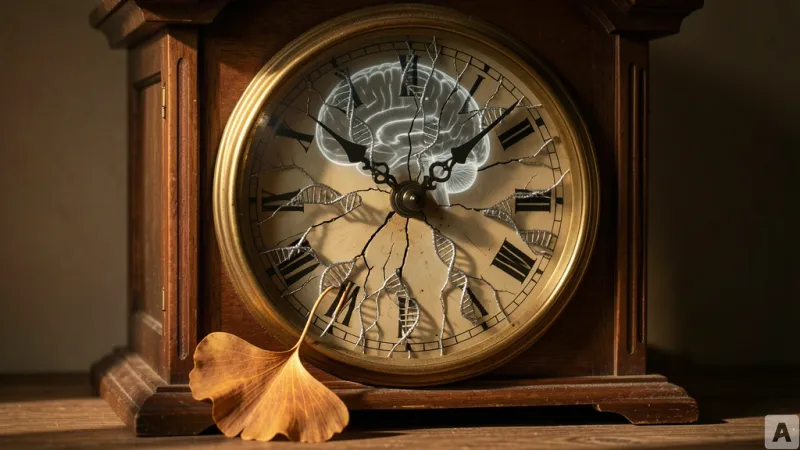
Every morning you glance in the mirror and wonder how old you really feel. But your cells are running on a different calendar than the one on your wall. This week on 'The Peter Attia Drive,' longevity researcher and physician Peter Attia dissected the science behind aging clocks — tools that claim to measure the gap between chronological age and biological age — and the gap between promise and proof is wider than most people realize.
What Aging Clocks Actually Measure: DNA Methylation and Biological Age
The core mechanism is DNA methylation, a chemical tag attached to DNA that regulates gene expression. These tags shift in predictable patterns as we age, and aging clocks read those patterns to estimate biological age — how old your cells and tissues really are. Attia pointed out that chronological age itself is already a prediction model: "The insurance industry has used age to predict mortality for hundreds of years." The real question is whether these new clocks outperform that century-old baseline.
One randomized controlled trial tested how simple lifestyle interventions — diet, exercise, sleep — affected multiple aging clock scores. Another study used brain MRI to measure aging rate and linked it to dementia risk and mortality. The data is real, but the interpretation is still slippery. Attia noted that drug trials are straightforward: give a pill, measure an outcome. Lifestyle trials are far messier. Improving a clock score by 10 percent does not mean you will live 10 percent longer. No one can guarantee that yet.
What Changed: From Blood Tests to Genetic Precision
A decade ago, doctors estimated health age using blood pressure and cholesterol. Now DNA methylation patterns offer a far more granular "clock." Attia called these tools "the most interesting and popular shortcut" in longevity research. But the marketing has run ahead of the science. Companies sell aging clock kits as "the latest and greatest way to track your health," without evidence that an improved clock score translates to extended lifespan or disease prevention.
The tension is clear: the tools are real, the biology is sound, but the clinical endpoint is missing. Attia emphasized that the ultimate question is whether improving a clock score leads to actual clinical outcomes — longer life, fewer diseases, better function. Right now, the answer is: we don't know.
The Gap Developers Should Watch
For now, aging clocks remain promising lab tools, not consumer health apps you can act on at home. Several commercial kits are already on the market — myDNAge, GlycanAge — but standardized guidance on how to interpret and act on the results does not exist. Researchers believe these clocks could become central to personalized longevity strategies in the future, but today they are closer to "interesting reference data" than actionable medical advice.
Attia's bottom line is sharp: the clock is fascinating, but the hands don't move on command.
If aging clocks can one day tell us more than a calendar can, the harder question is what we would do with that extra time.