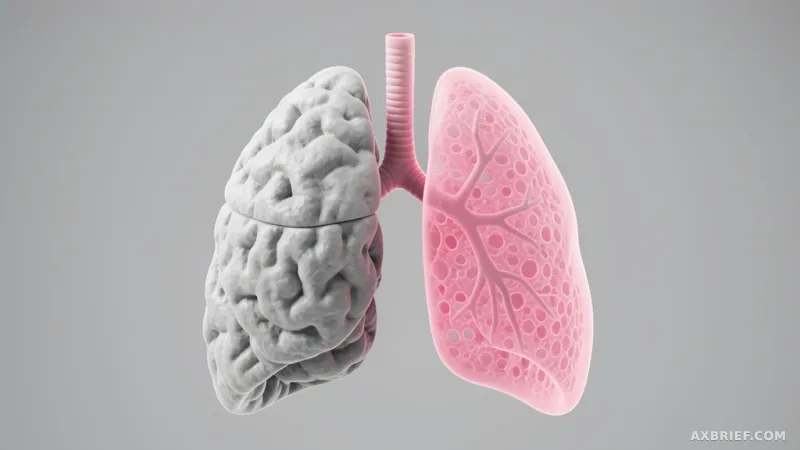
For patients living with idiopathic pulmonary fibrosis, every breath is a calculated struggle against a body that is slowly turning its own lungs into stone. The diagnosis usually triggers a countdown, with an average survival window of only three to five years. For decades, the medical community has operated under a grim consensus: you can slow the descent, but you cannot climb back up. Current pharmacological interventions act as a brake, delaying the inevitable hardening of lung tissue, but they possess no mechanism to dissolve the scars already etched into the organ. Even the most promising recent alternatives, such as senolytic therapies designed to clear out aged cells, remain trapped in early safety trials, leaving a void where a curative treatment should be.
The Genetic Drivers of Pulmonary Scarring
The biological machinery of idiopathic pulmonary fibrosis (IPF) centers on the lung fibroblast, the cell responsible for creating connective tissue. In a healthy lung, these cells maintain structure; in a fibrotic lung, they become hyperactive, churning out excessive collagen that transforms flexible air sacs into rigid scars. By analyzing the gene expression data of lung tissues and cells from IPF patients, researchers identified a critical anomaly: the abnormal overexpression of ID1 and ID3 proteins. These proteins do not act in isolation but function as master regulators of the cell cycle, specifically hijacking the MEK/ERK signaling pathway. This protein chain reaction is the primary engine for cell growth and differentiation, and when ID1 and ID3 are overexpressed, this engine runs unchecked, accelerating the production of scar tissue. The detailed findings of this molecular mapping are documented via EurekAlert.
From Slowing Progression to Reversing Damage
The fundamental shift in this research lies in the transition from symptom management to genetic intervention. Traditional therapies treat the fibrosis as an unstoppable tide that can only be dampened, but the targeting of ID1 and ID3 treats the fibrosis as a reversible biological state. By employing a dual-pronged strategy that combines small molecule drugs—chemically synthesized compounds designed to fit into specific protein pockets—with targeted gene therapy, the research team successfully suppressed the expression of these two proteins. The result was not merely a plateau in disease progression, but a measurable alleviation of existing fibrotic symptoms. This suggests that the scarring process is not a one-way street; by silencing the MEK/ERK-driven signals that maintain the fibroblast's active state, the lungs may regain the capacity to recover lost function. This causal link between protein inhibition and tissue restoration transforms the clinical goal from survival extension to actual structural recovery.
This strategic inhibition of ID1 and ID3 proteins marks the beginning of a transition toward regenerative respiratory medicine.