A neurologist reviews a series of brain scans and sees a victory on paper. The amyloid plaques—those sticky, protein clumps that have long been the primary villains in the story of Alzheimer's—are gone. The drug worked exactly as intended, clearing the cellular debris from the patient's brain. Yet, the patient still cannot remember their spouse's name, and their cognitive decline continues its steady, relentless march. This clinical paradox defines the current crisis in dementia research: we are successfully cleaning the brain, but we are not saving the mind.
The Architecture of a $6.2 Million Genetic Audit
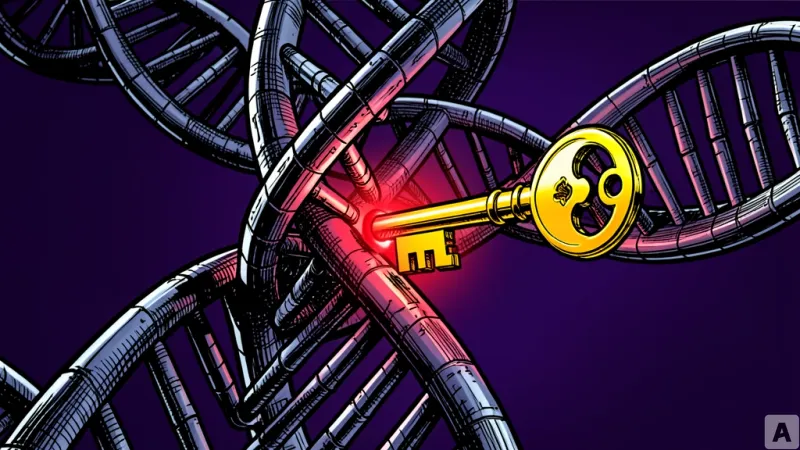
To break this deadlock, the National Institute on Aging has committed $6.2 million to a five-year research initiative designed to rewrite the playbook for drug discovery. The project, led by a research team at Case Western Reserve University, moves the search for a cure from the visible pathology of the brain to the invisible instructions of the genome. Rather than looking at the damage already done, the team is using artificial intelligence to re-analyze the genetic drivers that make a brain susceptible to the disease in the first place.
The scale of the data is immense. The researchers are targeting more than 1,800 genes already suspected of having a link to Alzheimer's. To fuel the AI models, the team is tapping into massive, high-resolution datasets from the Alzheimer’s Disease Sequencing Project and the Alzheimer’s Disease Genetics Consortium. These are not narrow samples; they are comprehensive whole-genome datasets that span a vast array of ethnicities and ancestral backgrounds. By integrating this diverse genetic information, the team aims to identify universal targets that work across different populations, avoiding the pitfall of developing treatments that only benefit a specific demographic.
The intended output of this five-year sprint is a genetically validated list of drug targets. This list will serve as a precision map for pharmaceutical companies and clinicians, providing the exact coordinates needed to develop the next generation of therapeutic interventions.
From Amyloid Cleanup to Systemic Prevention
For decades, the pharmaceutical industry has been wedded to the amyloid hypothesis. The logic was intuitive: if amyloid plaques are the most visible sign of the disease, removing them should stop the progression. This hypothesis guided the development of the few Alzheimer's drugs that have received FDA approval. However, the reality of the clinic has proven far more complex. Removing the plaques often fails to halt the cognitive slide, and in some cases, the side effects outweigh the marginal benefits. The industry has spent billions chasing a symptom while the underlying cause remained untouched.
This new AI-driven approach represents a fundamental shift in perspective. Instead of asking what happens once the brain is already under stress, the researchers are asking what makes the brain vulnerable to that stress in the first place. Alzheimer's is not the result of a single broken gene or a lone protein malfunction; it is a systemic failure of a network involving genetics, environment, and the biological wear and tear of aging. For a human researcher, identifying a pattern across thousands of interacting genes is an impossible task. It is like trying to find a single typo across a library of ten thousand books while the books are all being rewritten in real-time.
AI excels here because it does not look for a single cause, but for correlations across massive dimensions. By cross-referencing the 1,800 genes against diverse patient outcomes, the AI can spot microscopic genetic variations that human analysts would overlook. This transforms the medical model from a reactive one—treating the disease after the plaques appear—to a proactive one, where the risk is predicted and mitigated long before the first symptom manifests. It is important to note that the AI is not acting as a standalone doctor, but as a filter that narrows the field of uncertainty, allowing human scientists to ask the right questions faster.
This shift also highlights a broader transition in medical science: the move from extending lifespan to extending healthspan. Increasing the number of years a person lives is a hollow victory if those years are spent in cognitive decline. By targeting the genetic networks that govern brain aging, this project seeks to close the gap between how long we live and how long we remain functional. It treats the brain not as a collection of parts to be cleaned, but as a complex system to be stabilized.
The battle against dementia is moving from the visible debris of the brain to the invisible code that governs it.