In a modern cardiac operating room, a surgeon often finds themselves trapped in a cognitive loop. They glance at a two-dimensional X-ray on a monitor, then shift their gaze to a three-dimensional CT scan taken days prior, attempting to mentally map a static image onto a beating, shifting organ. This gap between the digital blueprint and the physical reality is currently bridged by the surgeon's intuition and years of experience. However, in the high-stakes world of cell therapy, where a few millimeters of deviation can determine whether a treatment succeeds or fails, relying on human intuition is a precarious variable.
The Architecture of Heart3D
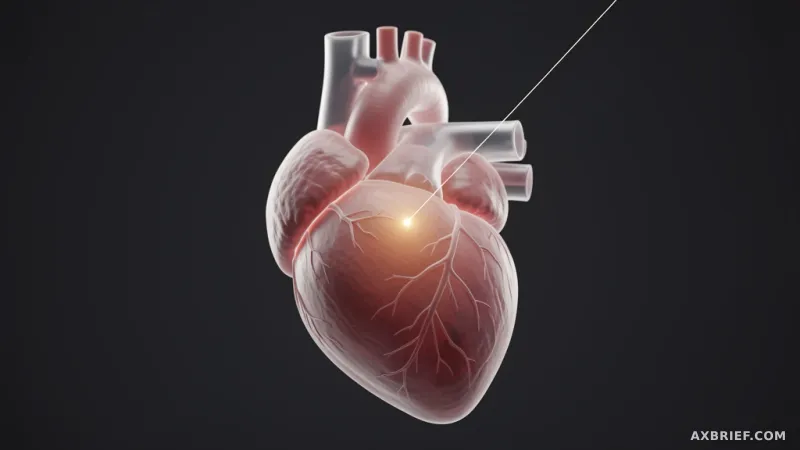
BioCardia has moved to formalize a technical solution to this problem, securing a patent in Japan titled Target area selection, entry and update through automatic remote image annotation. The centerpiece of this patent is Heart3D, a fusion imaging software designed to transform how clinicians approach cardiac interventions. The software functions by overlaying pre-operative 3D CT or MRI images onto two orthogonal 2D images in real time. This process creates a comprehensive 3D model that is displayed within or adjacent to the sterile field, providing a live navigational guide for the delivery system and a precise record of the injection sites.
Heart3D is not a standalone product but a critical component of a broader therapeutic stack. It is specifically engineered to support CardiAMP, BioCardia's cell therapy that utilizes a patient's own cells, and Helix, the specialized system used to inject those cells into the heart muscle. The development of this software is being carried out in collaboration with CART-Tech, a partner specializing in cell therapy. On the regulatory front, BioCardia has completed positive consultations with the Pharmaceuticals and Medical Devices Agency (PMDA) in Japan and is currently preparing its regulatory submissions for the Japanese market. Parallel discussions are also underway regarding the approval pathway for the United States. At present, Heart3D is available exclusively for pre-clinical research, and the company is actively seeking partnerships for further pre-clinical studies.
From Mental Mapping to Digital Precision
For decades, the standard for cardiac cell injection has been a process of mental reconstruction. Surgeons took a high-resolution static image and attempted to project it onto the patient's anatomy during the procedure. Heart3D fundamentally alters this workflow by projecting the high-resolution 3D data directly into the surgeon's field of vision, fused with the live 2D feed. The surgeon no longer needs to calculate the discrepancy between the image and the organ; they simply follow the digital guide to ensure the cells reach the exact target tissue. This shift represents a transition from a craft-based approach to a data-driven one, significantly increasing the accuracy of cell delivery and, by extension, the probability of therapeutic success.
From a technical perspective, the breakthrough lies in the automatic annotation feature. By aligning and updating medical images of different dimensions in real time, the system can account for the movement and positional shifts of the heart during a procedure. This highlights a broader trend in the medical device industry where software is becoming the primary determinant of hardware performance. By pairing the Helix injection system with the Heart3D navigation suite, BioCardia has effectively built a vertically integrated ecosystem consisting of the therapy, the delivery tool, and the guiding software.
This strategy suggests an ambition that goes beyond the development of a single drug. While competitors focus primarily on the biological efficacy of cell therapies, BioCardia is positioning itself to own the standard operating procedure for the entire intervention. By securing patents in Japan first, the company is leveraging a regulatory environment that is traditionally open to regenerative medicine to build a robust clinical track record. This creates a strategic moat; when the company eventually expands into the U.S. market, it will not be presenting a mere pharmaceutical product, but a validated, end-to-end clinical platform.
BioCardia is shifting the competitive landscape from the pursuit of a better molecule to the ownership of the essential infrastructure required to deliver it.