The film industry is currently witnessing a strange duality where the digital ghost of Val Kilmer can deliver lines and virtual entities like Tilly Norwood can command a screen. For independent filmmakers and tech-forward studios, these tools represent a liberation from the constraints of physical presence and aging. Yet, for a growing number of creators, the flood of high-fidelity video generation models feels less like a tool and more like an erasure. The tension has reached a breaking point where the industry must decide if a performance is defined by the image on the screen or the consciousness behind it.
The Academy's Human-Centric Mandate
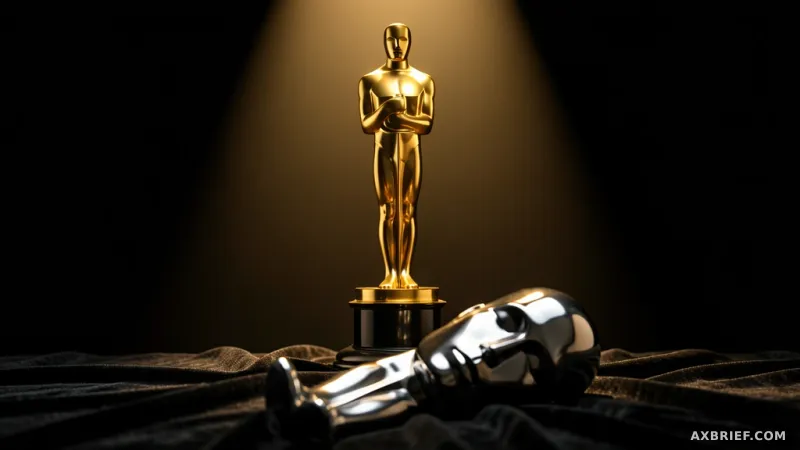
The Academy of Motion Picture Arts and Sciences, the governing body behind the Oscars, moved to resolve this tension on Friday by announcing a strict set of new regulations regarding generative AI. The core of the update is a clear boundary: AI-generated content is no longer a path to an Oscar. To be eligible for nomination, acting performances must be performed by humans and documented in the legal credits of the film. Furthermore, the Academy now requires that any performance be carried out with the explicit consent of the human actor involved.
This restriction extends beyond the screen and into the writing room. The Academy has mandated that screenplays must be human-authored to qualify for awards. This is not a mere suggestion but a formal requirement that the Academy intends to police. The organization has explicitly reserved the right to request additional information and documentation from studios to verify the AI usage history of a film and to prove that the script was written by a human being. By tying eligibility to legal credits and verifiable authorship, the Academy is transforming the Oscar nomination process into a verification audit of human labor.
The Collision of Technical Efficiency and Artistic Authority
For years, the industry operated in a gray area where AI-assisted polishing, digital touch-ups, and algorithmic writing aids were treated as invisible tools of the trade. These technologies were viewed as extensions of the editor's or writer's intent, much like a spell-checker or a color-grading suite. However, the shift from assistive AI to generative AI has collapsed that distinction. The Academy's new rules replace this ambiguity with a rigid administrative standard, effectively declaring that the process of creation is as important as the final product.
This policy shift is a direct institutional response to the existential dread that fueled the 2023 strikes by actors and writers. During those protests, the central fear was not that AI would be used to help humans, but that it would be used to replace them entirely. By codifying human labor as a prerequisite for the industry's highest honor, the Academy is attempting to protect the economic and social value of human creativity. This trend is not isolated to cinema; the publishing world has already seen novels recalled after the discovery of AI-generated prose, and various literary organizations have begun excluding AI-assisted works from their competitions to preserve the exclusive status of human authorship.
For developers and studio executives, this creates a new paradigm of risk management. AI is no longer just a way to cut costs; it is now a liability for those seeking prestige. We are likely entering an era of bifurcated production strategies. Studios may lean heavily into AI for low-budget, high-volume content where efficiency is the primary metric of success. Conversely, for premium, award-contending projects, they will likely maintain strictly human-centric pipelines to ensure they remain eligible for the cultural capital that an Oscar provides. The trophy is no longer just a reward for the best film, but a certification of human effort.
Artistic authority has shifted its metric from technical perfection to the verifiable proof of human labor.