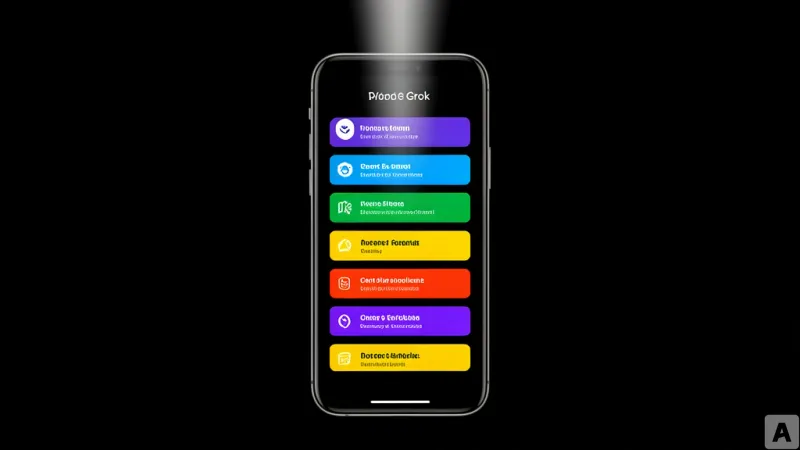
Every morning, developers opening X are finding their primary information stream undergoing a fundamental structural shift. For years, the platform relied on a binary choice between the algorithmic "For You" feed and a chronological "Following" list, but a new update is now allowing users to bypass these defaults entirely. By integrating xAI’s Grok model directly into the interface, the platform is moving toward a system where the feed is no longer just a collection of posts, but an AI-curated interpretation of global discourse.
Grok-Powered Categorization Across 75 Topics
The core of this update is a new suite of custom timelines covering more than 75 distinct subjects. Unlike previous iterations of the platform that relied on rigid keyword matching or user-generated hashtags, this system utilizes Grok to analyze the semantic context of posts in real-time. The model processes the vast stream of incoming data, assigns relevant topic labels, and organizes them into dedicated feeds. Users can access this by tapping the plus (+) icon on the home tab, where they are permitted to select and pin up to 10 specific topics to their primary navigation bar. Currently, this functionality is rolling out to premium subscribers on iOS, with Android support slated for a future release. This transition arrives alongside the sunsetting of X Communities, signaling a strategic pivot from siloed, user-moderated groups toward a centralized, AI-driven information architecture.
Beyond Keyword Filtering to Semantic Context
The technical leap here lies in the transition from literal string matching to latent context awareness. Historically, finding niche technical information required precise search queries or following specific hashtags, both of which were prone to noise and spam. Because Grok interprets the underlying meaning of a post, it can surface relevant content even when the author has not explicitly tagged it with a specific keyword. This represents a deep integration between xAI’s large language models and the platform’s live data stream, effectively turning the entire network into a real-time training and inference environment. However, this shift is not purely functional; the integration of advertising slots within these AI-generated feeds suggests a broader strategy to increase ad inventory while maintaining the appearance of a curated experience. For the user, this creates a tension between the desire for high-signal, relevant content and the platform's need to monetize the attention economy through these new, highly targeted slots.
This evolution marks the end of the era where users were passive recipients of a black-box algorithm, moving instead toward an era of active, AI-assisted curation. While the initial categories—ranging from robotics and cryptography to general technology—are clearly designed to appeal to the developer community, the long-term reliability of these feeds remains an open question. As Grok continues to refine its understanding of complex topics, the platform’s ability to maintain neutrality while providing personalized, high-context feeds will determine whether this becomes a power tool for professionals or merely another layer of automated noise.