A Chief Information Security Officer at a global investment bank sits in a boardroom, facing a paradoxical mandate. The executive leadership demands the integration of Google's Gemini to maintain a competitive edge in risk analysis, yet the regulatory framework is absolute: not a single byte of proprietary data can leave the internal network. This is the air-gap wall, a physical and logical barrier that has historically rendered the most powerful Large Language Models useless for the world's most sensitive sectors. For years, the choice for defense, intelligence, and high-finance teams was a binary trade-off between the raw power of hyperscaler clouds and the safety of mediocre, locally hosted open-source models.
The Architecture of the On-Premises Gemini Appliance
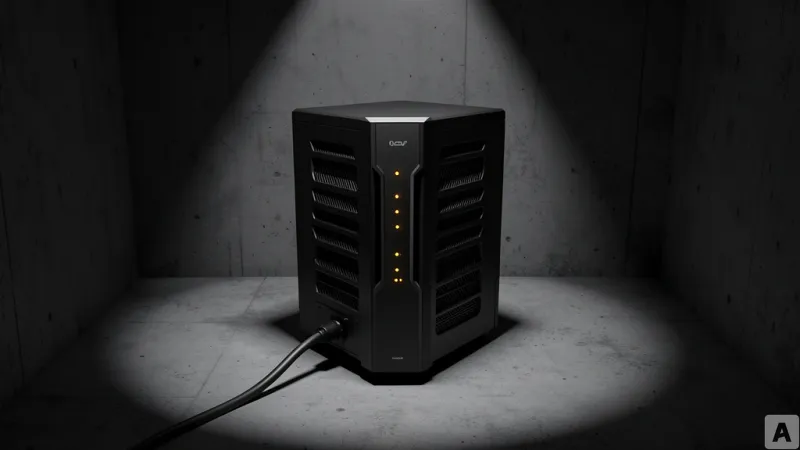
Google Cloud has moved to break this deadlock through an expanded partnership with Cirrascale Cloud Services. The result is a specialized deployment of Google Distributed Cloud, a solution designed to bring Google's cloud ecosystem into a customer's own physical data center. Unlike previous iterations of cloud extensions that relied on hybrid connectivity, this offering is delivered as a hardware appliance manufactured by Dell and certified by Google. Each unit is equipped with 8 Nvidia GPUs, providing the necessary compute density to run the full Gemini model without relying on external API calls.
This system is currently in a preview phase, with a full commercial release scheduled for June or July. According to Dave Drigger, CEO of Cirrascale, this is not a distilled or quantized version of the model designed for edge devices. It is the full-scale Gemini model, packaged into a physical chassis that supports Confidential Computing. This ensures that data remains encrypted not just at rest and in transit, but also while it is being processed in memory, effectively shielding the computation from the host environment itself. Organizations can deploy these servers within Cirrascale's managed facilities or their own secure bunkers, operating in a state of total isolation from the public internet and Google's primary cloud infrastructure.
The Volatile Memory Twist and Physical Sovereignty
While the hardware specifications are impressive, the true innovation lies in how Google handles the model weights. In a standard local deployment, model weights are stored on persistent storage, such as NVMe SSDs. This creates a massive security vulnerability: if a bad actor gains physical access to the server, they could potentially clone the weights and steal the intellectual property of the model. Google has countered this by ensuring the Gemini weights reside exclusively in volatile memory. The moment the power plug is pulled or the system is shut down, the model data evaporates instantly.
This design extends to the user experience through a strict session-based cache. Every input and output generated during a session is stored temporarily and automatically purged the moment the session ends. To prevent sophisticated physical attacks, the appliance includes a hardware-level kill switch. If the chassis is opened or the Confidential Computing environment is breached, the system triggers a self-locking mechanism. This breach leaves a permanent digital marker on the hardware, rendering the server a brick until it is physically returned to Dell, Google, or Cirrascale for factory resetting.
Even the update process has been reimagined to accommodate the most extreme security requirements. While most users will update via a secure private channel, Google provides a physical replacement path for environments where even a one-second connection to the outside world is forbidden. In these scenarios, the entire server is swapped out. The old unit is removed and wiped, and a new server pre-loaded with the latest model version is installed. This transforms the software update process into a logistics operation, solving the data sovereignty problem at the physical layer.
This shift signals a fundamental change in the AI arms race. The competition is no longer just about who has the highest benchmark score or the largest context window, but about who can most effectively cage their intelligence within a customer's four walls.