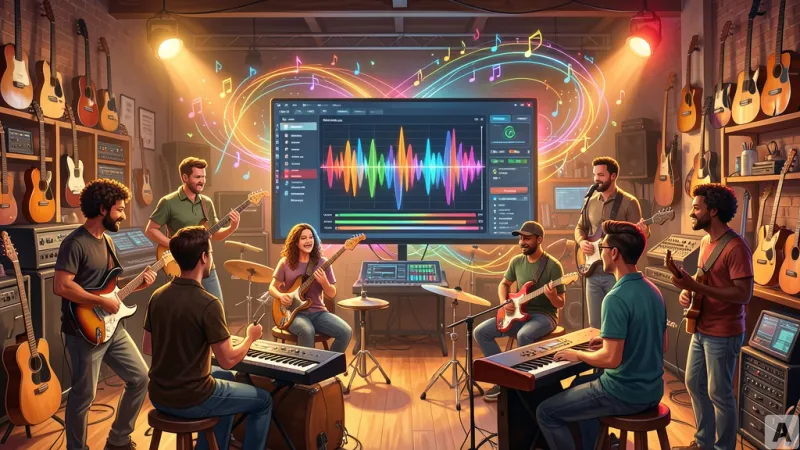
This week, the developer community is buzzing about GRAI, a promising new startup that has just secured $9 million in initial funding. The company is developing an app that aims to make music consumption more social through innovative AI technology. Rather than merely generating music, GRAI envisions a platform where users can remix existing tracks and share their creations with friends, marking a distinct shift from traditional AI music generation methods.
GRAI's Vision and Investment Background
Founded by a team from Belarus, GRAI's founders previously sold their video editing app VOCHI to Pinterest. They recognized that music remains one of the last major consumer categories that has not fully embraced a "creator-first" model. According to CEO Ilya Liasun, "Music discovery is broken, listening is passive, and there’s almost no social context." He emphasizes that AI will not eliminate artists and labels; instead, it presents an opportunity to create new ways for people to interact with music.
New Musical Experiences Through User Participation
GRAI targets Gen Z and Gen Alpha, demographics known for discovering music through friends, fandoms, and short-form content platforms like TikTok. The startup aims to provide users with ways to actively participate in music rather than just consume it. To achieve this, GRAI is developing its own taste and engagement graph, alongside a real-time audio system that allows users to modify original tracks while preserving their identity. Liasun states, "We want to work with artists and labels to ensure these activities are legitimate."
Sustainable Models Through Artist Collaboration
GRAI believes that as remixing becomes popular, users will have more opportunities to discover new artists and songs. Before launching the app, the company is engaging in discussions with music labels to establish a system where artists can choose whether to participate. Liasun emphasizes the principle of asking the owners first before integrating their work, although he has not disclosed any specific contracts that have been signed. GRAI is also keen on gathering consumer feedback through its initial app release to determine which features are most effective, welcoming even negative feedback.
GRAI's approach holds the potential to transform the music consumption paradigm. As this new platform emphasizes collaboration between users and artists, it will be interesting to see how it evolves.