Real-time voice translation is no longer a futuristic concept reserved for science fiction; it is becoming a critical productivity layer for the modern global enterprise. DeepL, a company that has spent years establishing itself as the gold standard for nuanced, context-aware text translation, is now aggressively expanding into the auditory space. By removing the friction of manual text entry and screen-sharing, DeepL aims to transform how international teams collaborate in an era where remote work is the default.
The Enterprise Pivot to Real-Time Audio
For years, the standard for cross-language communication in business has been a clunky mix of typing into translation apps and showing screens to colleagues. This process interrupts the natural flow of conversation and kills the momentum of high-stakes meetings. DeepL is solving this by integrating its translation engine directly into the tools where professional work actually happens. The new voice translation feature is designed for seamless use within Zoom and Microsoft Teams, allowing users to speak naturally while the system provides near-instant translated audio for their counterparts.
Beyond simple meeting integration, DeepL is targeting the enterprise market with a robust API. This allows companies to embed voice translation directly into their own proprietary software, such as customer support portals or internal communication hubs. One of the most significant advantages for corporate users is the ability to train the AI on specialized terminology. In industries like law, medicine, or high-tech engineering, a generic translation often fails because it does not understand company-specific jargon or technical nomenclature. DeepL allows organizations to upload their own glossaries, ensuring that a highly technical term in a German engineering meeting is translated with precision into English without losing its professional meaning.
To facilitate group dynamics, DeepL has introduced a QR-code based entry system. This allows multiple participants to join a translated conversation session instantly, making it viable for physical boardrooms where a mix of international delegates need to communicate without the presence of a human interpreter. This move signals a shift in DeepL's strategy from being a utility tool for individuals to becoming an essential infrastructure for global corporate operations.
Solving the Latency Gap and the Road to End-to-End AI
The primary enemy of real-time translation is latency. In a natural conversation, a pause of more than a few seconds creates an awkward silence that disrupts the psychological flow and can lead to misunderstandings. The challenge for any AI developer is finding the perfect equilibrium between translation accuracy and processing speed. If the system is too fast, it may miss the context of the sentence; if it is too slow, the conversation becomes a series of disjointed fragments.
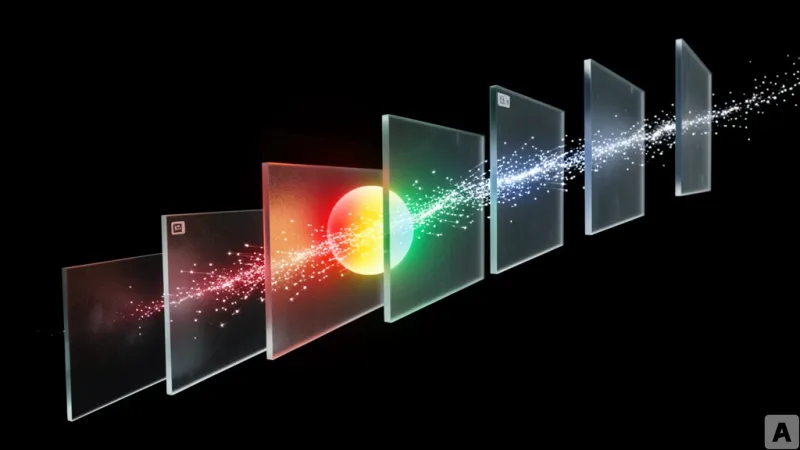
Currently, DeepL employs a three-stage pipeline to handle voice translation. First, the system utilizes speech-to-text technology to transcribe the spoken word into written language. Second, it passes that text through its industry-leading translation engine to convert it into the target language. Finally, it uses text-to-speech synthesis to read the translation aloud. While this method leverages DeepL's existing dominance in text translation, it inherently introduces a slight delay because the data must pass through three distinct processing layers.
DeepL acknowledges that this multi-step process is a stepping stone. The company is now working toward an end-to-end speech-to-speech model. In an end-to-end architecture, the AI does not convert voice to text as an intermediate step. Instead, it processes the acoustic signals of the source language and generates the acoustic signals of the target language in one fluid motion. This approach would theoretically eliminate the latency associated with transcription and synthesis, bringing the experience closer to a natural, human-to-human conversation. By removing the middleman of text, DeepL hopes to capture the subtle nuances of speech that are often lost in transcription.
Navigating the Competitive Voice AI Ecosystem
DeepL is entering a crowded field where several specialized players have already carved out niches. The competitive landscape is no longer just about who can translate a sentence correctly, but about who can preserve the human element of communication. For instance, Sanas focuses heavily on accent modification, helping customer service agents sound more natural to local callers to reduce friction in call centers. Meanwhile, Camb.AI specializes in high-fidelity voice synthesis and dubbing, focusing more on the cinematic and content-creation side of the market rather than live business meetings.
Another significant competitor is Palabra, which focuses on preserving the original speaker's tone and emotional inflection. The goal for Palabra is to ensure that if a speaker sounds urgent or empathetic, that emotion carries over into the translated voice. DeepL is taking a different approach by leaning into its core strength: linguistic accuracy. While other tools focus on the sound or the accent, DeepL is betting that in a professional environment, the precision of the message is the most valuable commodity.
The battle for the voice translation market is essentially a race to see who can best replicate the human experience of understanding. DeepL's strategy is to use its superior translation quality as a moat, betting that users will prioritize a perfectly translated technical requirement over a perfectly modulated tone of voice. As the company moves toward its end-to-end model, the gap between these specialized features and general translation may close, potentially positioning DeepL as the all-in-one solution for global voice communication.
As these technologies mature, the traditional language barrier is effectively dissolving. We are moving toward a world where the ability to speak a specific language is no longer a prerequisite for professional success or international collaboration. By integrating directly into the digital workspace and tackling the technical hurdles of latency, DeepL is not just translating words; it is redesigning the way the global workforce connects.