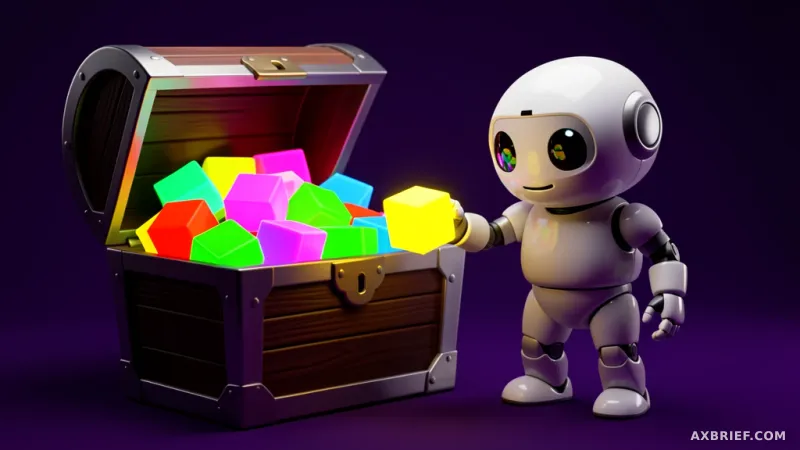
For decades, the barrier between a human and a functioning robot has been a wall of complex C++ libraries, proprietary SDKs, and prohibitively expensive hardware. While the smartphone revolutionized the digital world by abstracting technical complexity into a touch-screen interface, robotics remained a walled garden reserved for PhDs and industrial engineers. This week, that wall began to crumble as Hugging Face shifted the paradigm from programming a robot to simply installing an app.
The Hardware and Ecosystem of Reachy Mini
Hugging Face has officially launched a dedicated app store for the Reachy Mini, an open-source desktop robot first introduced in July 2025. The hardware is designed for accessibility, starting at a price point of $299 for the Reachy Mini Lite, which connects via USB to an external computer for processing. For users seeking autonomy, the Reachy Mini Wireless is available for $449, featuring an integrated Raspberry Pi CM 4 single-board computer that allows the robot to operate independently. The hardware suite is comprehensive for its size, equipped with a camera, speaker, and microphone to facilitate environmental awareness and interaction.
Market adoption has been aggressive. Since its launch, approximately 10,000 units have been sold, with a significant surge of 3,000 units moving in the last two weeks alone. This hardware momentum is supported by a burgeoning software ecosystem. The new app store currently hosts over 200 community-created applications, all of which are available for download free of charge. By combining affordable hardware with a free, community-driven software repository, Hugging Face is attempting to replicate the early growth trajectory of the mobile app economy within the realm of physical robotics.
From Manual Coding to AI-Driven Embodiment
The critical shift here is not the hardware itself, but the removal of the traditional robotics learning curve. Historically, making a robot perform a simple task required a deep understanding of firmware architecture and specific software development kits. Hugging Face has bypassed this friction by introducing ML Intern, an AI agent designed to translate natural language instructions directly into executable robot code. When a user provides a prompt—such as asking the robot to wave its hand during a morning greeting—ML Intern handles the heavy lifting. The agent writes the code, tests it against the robot's physical constraints to prevent hardware damage, and deploys the final package.
This system is intentionally model-agnostic, allowing developers to swap the underlying intelligence based on their specific needs. While ML Intern facilitates the translation, users can power their apps with a variety of high-end engines, including GPT-5.5, Claude Opus 4.6, Kimmy 2.6, Mini Max GM5, and Deep Sig V4 Pro. For applications requiring low-latency, fluid interaction, the platform supports integration with OpenAI Realtime and Gemini Live. This architectural choice transforms a process that previously took weeks of manual integration into a workflow that concludes in minutes.
Beyond the code, Hugging Face is solving the physical accessibility problem through a web-browser-based 3D simulator. This allows developers to build, test, and deploy applications in a virtual environment without owning a physical Reachy Mini. While GitHub serves as a repository for professional code, this app store functions as a populist platform where non-experts can fork existing behaviors and modify them for their own use.
This strategy is a calculated move to solve the most pressing bottleneck in robotics: the scarcity of high-quality training data. By turning thousands of desktop robots into active testbeds, Hugging Face is encouraging model creators to use Reachy Mini as a primary environment for testing robot control capabilities. The result is a massive, decentralized influx of robotics-specific data that will likely accelerate the development of embodied AI across the entire industry.
As standardized app ecosystems replace manual coding, the desktop robot is evolving from a novelty toy into the primary benchmark for the next generation of embodied AI.