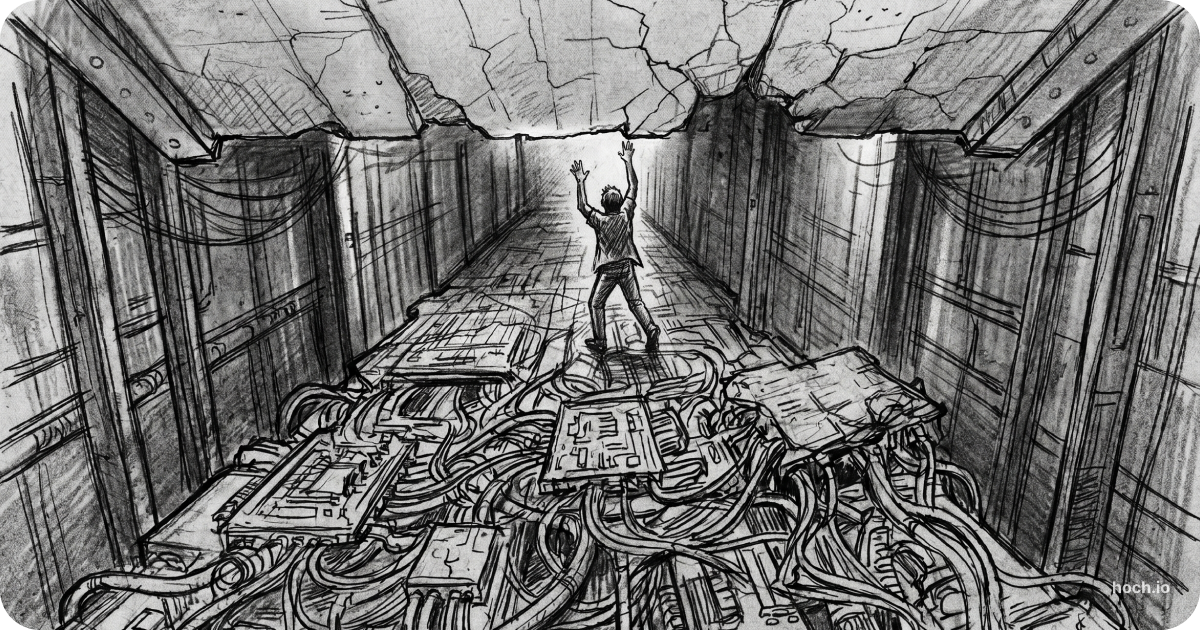
Every morning begins with a familiar ritual of anxiety for the modern software engineer. A quick scroll through social feeds reveals a new LLM benchmark, a disruptive framework, or a viral thread claiming that traditional coding is dead. This collective apprehension mirrors the mid-19th century when Paul Delaroche looked at the first cameras and predicted the end of painting. The fear is not merely about the tool, but about the erasure of the skill set that defines a professional identity. In an era where a prompt can generate a functioning API in seconds, the industry is grappling with a fundamental question of where the human engineer actually fits into the production pipeline.
The Rising Floor of Technical Competence
Choi Hong-chan, a Tech Lead Manager at Google and an educator training the next generation of music technologists at Stanford University, views this shift not as a ceiling collapsing, but as a floor rising. With over two decades of engineering leadership, Choi argues that AI is effectively automating the baseline of technical execution. We see this in the proliferation of prompt engineering and the adoption of the Model Context Protocol (MCP), which standardizes how AI models interface with external data. These tools act as temporary scaffolds, allowing developers to achieve results that previously required years of syntax mastery and boilerplate experience.
However, these scaffolds are transient. As models evolve, the specific art of prompt engineering or the manual configuration of context protocols will likely be absorbed into the model's native capabilities. The technical floor—the minimum level of competence required to produce a working result—is moving upward at an exponential rate. What was considered an intermediate skill five years ago is now a baseline capability provided by a chat interface. This shift forces a redistribution of value within the engineering role, moving the focus away from the act of implementation and toward the act of orchestration.
The Trap of Cognitive Debt and the Human Ceiling
The danger of a rising floor is the illusion of mastery. When AI provides a solution that works 99.9% of the time, the engineer is tempted to stop questioning the process. This creates a phenomenon known as cognitive debt, where a developer utilizes a technology or a code snippet without fully understanding its internal logic. While the immediate result is a faster delivery cycle, the long-term cost is a hollowed-out expertise. The engineer becomes a curator of black boxes, unable to debug the system when it inevitably fails. This is where the critical distinction between AI efficiency and human judgment emerges.
While AI excels at pattern optimization and rapid synthesis, it cannot assume ownership. The remaining 0.1% of errors—the edge cases, the architectural flaws, and the subtle logic gaps—are where the most catastrophic failures occur. The ability to detect that 0.1% error and the courage to take responsibility for the final approval is the new human ceiling. The competitive advantage has shifted from the ability to write code to the ability to critically analyze and validate it. This requires a transition from the solo trend-chaser, who spends their nights chasing fragmented updates on social media, to a T-shaped professional who combines deep specialized knowledge with a broad systemic perspective.
Rather than competing with AI in a race of speed, the modern engineer finds stability in collective intelligence. Moving from individual anxiety to team-based learning transforms the pressure of the AI race into a shared intellectual pursuit. The goal is no longer to be the fastest coder in the room, but to be the person who understands the implications of the code the AI produced.
Survival in the AI era depends on the relentless expansion of the human ceiling, ensuring that judgment and ownership remain the ultimate arbiters of technical value.