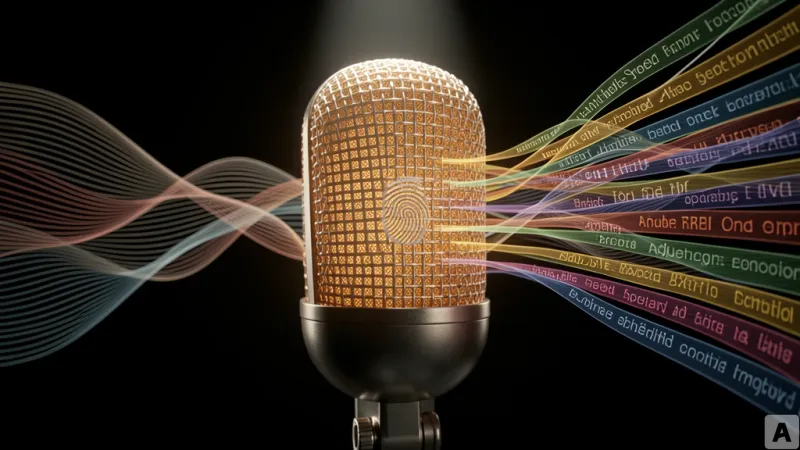
This week, developers logging into Google AI Studio's playground are feeling something unfamiliar: a quiet tension. It's not because the text-to-speech model reads aloud — it's because it now breathes, pauses, and stresses certain words like a human actor. For months, teams have been rewriting prompts dozens of times to scrub out the robotic monotone that plagues AI voice services. Now, they insert a single tag between words, and the output flips entirely. The community reaction is sharp: AI has crossed from narrator into voice actor territory.
Gemini 3.1 Flash TTS: Performance and Control Tools
Google has officially released Gemini 3.1 Flash TTS, a text-to-speech model that supports over 70 languages. On the Artificial Analysis TTS leaderboard, it holds an Elo score of 1,211. The model is available immediately in Google AI Studio, Vertex AI, and Google Vids. Artificial Analysis places the model in the most attractive quadrant of its cost-quality matrix, noting that it delivers high-fidelity voice generation at low cost. Every output is watermarked with SynthID, an inaudible system-level marker that identifies the audio as AI-generated.
Audio Tags Redefine Voice Generation Standards
Previously, changing an AI voice's tone or speed meant writing long prompts or regenerating multiple times and hoping for the best. Now, developers insert natural-language commands directly into the text input using audio tags — inline directives that specify vocal style, speed, and emphasis. It's like sitting in a director's chair and giving the AI specific acting instructions. This shifts the benchmark from simple speech synthesis to high-direction character creation and immersive audio experiences. With multilingual support expanded to over 70 languages, developers can precisely control each language's unique intonation and style.
The immediate change developers feel is reduced iteration time and increased predictability. Where before they had to cherry-pick the best output from random generations, now they can place emphasis exactly where they want it. Early testers report that the model delivers high-fidelity vocal performances that go beyond plain text delivery. For teams building global services, the ability to dial in subtle local-language nuances will determine product quality.
What Actually Changed
The old approach treated voice as a single knob: speed up, slow down, pitch up, pitch down. Gemini 3.1 Flash TTS treats voice as a script. Developers can now specify that a character speaks softly during a confession, then shifts to a commanding tone for the next line — all within the same text input. The audio tags act as stage directions, not post-processing filters. This is not a marginal improvement; it's a structural shift from generating audio to directing performance.
Compare this to the previous generation of TTS models. They required separate configuration files, multiple API calls, or manual audio splicing to achieve what a single tag now does. The cost savings are direct: fewer API calls, less post-processing, faster iteration. The Elo score of 1,211 reflects not just quality but consistency — the model delivers predictable results across languages and styles.
One Sentence
AI voice has evolved from a delivery mechanism into a design interface for emotion, and the developers who learn to direct it will shape how users hear the next generation of applications.