The era of the hardware tax is ending as cloud gaming transforms high-end titles into accessible streams. For decades, the barrier to entry for AAA gaming has been a steep financial investment in silicon and cooling systems. To experience the cutting edge of visual fidelity, players typically need a massive tower, a power-hungry GPU, and the patience to endure hundred-gigabyte installations. This paradigm shifts today as Capcom brings its ambitious new title, PRAGMATA, to NVIDIA GeForce NOW on day one, effectively decoupling high-fidelity experiences from the physical limitations of the user's device.
The Convergence of Capcom and Cloud Infrastructure
PRAGMATA arrives not just as a new entry in the action-adventure genre, but as a showcase for the viability of cloud-native gaming. Set in a distant future on a lunar research facility, the game follows the journey of Hugh, an investigator, and Diana, a mysterious android. Together, they navigate a surreal landscape to uncover the secrets of Luna Filament, a mythical substance capable of manifesting anything, in a desperate bid to return to Earth. The narrative ambition of the game is matched by its technical demands, which would normally require a top-tier gaming rig to run at maximum settings.
By integrating with GeForce NOW from the moment of release, Capcom ensures that the game's visual spectacle is not gated behind a paywall of expensive hardware. This strategic move allows players to bypass the traditional installation process entirely. Instead of waiting hours for assets to download and verify, users can launch the game almost instantaneously. This trend toward immediate access is further highlighted by the recent addition of Fortnite's Save the World mode to the service for free, signaling a broader industry shift where the friction between wanting to play and actually playing is being systematically removed.
AI-Driven Rendering and the Death of the GPU Barrier
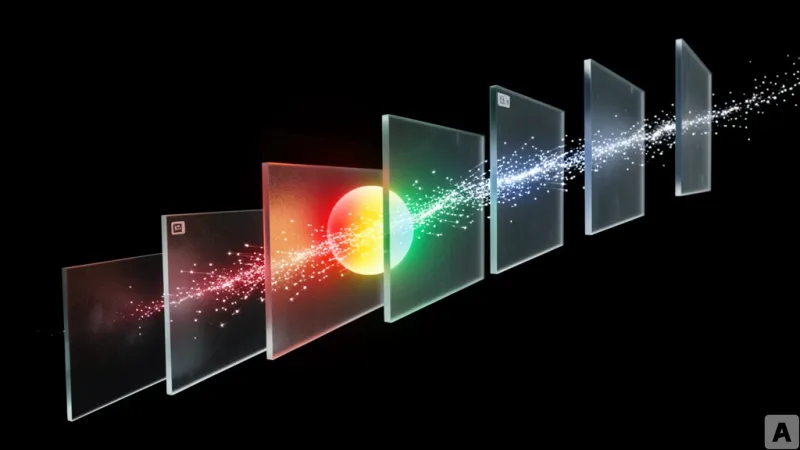
To understand why this matters, one must look at the underlying architecture of cloud gaming. Traditionally, a computer's graphics card handles the heavy lifting of rendering every pixel and calculating how light bounces off surfaces. GeForce NOW moves this entire process to remote servers equipped with industrial-grade hardware. The user's device essentially becomes a thin client, receiving a high-definition video stream of the game while sending input signals back to the server in real-time. It is a symbiotic relationship similar to how a user watches a 4K video on YouTube, but with the critical addition of near-zero latency interactivity.
This experience is further enhanced by the implementation of DLSS 4. Deep Learning Super Sampling is not merely a resolution booster; it is an AI-driven engine that predicts and fills in missing frames and pixels. By using artificial intelligence to synthesize imagery, DLSS 4 allows the cloud server to produce cinematic, fluid motion that would typically crash a mid-range laptop. When combined with real-time ray tracing, which simulates the physical behavior of light to create realistic reflections and shadows, the result is a visual experience that is indistinguishable from a local high-end PC.
For the average consumer, this means the hardware requirements for a game like PRAGMATA are no longer dictated by the game's engine, but by the quality of their internet connection. The analogy is simple: instead of buying an expensive professional kitchen and sourcing every ingredient to make a gourmet meal, the user is ordering a five-star dish via a high-speed delivery service. The quality of the meal remains the same, but the overhead cost and preparation time vanish.
Global Scaling and the Democratization of AAA Gaming
This technological shift is now scaling globally, breaking down geographic and economic barriers to entry. The expansion of GeForce NOW's Ultimate membership into India is a pivotal moment in this trajectory. By providing the highest tier of service—characterized by the fastest response times and maximum resolution—to a massive, mobile-first market, NVIDIA is betting on a future where the PC is no longer the primary gateway to gaming. In regions where high-end GPUs are prohibitively expensive or difficult to source, cloud gaming provides a democratic path to the same experiences enjoyed by enthusiasts in tech hubs.
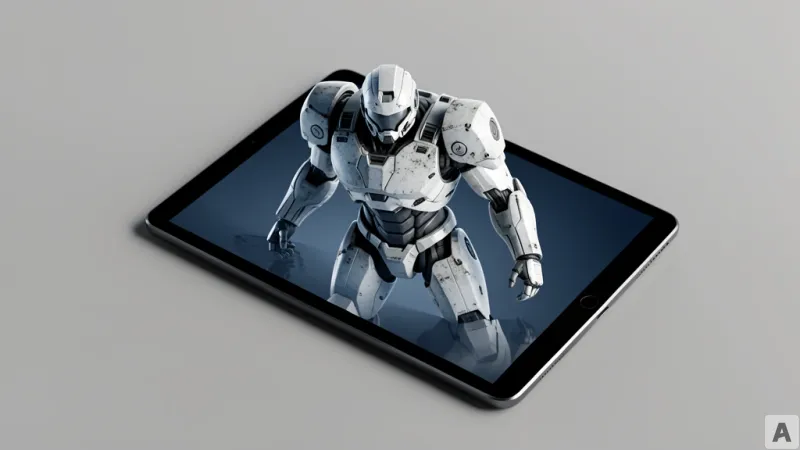
We are witnessing the transition from a model of ownership to a model of access. The traditional cycle of upgrading hardware every two to three years to keep up with software demands is becoming obsolete. When the processing power resides in the cloud, the hardware in the user's hand becomes a commodity. Whether a player is using a decade-old laptop, a tablet, or a basic Chromebook, the experience of exploring the lunar mysteries of PRAGMATA remains consistent.
As the industry moves forward, the definition of a gamer is expanding. The ability to play a cutting-edge title is no longer a status symbol reserved for those who can afford a $2,000 rig. Instead, the focus is shifting back to the core of the medium: the adventure itself. The question for the player is no longer whether their computer can run the game, but whether they are ready to step into the world the developers have created.