Geothermal plant operators begin every morning with a fundamental disadvantage: they are flying blind. Deep beneath the surface, the variables that dictate the success or failure of a facility—temperature fluctuations, pressure shifts, and the erratic movement of fluids—remain largely invisible. A sudden change in subsurface behavior can lead to a drop in efficiency or, in worst-case scenarios, trigger induced seismicity that threatens the entire operation. This inherent unpredictability has long relegated geothermal energy to the category of high-risk technology, despite its potential as a baseline power source.
The KAIST-Google Framework for Subsurface Quantification
To address this invisibility, Google has selected Professor Kye-Choon Cho and his team at the KAIST Department of Civil and Environmental Engineering for the Foundational Science Grant. This initiative is designed to accelerate scientific innovation in South Korea by providing the resources necessary to tackle complex, large-scale problems. Professor Cho’s Geosystems Laboratory is focusing these resources on the development of technologies to safely and efficiently manage subsurface systems, specifically targeting geothermal energy, Carbon Capture, Utilization, and Storage (CCUS), and the complex dynamics of underground fluid flow.
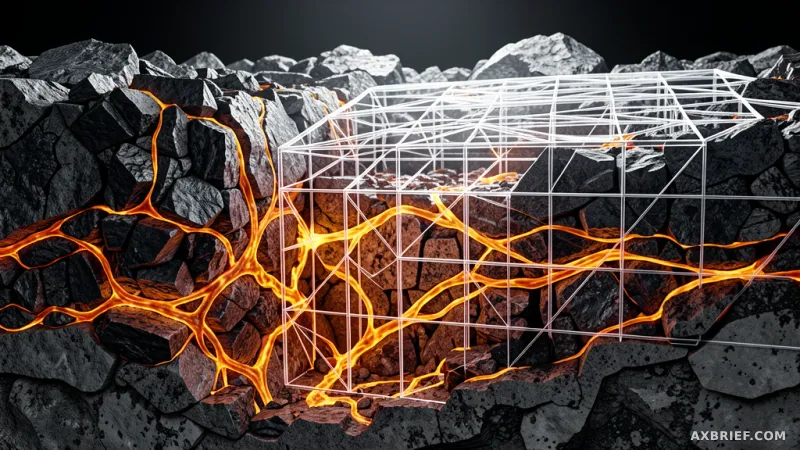
The primary technical challenge lies in the nature of geothermal reservoirs. Because these systems exist kilometers underground, direct observation is impossible. Operators must rely on indirect data to manage the injection of high-pressure fluids, a process used to enhance the connectivity of micro-fractures in rock to increase heat extraction. However, this very process can trigger micro-earthquakes, creating a tension between the need for energy efficiency and the requirement for geological stability. The KAIST research aims to quantify these risks by integrating physical simulations with artificial intelligence to create a predictive model that can anticipate these behaviors before they manifest as crises.
Bridging the Gap Between Pure Data and Physical Law
For decades, the industry has been split between two flawed methodologies. On one side are traditional physics-based models, which are scientifically rigorous and can explain exactly how heat and fluids move through porous media. The trade-off is computational cost; these models require immense processing power and time, making real-time analysis an impossibility. On the other side is deep learning, which can process massive datasets and identify patterns in milliseconds. However, pure AI is prone to producing physically impossible results because it lacks an understanding of the laws of thermodynamics or fluid mechanics—it sees patterns, not principles.
Professor Cho’s team is resolving this conflict through Physics-Informed AI. Rather than treating the AI as a black box that only learns from historical data, the team embeds the actual laws of physics into the neural network's architecture. In this hybrid approach, the physics acts as a constraint, ensuring that the AI's predictions remain within the bounds of physical reality, while the AI provides the speed necessary for operational decision-making. This synthesis transforms the workflow from a slow, manual process of expert interpretation into an automated system capable of rapid, reliable forecasting.
By reducing the computational overhead, the framework allows operators to run multiple scenarios in near real-time. If the AI detects a high probability of productivity decline in a specific sector, it can immediately simulate how changing the injection pressure or flow rate would mitigate the risk. This shifts the operational paradigm from reactive troubleshooting to proactive risk management, effectively turning underground uncertainty into a quantifiable and manageable variable.
As South Korea seeks to stabilize its power grid and enhance energy security, the ability to harness 24-hour stable energy from the earth becomes a strategic imperative. By removing the fear of the unknown beneath the surface, this AI-driven approach paves the way for geothermal energy to move from a high-risk experiment to a cornerstone of the renewable energy transition.