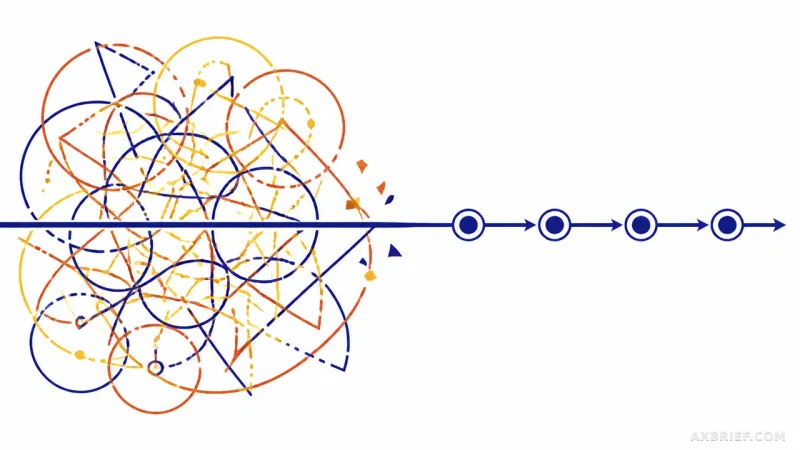
The modern 3D designer often spends more time fighting the interface than refining the design. For anyone who has opened a professional CAD suite for the first time, the experience is a barrage of nested menus, obscure coordinate systems, and a steep learning curve that can take weeks to climb. The friction lies in the manual translation of a mental concept into a series of precise mouse clicks and coordinate entries, where a single misplaced vertex can derail an entire afternoon of work.
The Architecture of Text-to-CAD
Adam emerges as an open-source solution to this friction, functioning as a text-to-CAD web application that bypasses the traditional manual drafting process. Instead of requiring users to navigate a complex GUI, Adam allows designers to describe their desired model in plain language. The system then interprets these text descriptions to automatically generate a 3D CAD model directly within the web browser, removing the need for heavy local software installations.
This tool is distributed under the GNU General Public License v3.0 (GPLv3), ensuring that the software remains free and modifiable. Because the source code is fully open, developers can optimize the tool for specific industrial workflows or add custom features without being locked into a proprietary ecosystem. The output of the system is not a static mesh but a parametric OpenSCAD format. By leveraging OpenSCAD, Adam creates models where dimensions like radius, height, and thickness are treated as variables. This means a user can adjust a single numerical value to transform the entire geometry of the part instantly.
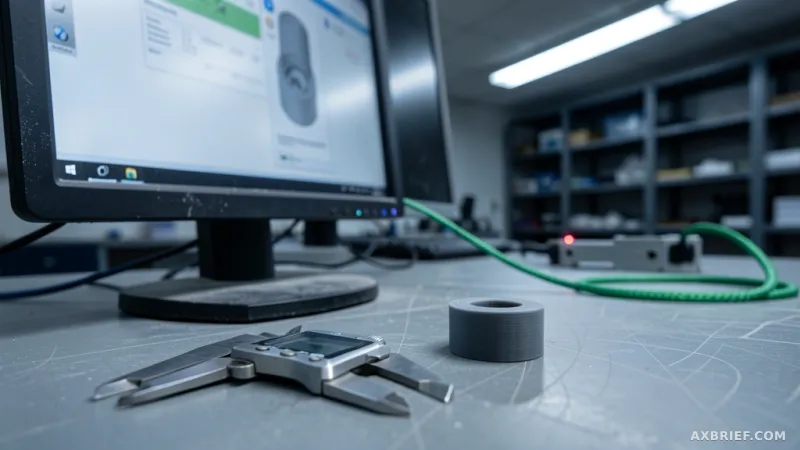
To ensure these models are usable in real-world manufacturing, Adam supports exports in .STL, .SCAD, and .DXF formats. These are the industry standards for 3D printing and CNC machining, allowing a concept to move from a text prompt to a physical object with minimal translation loss.
Shifting from Tool Mastery to Design Intent
The true disruption of Adam is not just the automation of drawing, but the shift toward parametric logic. In traditional CAD, modifying a part often requires the designer to undo multiple steps or manually redraw sections of the model. Adam replaces this manual labor with a code-based approach where the text prompt defines the logic of the object. When a user requests a change, they are not moving a point in 3D space; they are updating a parameter in a script.
For developers looking to deploy or customize the environment, the technical stack is designed for agility. The application is built using the TanStack Start framework for the web frontend. To bridge the gap between a local development server and the external web, the system employs ngrok. This tunneling tool exposes the TanStack Start development server to the internet, allowing for seamless testing and external access.
Data persistence and file management are handled by Supabase Storage. The integration is specifically tuned to handle provider callbacks and local signature storage URLs. By routing data through ngrok tunnels, the application can securely fetch signed URLs from Supabase, ensuring that the generated 3D files are stored and retrieved efficiently in the cloud. This combination of a modern web framework, secure tunneling, and cloud storage transforms a local script into a scalable design tool.
This architecture proves that the barrier to entry for 3D design is no longer the ability to operate a complex piece of software. By reducing the design process to a conversation between the user and the machine, the technical overhead of CAD is stripped away, leaving only the creative intent.
The era of spending hours searching for a specific button in a toolbar is ending. As Adam demonstrates, when the tool becomes invisible, the focus finally shifts from how to build to what is worth building.