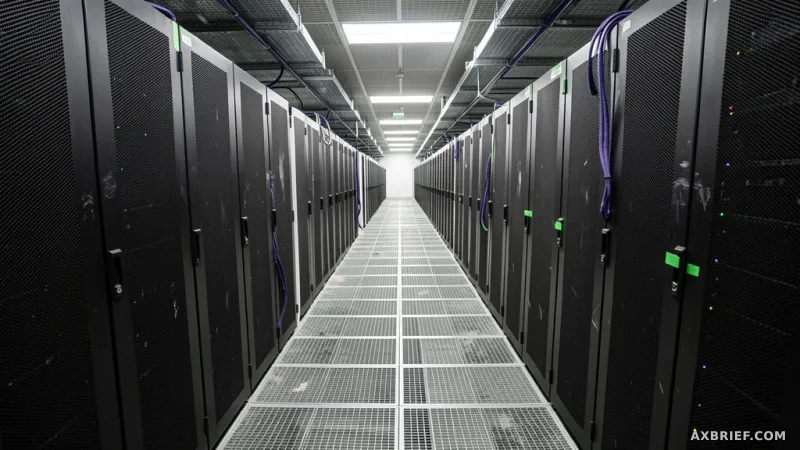
As the race to train increasingly complex AI models intensifies, the bottleneck has shifted from software architecture to the raw, physical reality of power and cooling. This week, Google signaled that its future competitiveness depends as much on regional utility management as it does on neural network design, announcing a massive $1.5 billion expansion of its data center campus in Jackson County, Alabama.
Scaling Infrastructure Through Self-Funded Power
The expansion, slated to take place between 2026 and 2027, represents a significant commitment to internalizing the risks associated with AI infrastructure. Google has confirmed that it will fully self-fund the power and infrastructure development costs required for this project. To facilitate the energy needs of this facility, the company is working closely with the Tennessee Valley Authority (TVA) and the Alabama Energy Efficiency Association (CAANEAL). This collaboration includes the creation of a $2 million Energy Impact Fund, which is specifically earmarked for regional energy efficiency upgrades and residential insulation programs. Beyond the hardware, Google is also investing $550,000 to provide STEM kits to local students in grades 4 through 8 and has pledged to offer digital skills training to over 130,000 Alabama residents.
The Shift Toward Resource Sovereignty
What distinguishes this project from standard corporate expansion is Google’s strategy of repurposing existing industrial footprints. Since 2019, the company has operated its Alabama data center on the site of a former coal-fired power plant. By converting legacy energy infrastructure into hubs for AI computation, Google effectively lowers the environmental and financial barriers to entry. However, the true pivot here is the move toward total control over resource management. By assuming the full cost of power and water, Google is insulating its AI operations from the volatility of external utility markets. This includes active management of the Paint Rock River Watershed to ensure the stability of the water resources required for data center cooling. The strategy is clear: by internalizing the supply chain of electricity and water, Google is removing the uncertainty that currently plagues the scaling of large-scale AI models.
Google’s Alabama investment confirms that the next phase of the AI arms race will be won by companies that can successfully negotiate the intersection of heavy infrastructure, local community integration, and absolute control over their operational resources.