Modern AI clusters have reached a scale where human intuition and physical presence are becoming the primary bottlenecks of infrastructure management. In facilities housing tens of thousands of servers, the traditional model of human technicians patrolling aisles to monitor hardware health or environmental stability is no longer sustainable. The sheer geography of the hyperscale data center creates a tension between the need for constant vigilance and the escalating cost of manual labor.
The Deployment of the OPR-R2 Fleet
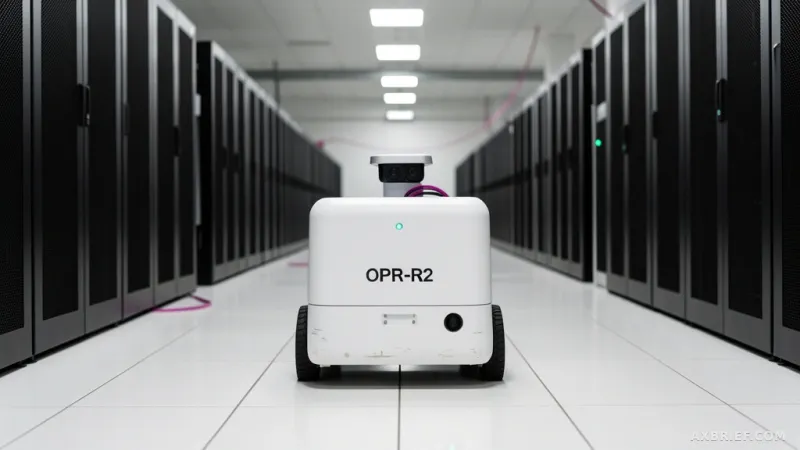
Hyperscale Data is addressing this operational ceiling by transitioning its labor structure from human personnel to robotic assets. The company has initiated a massive deployment at its Michigan AI data center, ordering 143 OPR-R2 robots to handle the rigors of facility oversight. This initiative is being spearheaded by Omnipresent Robotics (OPR), a wholly-owned subsidiary of Hyperscale Data.
The rollout began in earnest on July 16, 2026, when the first OPR-R2 unit was successfully assembled on-site at the Michigan facility. This initial assembly marks the start of a phased deployment that will eventually see all 143 units integrated into the data center's daily operations. By replacing fixed human labor costs with a fleet of programmable assets, Hyperscale Data aims to fundamentally alter the cost structure of large-scale AI infrastructure. Further details regarding the deployment can be found via Hyperscale Data.
From Simple Automation to Physical AI Training
The strategic value of this deployment extends far beyond the simple automation of repetitive tasks. While the robots provide immediate utility in patrolling, their primary purpose is to serve as the sensory organs for a broader Physical AI training program. The core of this strategy is large-scale visual data collection, where the OPR-R2 units continuously capture and digitize the physical environment of the data center.
This approach solves a critical problem in the development of embodied AI: the lack of high-quality, real-world interaction data. Data centers provide a unique advantage because they are strictly controlled environments. Unlike a chaotic city street or a variable home setting, a data center consists of standardized corridors and uniform server racks. This predictability transforms the Michigan facility into a massive, real-world laboratory where Physical AI can learn to move, interact, and navigate with a high degree of precision.
For too long, the robotics industry has relied on curated demonstration videos to prove capability. Hyperscale Data is pivoting away from this trend, betting that the true viability of Physical AI is determined not by a polished clip, but by the volume of data collected across a fleet of 143 active units. By leveraging this scale, the company is building a Physical AI model optimized specifically for the complexities of infrastructure operations, turning the data center itself into the training set.
The transition from digital intelligence to embodied operational intelligence is now moving from the lab to the server aisle.