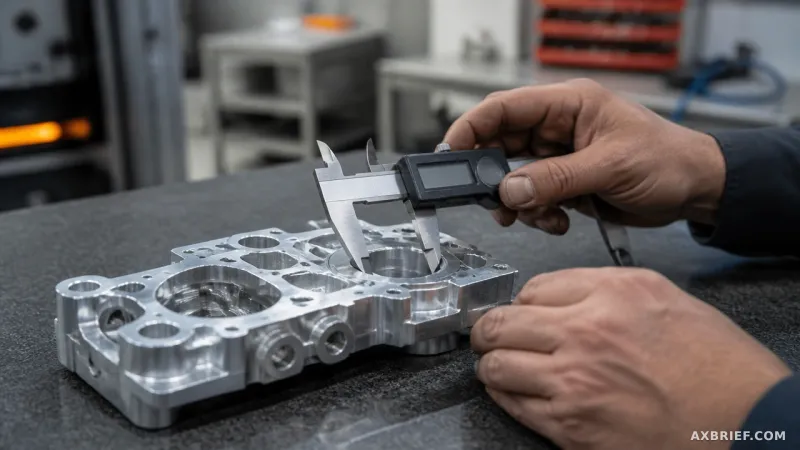
Imagine a senior hardware engineer staring at a simulation screen at 3 AM, manually tweaking a single parameter in a thermal model only to have the entire system crash during the meshing phase. This cycle of trial, error, and exhaustive debugging has been the invisible tax on industrial innovation for decades. For years, the bottleneck in aerospace, automotive, and semiconductor design hasn't been the lack of raw computing power, but the sheer amount of human labor required to navigate the gap between a CAD model and a validated physical result.
The Architecture of an Autonomous Engineer
At GTC Taipei, NVIDIA addressed this systemic inefficiency by unveiling NemoClaw, an open blueprint designed to build specialized autonomous AI agents for industrial engineering. Rather than providing a static tool, NVIDIA has released a comprehensive architectural guide that allows companies to deploy AI engineers capable of planning and executing complex technical workflows independently. The framework is built around a flexible orchestration layer where users can choose between OpenClaw and Hermes, depending on the specific needs of the agent's task planning and execution logic.
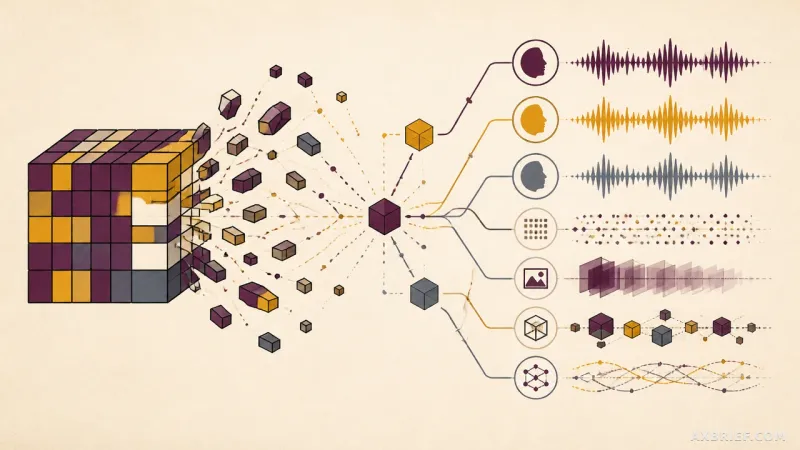
To ensure these agents are not just general-purpose chatbots but precise technical tools, NemoClaw incorporates a model router that directs tasks to the most appropriate LLM based on the complexity of the operation. This is supported by the NVIDIA NeMo library, which enables enterprises to optimize and fine-tune models using their own proprietary industrial data. The deployment flexibility is equally broad, scaling from the NVIDIA DGX Spark for individual workstations to massive enterprise data centers and various cloud service providers.
Security remains a primary concern when granting an AI agent access to sensitive corporate intellectual property. NVIDIA solves this through OpenShell, an open-source runtime that acts as a security perimeter. OpenShell implements policy-based management over the agent's access to files, network resources, and external tools. By enforcing these security policies at every layer, the system ensures that the AI agent operates strictly within a predefined sandbox, preventing unauthorized data exfiltration or accidental system modifications.
This ecosystem is already being adopted by a consortium of global engineering giants. Companies including Cadence, Dassault Systèmes, Siemens, and Synopsys, along with various specialized startups, are integrating NemoClaw into Computer-Aided Engineering (CAE) and Electronic Design Automation (EDA) workflows to automate the most grueling parts of the design process.
Collapsing the Iteration Cycle from Weeks to Hours
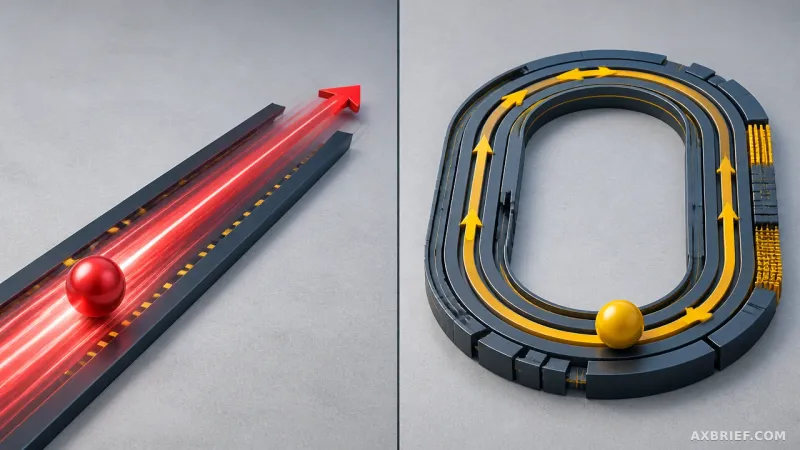
The fundamental shift introduced by NemoClaw is the transition from linear, human-led workflows to closed-loop, AI-driven optimization. In a traditional simulation pipeline, an engineer must move manually from 3D modeling (CAD) to meshing, then to simulation setup, debugging, and finally report generation. If a single variable needs adjustment, the engineer often has to restart the entire sequence. This manual intervention is where the most significant time losses occur.
By integrating AI agents into this loop, the time required for these iterations has collapsed. Cadence has reported that RTL (Register Transfer Level) verification, a critical and time-consuming stage of digital circuit design, has been reduced from a process taking several weeks to one that completes in just a few hours. Similarly, nTop has compressed geometric iterative design tasks that previously spanned several days into a matter of hours. The AI agent handles the variable adjustment and result verification loop autonomously, arriving at the optimal design value without human hand-holding.
This efficiency extends to complex physical environment analysis. PhysicsX has transformed the CAE workflow for thermal simulations in Microsoft Surface laptops, replacing manual steps with an automated AI cycle. SimScale has achieved similar results in Noise, Vibration, and Harshness (NVH) analysis, where workflows that previously required multiple engineers working for weeks are now automated, shifting the engineering cycle from a weekly cadence to an hourly one.
These gains are manifesting in highly specific industrial applications. Siemens has integrated NemoClaw into its Fuse EDA AI Agent to assist in the design of semiconductors, 3D integrated circuits (IC), and printed circuit board (PCB) systems, allowing the agent to plan and coordinate complex design flows. Synopsys is utilizing Ansys Icepak to automate the meshing, simulation, and optimization of electronic cooling designs for GPUs.
Beyond simple automation, the speed of design space exploration has accelerated. Flexcompute now combines optical, electrical, and thermal simulations to explore thousands of design variations overnight, identifying low-power, high-performance components that would have taken months to find manually. P-1 AI has developed an agent named Archie, which analyzes data center cooling and power requirements to select components and perform design trade studies. In the realm of manufacturing, Synera has combined Nemotron models with Autodesk Moldflow to create a specialized agent for injection molding processes.
Even the process of creating the AI models themselves is being automated. Luminary is utilizing AI engineers to handle the entire pipeline from data generation and model selection to the training and retraining loops, significantly lowering the complexity and time required to develop accurate physical models.
Engineering efficiency is no longer defined by the patience and skill of a human operator performing manual iterations. The benchmark has shifted to the optimization speed of the autonomous agent.