The modern data scientist spends the vast majority of their professional life in a state of repetitive frustration. While the public eye is fixed on generative AI and the magic of large language models, the actual engine of global commerce still runs on structured data. Every critical business decision, from quarterly financial forecasts to patient triage in hospitals and supply chain logistics, relies on tables. These spreadsheets, ERP systems, and CRM databases hold the truth, but extracting that truth is a grueling process. For months at a time, analysts are trapped in the feature engineering loop, manually crafting variables, testing hypotheses, and scrubbing raw data to find a signal that a machine learning model can actually understand. The bottleneck is not the algorithm, but the manual labor required to make the data legible to the algorithm.
The Architecture of the Large Tabular Model
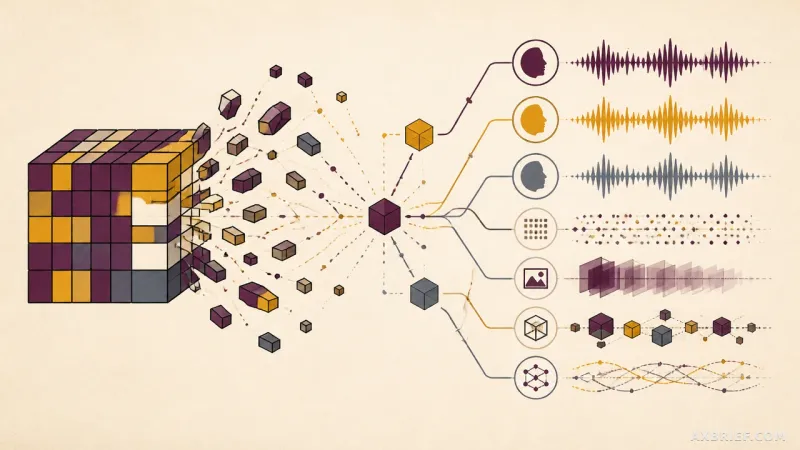
Fundamental has introduced a paradigm shift to break this bottleneck with NEXUS, a foundation model specifically engineered for structured data prediction. Unlike Large Language Models (LLMs) that are optimized for the sequential nature of text, NEXUS utilizes a Large Tabular Model (LTM) architecture. This distinction is critical because tabular data does not follow the same linguistic patterns as human speech; it follows relational and statistical patterns. To achieve this, NEXUS was pre-trained on billions of real-world prediction tasks, allowing it to develop an innate ability to identify meaningful signals within raw structured data without requiring manual guidance.
To bring this capability to the enterprise level, Fundamental partnered with AWS to integrate NEXUS into Amazon SageMaker JumpStart. This integration transforms the deployment process from a complex engineering project into a streamlined workflow. Users can simply search for Fundamental NEXUS within the JumpStart catalog, select the model, and deploy it immediately into their environment. This removes the need for data scientists to design features from scratch or spend weeks training a model from a blank slate.
Technically, NEXUS operates by taking raw tabular data as input and producing deterministic prediction values. This is a fundamental departure from the probabilistic nature of generative AI. While an LLM might hallucinate a plausible-sounding answer, NEXUS analyzes pre-trained weights to identify correlations and output a concrete, reliable prediction. The result is a system where a data scientist can feed in raw data and immediately move to the validation phase, bypassing the traditional pre-processing grind entirely.
Shifting the Value Chain from Engineering to Insight
The true disruption of NEXUS lies not just in its speed, but in how it redefines the role of the data scientist. For decades, the competitive advantage of a company depended on how sophisticated its feature engineering was. The team that could invent the most clever derived variable usually won. NEXUS flips this logic. By automating the signal extraction process, the value shifts from the ability to clean data to the ability to act on the resulting predictions. The tension is no longer about how to get the model to work, but how to integrate the model's output into a business strategy.
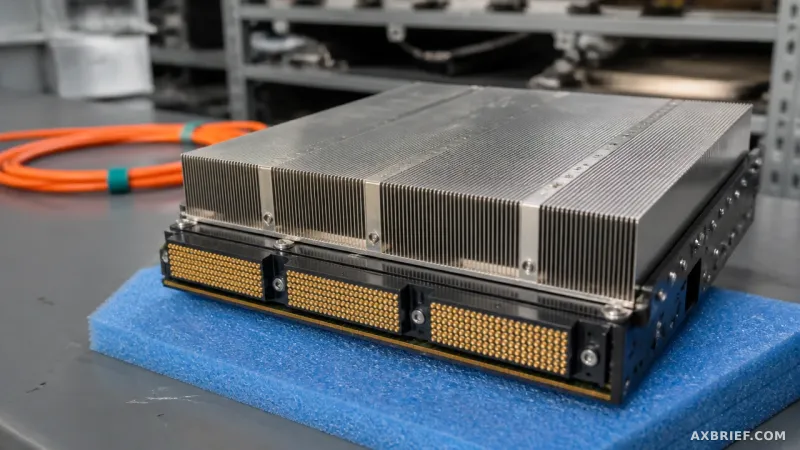
This transition is supported by a rigorous enterprise security framework provided by Amazon SageMaker AI. For industries like finance and healthcare, the primary barrier to adopting foundation models is the fear of data leakage. NEXUS addresses this by running on dedicated single-tenant, network-isolated GPU instances. In a single-tenant architecture, resources are physically and logically isolated for a specific customer, eliminating the risk of data contamination that often plagues shared infrastructure.
Furthermore, the entire inference workflow remains within the user's own AWS environment. Because the endpoints are network-isolated, data is never transmitted to external servers. This allows organizations to maintain strict data governance and comply with regulatory mandates while still leveraging the power of a pre-trained foundation model. By removing the undifferentiated heavy lifting of infrastructure management—such as resolving CUDA library dependencies or configuring server clusters—engineers can focus exclusively on optimizing business logic.
This capability manifests in high-stakes industrial applications. In equipment failure prediction, the traditional approach requires an analyst to manually calculate vibration thresholds or temperature rate-of-change variables. NEXUS consumes the raw sensor logs and equipment tables directly, identifying the deterministic signs of failure without the need for derived features. In supply chain optimization, the model processes logistics logs and inventory tables to predict bottlenecks in real time, allowing companies to respond to volatility in days rather than waiting for a monthly report cycle.
Even in the adversarial environment of financial fraud detection, the impact is profound. Fraud patterns evolve rapidly, and the traditional loop of defining a pattern, writing it into a formula, and testing it is often too slow to catch new threats. NEXUS leverages its LTM signal extraction to spot anomalies in transaction histories and user behavior tables immediately. This collapses the experimental phase from hundreds of manual hypotheses down to a rapid deployment cycle.
The New Lead Time for Production AI
The strategic partnership between Fundamental and AWS effectively commoditizes the most painful part of the machine learning pipeline. By providing a verified security framework and a pre-trained LTM, the partnership ensures that enterprises do not have to build their own foundation models from scratch—a feat that would require prohibitive amounts of compute and data.
As a result, the timeline for moving a tabular prediction model from a concept to a production environment has shrunk from several months to a few days. This acceleration changes the fundamental economics of data science. When the cost of experimentation drops and the speed of deployment increases, the volume of insights a company can generate grows exponentially. The data scientist is no longer a data janitor; they become a strategic architect who connects predictive outputs to tangible business outcomes.
Ultimately, the competitive edge in structured data is no longer about who has the most patient engineers to carve out features. It is about who can most rapidly embed a foundation model into their operational workflow. Through the combination of NEXUS and SageMaker AI, the lead time between raw data and production-grade intelligence has been minimized, maximizing the speed of data-driven decision-making across the enterprise.