Industrial plant managers and construction engineers have long accepted a messy trade-off for raw power: the inevitable leak of hydraulic fluid and the grueling cycle of high-pressure hose maintenance. For decades, when a project required tens of tons of force, hydraulics were the only viable answer, despite the environmental hazards and the opacity of the systems. However, the industry is currently hitting a tipping point where the demand for precision and data-driven oversight is colliding with the limitations of fluid power.
The Engineering Specs of the RSX50
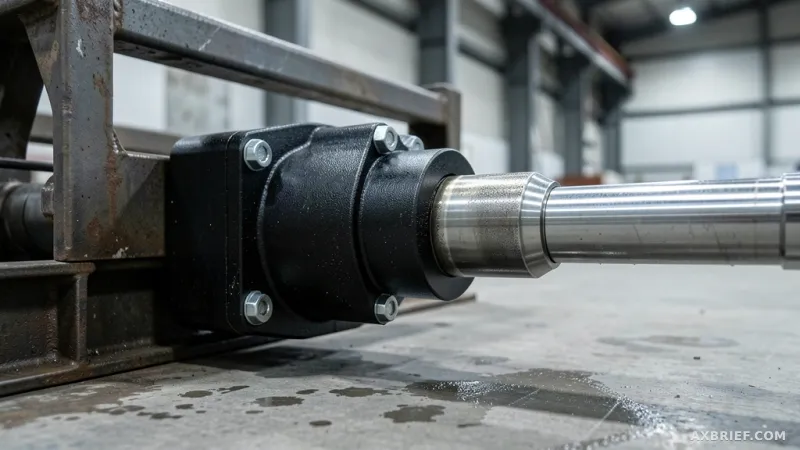
Tolomatic is positioning itself at the center of this transition with the unveiling of its advanced motion components, headlined by the RSX50 electric linear actuator. The company plans to showcase these technologies at Automate 2026, taking place from June 22 to June 25 at the McCormick Place in Chicago. The RSX50 is specifically engineered to operate in the harshest industrial environments while providing the kind of output previously reserved for hydraulic cylinders.
Technically, the RSX50 is a powerhouse of electric linear motion. It delivers a maximum output of 100,000 lbf (approximately 45 tons), effectively bridging the gap between electric precision and hydraulic strength. The actuator supports a stroke length of 59 inches (approximately 1.5m), allowing for significant travel distance in heavy-duty applications. To ensure that power does not come at the cost of productivity, the system achieves movement speeds of up to 30 inches per second (0.76m).
By replacing hydraulic systems with this electric alternative, facilities eliminate the need for oil leak management and the associated environmental cleanup costs. More importantly, the shift allows for the integration of electrical signals to capture real-time operational data. This transition transforms a passive mechanical component into a data source, allowing managers to quantify maintenance savings and implement a rigorous, data-backed equipment management framework.
Beyond Raw Power: Specialization and Digital Integration
While the RSX50 handles the heavy lifting, the true shift in Tolomatic's strategy is the move toward environment-specific optimization. The industry is realizing that a one-size-fits-all approach to actuators fails in specialized sectors like food processing or chemical manufacturing, where corrosive agents rapidly degrade standard hardware. To solve this, Tolomatic utilizes 316 stainless steel for its RSH lineup. This specific alloy is chosen for its high resistance to corrosion, ensuring that the actuators meet the strict hygienic design standards required for food and beverage processing or environments saturated with aggressive chemicals.
In high-vibration environments, the traditional separation of the motor and the drive unit often creates a point of failure, where mechanical play or connection fatigue leads to system downtime. The IMA series addresses this by utilizing an integrated linear servo actuator design. By merging the motor and the drive into a single unit, Tolomatic removes the need for separate servo motor procurement and installation. This compact architecture is inherently more resistant to shock and vibration, providing a level of stability that discrete components cannot match.
For the precision-heavy world of resistance spot welding, where the rapid replacement and exact positioning of equipment are critical, the ServoWeld CSWX lineup introduces a modular design philosophy. This approach allows system integrators to assemble the hardware based on the specific requirements of the manufacturing environment. By selecting materials and structures tailored to the specific stresses of the welding process, companies can significantly reduce the frequency of maintenance interventions.
The fundamental difference here is not just the replacement of oil with electricity, but the replacement of guesswork with telemetry. A hydraulic cylinder is a black box; you know it is working until it fails. An electric servo actuator, however, provides a constant stream of performance metrics. This allows a facility to move from reactive repairs to predictive maintenance, where part replacement is triggered by actual wear data rather than a calendar date.
The transition to electrification begins with a cold calculation of load and ROI. By using the output and speed specifications of the RSX50 as a baseline, operators can compare the current cost of hydraulic maintenance against the projected gains of a digital, leak-free system.