The current frontier of robotics is not defined by how fast a machine can move or how precisely it can follow a pre-programmed path, but by how it handles the chaos of a human home. For years, the industry has seen a divide between robots that excel at spatial navigation and those that specialize in the delicate art of object manipulation. Bridging this gap requires more than just better hardware; it requires a unified intelligence capable of translating a vague human request into a precise physical action in an unpredictable environment. This tension between cognitive understanding and physical execution is where the battle for the future of service robotics is being fought.
The Record Breaking Performance at RoboCup 2026
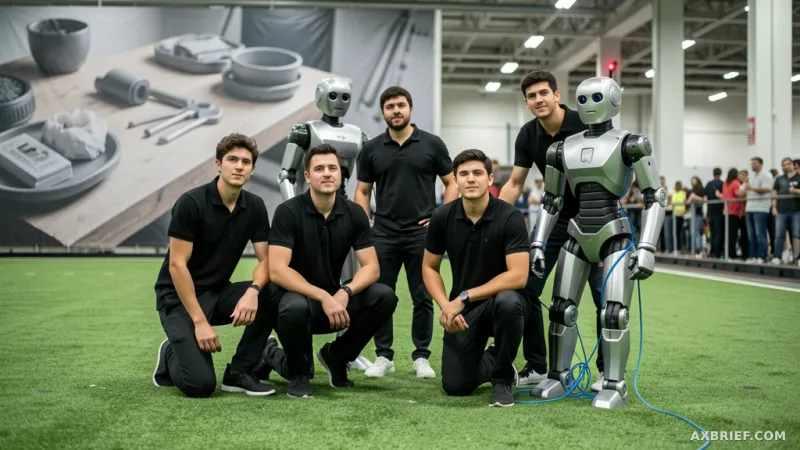
From July 2 to July 6, the global robotics community converged on Songdo, Incheon, for the RoboCup 2026 Home Service competition, an event designed to stress-test autonomous navigation and object manipulation within domestic settings. The Tidyboy team, led by Chief Scientist Professor Seung-jun Lee of Tomorrow Robotics, emerged as the definitive victors. The team secured first place with a total score of 7426.5 points, marking the highest score ever recorded in the history of the competition. The scale of the victory was staggering, as the second-place team finished with 5505.1 points, leaving a gap of more than 1900 points between the winner and the rest of the field.
This victory is not an isolated success but part of a sustained era of dominance. With this win, Professor Lee's team has secured five total championships and maintained its position at the top of the world rankings for two consecutive years. The 2026 competition was particularly significant because it marked the first year that the DSPL, OPL, and SSPL leagues—which were previously separated by platform and operating environment—were merged into a single integrated league. This consolidation expanded the competitive pool and increased the difficulty of the evaluation process, as teams had to prove their technical superiority against a broader array of robotic architectures and software stacks.
Competing against an elite roster of international institutions, Tomorrow Robotics faced off against the NimbRo team from the University of Bonn in Germany, the eR@sers from Tamagawa University in Japan, and the Hibikino-Musashi team from the Kyushu Institute of Technology. The competition also featured high-caliber entries from China, including the Tinker team from Tsinghua University and the WrightEagle.AI team from the University of Science and Technology of China. Despite this intense global competition, the Tidyboy team demonstrated a level of operational stability and intelligence that far exceeded the industry standard.
The Convergence of Manipulation and Interaction
While the total score provided the quantitative proof of victory, the qualitative breakthrough lay in the specific awards granted to the Tidyboy team. For the first time in the history of RoboCup@Home, a single team swept both the Best Object Manipulation Award and the Best Human-Robot Interaction Award. In the world of Physical AI, these two domains are traditionally treated as separate problems. Object manipulation is a challenge of kinematics, tactile sensing, and spatial geometry, while human-robot interaction is a challenge of natural language processing, intent recognition, and social intelligence.
By winning both, Tomorrow Robotics proved that it has solved the synchronization problem between the brain and the body. The ability to understand a human's intent and then immediately execute a complex physical task without a breakdown in communication is the primary hurdle for commercial service robots. This achievement validates the technical architecture of the HABILIS Brain, the proprietary robot intelligence platform that Tomorrow Robotics is currently refining. The HABILIS Brain is designed to move beyond simple command-and-control structures, instead focusing on a Physical AI framework that allows the robot to adapt to environmental changes in real-time while maintaining a deep understanding of human goals.
This shift represents a move away from the era of specialized robots toward the era of general-purpose physical agents. Most competing teams were able to excel in one specific area—either navigating a room efficiently or picking up a specific object—but the Tidyboy team demonstrated a unified intelligence. The 1900 point lead was not merely a result of faster execution, but a result of fewer failures in the hand-off between perception, decision-making, and physical action. Through strategic industry-academic collaboration, Tomorrow Robotics is now pushing this HABILIS Brain technology toward full-scale commercialization, aiming to transition these laboratory successes into real-world home and service environments.
The industry's expectation for home robots is shifting from a desire for simple convenience to a demand for proven, reliable execution. Tomorrow Robotics has provided the numerical evidence that integrated intelligence can operate organically in the physical world.