Every modern AI developer knows the specific anxiety of the cloud GPU billing dashboard. It is the moment when a promising prototype suddenly scales, and a series of iterative prompts transforms into a four-figure monthly invoice. For the last three years, the industry has operated under a precarious economic regime where the cost of innovation is tied to the volatility of token-based pricing. Developers are forced to balance the desire for model performance against the fear of an unpredictable API bill, often throttling their own creativity to keep costs manageable.
The Hardware Pivot to Fixed-Cost AI
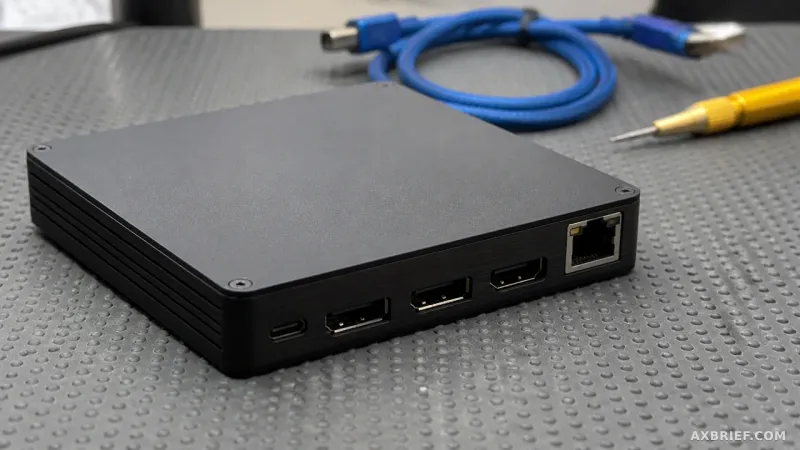
Microsoft addressed this friction at Microsoft Build 2026 by introducing the Surface RTX Spark Dev Box. This is not a traditional workstation but a specialized small-form-factor computer designed to move the entire inference pipeline from the cloud to the desk. At the heart of the machine is the RTX Spark SoC, a system-on-chip that integrates an ARM-based CPU and Nvidia Blackwell GPU into a single architecture. By collapsing the traditional divide between the CPU, discrete GPU, VRAM, and system RAM, Microsoft has created a unified memory pool of 128GB.
This architectural shift is critical for handling large-scale models. The Surface RTX Spark can load and execute AI models with over 120 billion parameters without a single call to a cloud API. The 128GB unified memory specifically solves the bottleneck of the Key-Value (KV) cache, which typically requires 40 to 50GB of memory when processing a context window of 100,000 tokens. By providing this headroom locally, developers can interact with frontier-class models and optimize them in a private environment without transmitting sensitive data externally. The device delivers 1 petaflop of AI compute performance, wrapped in an aluminum chassis featuring a 3D-printed perforated top panel that serves as a passive heatsink for high-efficiency cooling.
This represents a fundamental change in the economics of AI development. By shifting the financial burden from variable token fees to a one-time hardware purchase, Microsoft is offering developers cost predictability. The goal is a hybrid workflow where the local hardware handles the iterative, expensive prototyping phase, and Azure cloud services are reserved only for final-stage scaling and deployment.
The Rise of Agentic Systems and the Benchmark Gap
While the hardware provides the foundation, the software landscape is shifting from simple chatbots to autonomous agents. The emergence of M-DASH, a Multi-model Agentic Scanning Harness, demonstrates that the combination of multiple general-purpose models can outperform a single frontier model. In the Cyber Gym benchmark, M-DASH achieved a score of 88.45 percent, surpassing Anthropic's Mythos preview at 83.1 percent and OpenAI's GPT-5.5 at 81.8 percent. This suggests that the future of AI performance may lie in the orchestration of multiple models rather than the pursuit of a single, monolithic entity.
This agentic shift is visible across the industry. Google is currently dogfooding an AI agent named Remy within internal versions of the Gemini app. Unlike traditional LLMs that wait for a prompt, Remy is designed as a proactive personal agent capable of performing tasks autonomously 24 hours a day. Similarly, DeepSeek has introduced a digital finger vision feature that allows its agents to point to specific coordinates during a reasoning process, a move that has reportedly pressured OpenAI to accelerate its own release cycles.
However, as models become more capable, the gap between synthetic benchmarks and real-world engineering is widening. Data Curve recently released Deep Suite to address this, focusing on tasks that require extensive code generation rather than simple pattern recognition. The results highlight a stark divide in implementation capability. GPT-5.5 led the pack with a score of 70 percent, followed by GPT-5.4 at 56 percent and Opus 4.7 at 54 percent. In contrast, Kimi 2.6 scored 24 percent and DeepSeek V4 trailed at 8 percent. This indicates that while many models can chat, very few can actually engineer complex systems.
This tension between capability and reliability is further evidenced by the security risks of autonomous agents. While Mythos 1 expanded the scope of autonomous work, Project Glasswing revealed thousands of critical vulnerabilities in such systems. Even within the Windows ecosystem, recent code verification processes uncovered 16 vulnerabilities, four of which were classified as critical risks allowing remote intrusion without a password. These flaws are slated for correction in the May Patch Tuesday update.
Beyond the models, the capital is moving toward the physical infrastructure required to sustain this growth. Dell has successfully pivoted into an AI infrastructure powerhouse by providing the racks and cooling systems necessary to make Nvidia GPUs functional at scale. This strategic shift has seen Dell's stock surge 80 percent following recent earnings reports, with a year-to-date increase of 240 percent. At the same time, professional services are seeking to internalize their AI capabilities to avoid vendor lock-in. The law firm Kirkland & Ellis is investing 500 million dollars into a proprietary AI platform, starting with an initial 100 million dollar allocation this year. By building their own knowledge base with 180 external experts, they are insulating themselves from the licensing costs and intermediaries of wrapper companies like Harvey.
Other notable updates in the ecosystem include the release of Claude Opus 4.8, which shows marginal improvements in reasoning and honesty over version 4.7. Claude Code has introduced a dynamic workflow where parallel agents debate each other to find the optimal answer, though it still struggles with multi-part prompt adherence in ways that OpenAI models do not. Meanwhile, xAI's Grok 5 has deepened its integration with Cursor to enhance AI-driven coding, and Microsoft 365 Copilot has added inline formatting for long prompts and direct data-to-chart generation.
AI development is transitioning from a battle of API credits to a battle of local infrastructure efficiency.