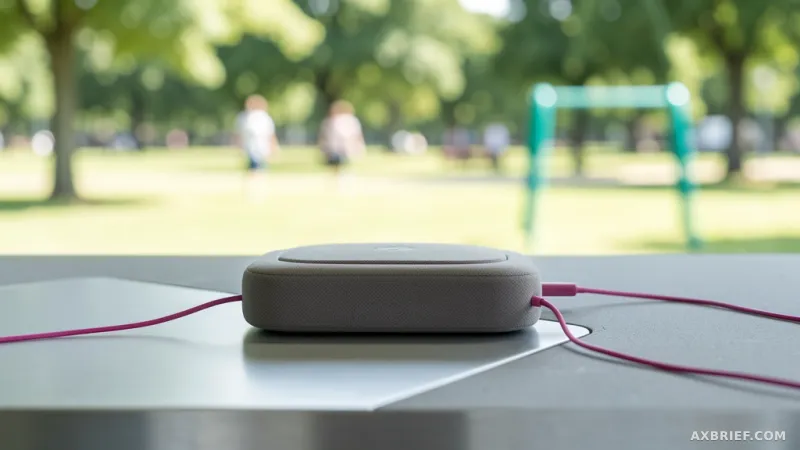
Commuters at the 28th Street subway station in New York City recently encountered a jarring sight: a promotional poster for the iPod Shuffle. In an era of foldable screens and generative AI, an advertisement for a twenty-year-old device without a single pixel of display seems like a glitch in the timeline. However, the campaign, launched by the refurbished tech marketplace Back Market, is not a nostalgia play. It is a calculated response to a growing cultural exhaustion with the modern smartphone. The core message is simple and provocative: zero screen time.
The Data Behind the Digital Retreat
This shift toward screenless hardware is backed by a measurable surge in consumer behavior. Current data indicates that approximately 53% of adults in the United States express a desire to reduce their daily screen time. This is not merely a passive wish but a driver for specific product adoption. A distinct trend has emerged among Gen Z, a generation born into the ecosystem of algorithmic feeds and constant connectivity. These users are increasingly opting for wired headphones, retro gaming consoles, CD players, and digital compact cameras. The common thread among these devices is the absence of a notification center; they provide a singular utility without attempting to monopolize the user's attention through Instagram stories or recommendation engines.
Market data from Circana confirms that this preference is translating into significant revenue. Spending on fitness trackers in the United States grew by 88% year-over-year, with the primary growth engine being screenless wearables. Devices like the Oura ring and Whoop wristbands, which offload data visualization to a paired app while remaining invisible during the day, are leading the charge. Beyond wearables, a growing segment of users aged 20 to 35 are replacing their primary devices with e-ink hardware running Android or the Light Phone, a minimalist device designed to strip away the distractions of a traditional smartphone. This movement has even birthed niche AI hardware, such as Mark, an AI-powered bookmark priced at $159, specifically designed to prevent users from reaching for their phones while reading.
From Frictionless Design to Intentional Boundaries
This phenomenon represents more than a retro fashion statement; it is the emergence of Slowtech. For the last two decades, the tech industry has operated under the philosophy of Fast Tech, where the primary goal was the total removal of friction. Every UX update and hardware iteration aimed to make the transition from desire to consumption as seamless as possible. Slowtech reverses this logic. It posits that intentional friction is not a bug, but a feature that allows users to establish healthy boundaries with their tools.
Modern users are experiencing a profound fatigue stemming from the pressure to optimize every second of their existence. When music is curated by an algorithm and every gap in the day is filled by a notification, the user loses agency. The move toward screenless hardware is an attempt to reclaim that control. This is distinct from anti-tech movements that reject digitalization entirely. Instead, Slowtech is a selective adoption strategy. It maintains the utility of digital technology while stripping away the compulsive loops designed to keep users tethered to a screen.
This shift is already influencing the next generation of developers and investors. Austin Murray, a pioneer in the early mobile gaming market, has pivoted his focus toward this tension. He is currently developing MOQA, an app designed to actively reduce screen time. Murray argues that the current crisis of digital addiction is not a failure of individual willpower but a failure of product design. The industry has spent years perfecting the art of retention, but the market is now shifting toward the art of the healthy departure. The competitive axis is moving from how to keep a user engaged for as long as possible to how to help a user leave the device and return to their physical environment.
For AI practitioners and hardware engineers, this trend suggests that feature bloat is becoming a liability. The instinct to push every piece of AI-generated information through a screen is meeting increasing resistance. The success of the Oura ring demonstrates a viable strategy: use the screen for deep data analysis in a dedicated session, but remove it from the daily interaction to protect the user's attention. Similarly, auxiliary AI tools like Mark suggest that hardware which acts as a guardrail against smartphone distraction has significant potential, particularly in high-pressure environments like the academic and professional landscapes of South Korea.
However, a total downgrade to minimalist hardware remains a challenge in societies with deeply integrated digital infrastructures. In environments where banking, hotel check-ins, and payments are exclusively smartphone-based, a complete replacement is impractical. The more realistic path forward is the development of a control layer—software or hardware that manages and filters the smartphone's functions rather than replacing the device entirely. The new frontier of differentiation in tech will not be found in adding more capabilities, but in how elegantly a product can implement intentional inconvenience to solve digital fatigue.