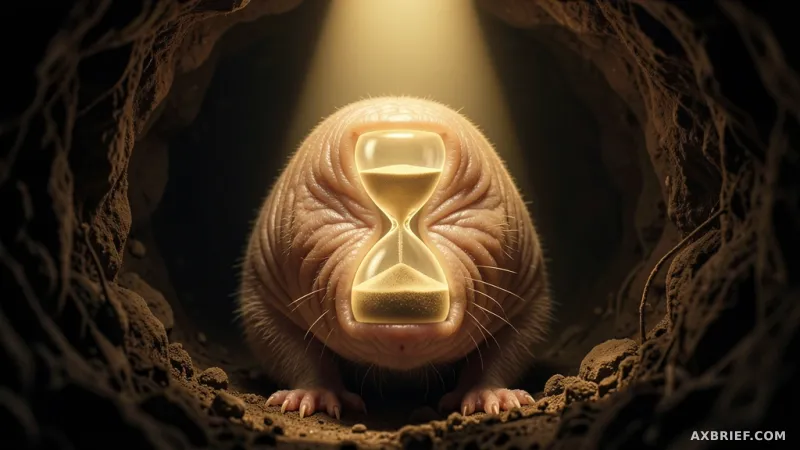
In the controlled environment of a laboratory, the life of a standard mouse follows a predictable, downward trajectory. As these rodents age, their gut microbiome undergoes a radical transformation, a shift that consistently triggers increased systemic inflammation and a sharp decline in beneficial metabolic byproducts. For years, researchers have viewed this microbial decay as a hallmark of the aging process itself. However, the naked mole-rat (Heterocephalus glaber)—a subterranean rodent capable of living for over 40 years—defies this biological script, maintaining a level of physiological consistency that has long puzzled the scientific community.
Analyzing the Microbiome of the Long-Lived Rodent
To understand how these animals maintain such stability, researchers conducted a comprehensive analysis of fecal samples collected from a diverse population of naked mole-rats, spanning various social castes and an age range exceeding 30 years. The study utilized C57BL6/J mice as a control group, a strain frequently employed in aging research due to its well-documented microbial decline. While the control mice exhibited extensive, age-related shifts in their gut microbial composition, the naked mole-rats showed virtually no significant changes across their lifespan. The only notable exception was a slight increase in the proportion of Methanomassiliicoccus intestinalis, a methanogenic archaeon unique to the naked mole-rat gut, in older individuals. Furthermore, the researchers observed that queen mole-rats, which possess reproductive capabilities, exhibited higher microbial diversity, a phenomenon attributed to their aggressive coprophagy, or the consumption of their own feces, which facilitates the recycling of essential microbes.
Rethinking the Mechanisms of Aging and Immunity
Historically, the degradation of the gut microbiome has been categorized as a primary driver of aging. The findings from this study, however, suggest a fundamental reversal of that causality. The fact that naked mole-rats remain immune to age-related microbial shifts implies that the dysbiosis observed in other mammals may be a secondary symptom rather than a primary cause. It appears that the microbial imbalance is a consequence of an aging immune system that can no longer effectively suppress harmful pathogens. Because the naked mole-rat possesses an exceptionally robust immune system that does not succumb to typical age-related decline, its gut ecosystem remains remarkably stable throughout its long life. Detailed data from this analysis can be reviewed in the arXiv paper.
By demonstrating that gut homeostasis is not an inevitable casualty of time, the naked mole-rat provides a new blueprint for understanding how biological systems can delay or prevent functional decline. This resilience suggests that aging is not a fixed, universal decay, but a variable that can be biologically managed.