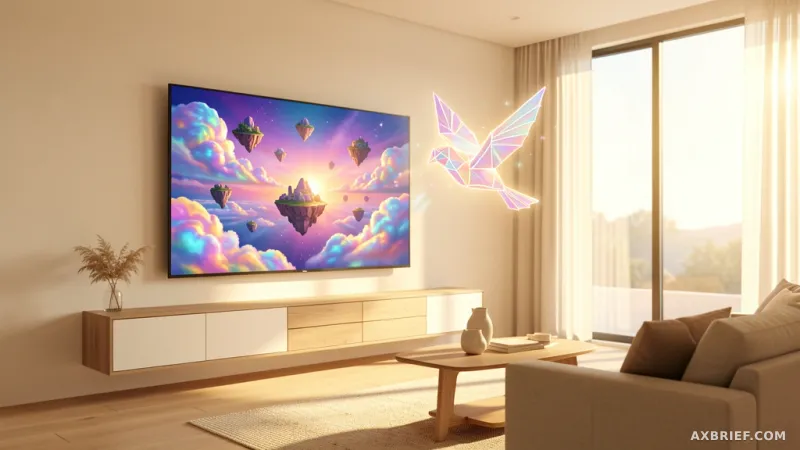
The living room experience is undergoing a fundamental shift as the television evolves from a passive viewing device into an interactive canvas for generative AI. Sitting on the sofa, families are moving beyond traditional channel surfing, using voice commands to manipulate visual media, generate custom scenes, and curate personal memories in real-time. This transition marks a strategic pivot by Google to position the living room screen as a central hub for its AI ecosystem.
Gemini-Powered Generative AI and Device Integration
Google announced on Wednesday a significant expansion of Gemini, its large language model, into the Google TV interface. By accessing the new generation button within the Gemini tab, users can now interface directly with Nano Banana, an image generation and editing model, and Veo, a video generation model. These features are currently rolling out to Gemini-supported TCL TV models in the United States, with plans for broader hardware support in the near future. Nano Banana allows users to modify elements within photos—such as changing a subject's clothing or altering backgrounds—using simple voice prompts. Veo complements this by generating new video content from text descriptions or adding animation effects to static images, creating a collaborative, play-oriented interface designed for shared living room environments.
The Evolution of Google Photos and Search
Historically, navigating a digital photo library on a television screen was a cumbersome process, often requiring users to scroll through thousands of images to find a specific memory. The new Gemini-based search functionality replaces this friction with natural language queries, allowing users to pull up specific events like vacations or birthday parties instantly. Once located, search results are optimized for the big screen, transitioning into full-screen displays or curated layouts suitable for slideshows. Beyond retrieval, the new Remix tool enables users to apply artistic styles, such as watercolor or oil painting effects, to their photos directly on the TV. Furthermore, by selecting Google Photos in the screensaver settings, users can activate Dynamic Slideshows, which utilize automated animation layouts and color processing to turn the television into a high-fidelity digital frame.
Short-form Content Integration on the Home Screen
For developers and content strategists, the most notable shift is the introduction of the Short videos for you row on the Google TV home screen. This feature prioritizes YouTube Shorts content, placing it at the top of the interface to ensure a seamless transition between traditional long-form viewing and rapid-fire short-form consumption. While mobile platforms have recently introduced options to hide short-form content, Google is taking the opposite approach on TV, leveraging these feeds to maximize user dwell time. The company has signaled that this feed may eventually expand to include content from other platforms. Given that the Instagram app was expanded to Google TV devices in the U.S. earlier this year, the living room screen is rapidly becoming a highly contested battleground for platform-agnostic content aggregation.
The television screen has moved beyond its role as a passive display, emerging instead as a sophisticated interface where generative AI actively reshapes the daily domestic experience.