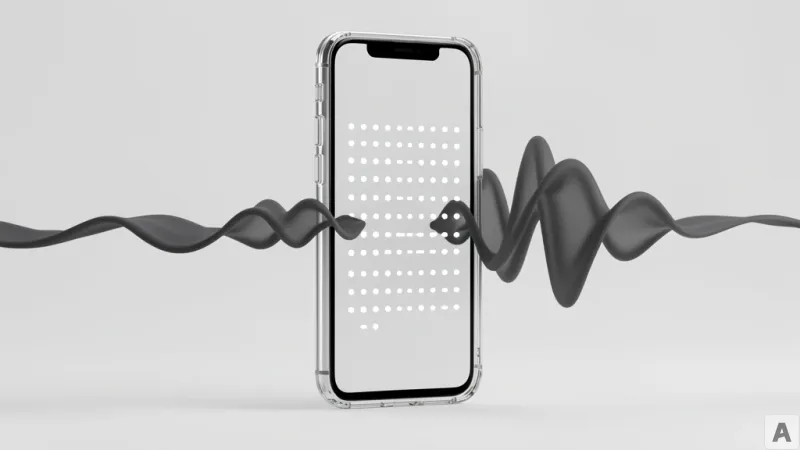
New York this week looks like a maker fair with a twist: artists pull out palm-sized gadgets on a shared table, each one doing something different, from a souvenir that trades facts and jokes to a phone-shaped display that mimics stock charts and a compact sensor that reports indoor air quality. Everyone calls it an experiment, but the through-line is the same platform—Era—quietly positioning itself as the software layer that makes these devices feel connected rather than standalone.
Era’s $11M funding and the team behind its AI gadget platform
Era says it has raised a total of $11 million so far. Of that, $9 million came from a seed round led by Abstract Ventures and BoxGroup, with participation from Collaborative Fund and Mozilla Ventures. Before that, Era also received $2 million in pre-seed funding from Topology Ventures and Betaworks.
The investor list reads like a who’s who of consumer tech and developer ecosystems. It includes Caterina Fake, the co-founder of Flickr; Ken Kocienda, the iPhone keyboard creator; Tony Wang, founder of OAS; Daniel Kuntz, co-founder of Little Guy; Mina Fahmi, co-founder of Sandbar; ShaoBo Z, CPO at Rabbit; and Kelin Zhang, the maker behind Poetry Camera.
Era’s pitch is not just about building gadgets. It’s about building the layer that lets gadgets coordinate with AI models and with each other’s constraints—something the company argues becomes more important as hardware gets smaller, more multimodal, and more personalized.
The tension in the room is familiar to anyone who has watched AI hardware startups come and go: investors can fund prototypes, but the market still asks who will own the experience when the device is no longer the only interface.
Era’s funding story sets up that question by framing the company as infrastructure rather than a single device brand.
From app control to an intelligence layer that orchestrates models
At the showcase, the artists’ gadgets vary wildly in what they do, but Era insists the platform is the real common denominator. The company draws a hard line: it is not trying to build the hardware itself. Instead, it provides software that helps hardware makers produce AI-enabled devices.
That distinction matters because Era is explicitly challenging the old pattern where the app layer dominated the user experience. Liz Dorman, speaking in the context of Era’s approach, argues that an AI model can replace the app layer.
In Era’s framing, what replaces the app is a flexible orchestration layer—software that can bundle multiple actions into a single flow—and the ability to attach tasks like custom voice generation to the hardware side. Dorman also pushes a broader critique: she wants users to regain choice over their own devices, and she points to a structure where large organizations pick devices for specific regions and effectively force the experience.
So the platform is positioned as a way to keep control from being locked behind a single distribution channel or a single app. It’s also positioned as a way to let creators and makers experiment without having to reinvent the AI plumbing every time they build a new gadget.
The tension here is subtle but real: if the app layer used to be the “brain” of the experience, what happens when the brain moves into routing, orchestration, and model access?
Era’s answer is that the intelligence layer becomes the product, while the device becomes a surface for that intelligence.
What developers feel first: model routing and connection constraints
Where Era’s pitch becomes concrete for builders is in the mechanics. Casey Caruso, an entrepreneur and managing partner at Topology Ventures (and also a Topology Ventures founder), says Era’s orchestration platform differentiates itself by handling two things at once: dynamic model routing across model providers and real-world connection constraints.
Dynamic routing, in this context, means the system can switch which model it uses depending on the situation. Connection constraints means the platform accounts for what the environment can actually support—such as connectivity limitations—rather than assuming the device always has ideal access.
Era says it currently offers access to 130-plus LLMs from 14 or more providers. The company says it targets a range of hardware form factors, including eyewear, jewelry, and home speakers—categories where the “right” model and the “right” interaction style can vary dramatically.
Era also argues that as form factors multiply, hardware makers need a software layer that can handle multimodal inputs, such as text and images, and the inference work that comes with them. In other words, the more the device resembles a sensor and an interface rather than a single-purpose appliance, the more the platform has to manage how inputs get interpreted and which models get invoked.
The company further claims the platform is designed to scale to millions of devices. It also says it can support custom AI device experiments where brands aim at specific user segments.
Era’s vision goes beyond maker convenience. The company says it wants AI gadget users to protect privacy while still being able to choose which models and which model providers they use directly. It also says it plans to open the platform to open-source and maker communities, with the goal of showing diverse device-driving examples—using an artist-style showcase as a template for broader adoption.
The market backdrop, however, is not forgiving. Industry observers keep returning to the idea that no single company has yet “won” in AI hardware. Humane was acquired by HP, Rabbit has been quieter than many expected, and Plaud has shown performance in meeting-related contexts, while early-stage comparisons often come up for Sandbar and Taya.
Even with that uncertainty, Era’s internal bet is that if users see more real use cases for AI devices, some will make “keep using” choices rather than treating gadgets as one-off demos.
The twist is that Era’s differentiation is not primarily about a specific device capability. It’s about bundling the model layer, the connectivity layer, and the input layer into one intelligence system.
So in the community conversation, attention shifts away from “who owns the app” and toward “who owns routing and constraints handling.”
Era’s platform reframes AI gadgets as an orchestration problem first, and a hardware problem second.
Era’s next step is to make that orchestration layer the default way AI devices behave, so the experience becomes portable across makers, models, and real-world limitations.