For a decade, the tech industry worshipped at the altar of the asset-light model. The dream was simple: build a digital layer that connects supply and demand without ever owning the supply itself. Uber was the poster child for this philosophy, scaling into a global behemoth by convincing millions of drivers to provide the cars, the insurance, and the maintenance while Uber collected the fee. It was the ultimate hedge, allowing a software company to dominate the physical world of transportation without the crushing overhead of a traditional taxi fleet. But the arrival of autonomous driving has fundamentally broken the logic of the middleman.
The Ten Billion Dollar Pivot
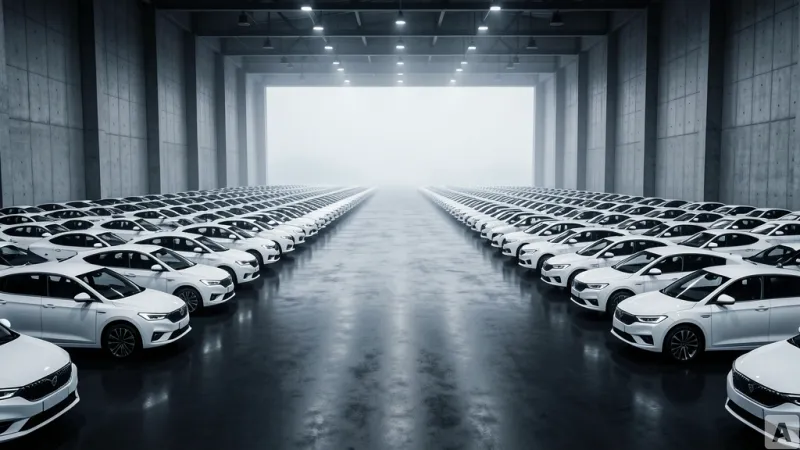
A recent analysis from the Financial Times reveals that Uber is quietly dismantling its asset-light identity. The company has committed over 10 billion dollars to a strategy centered on the direct ownership and acquisition of robotaxis. This capital deployment is split into two distinct channels: 2.5 billion dollars has already been funneled into direct investments and equity stakes in autonomous vehicle players, while the remaining 7.5 billion dollars is earmarked for the actual purchase of robotaxi fleets over the coming years.
Uber is not betting on a single horse but is instead diversifying its hardware portfolio across a spectrum of specialized AI and EV firms. The investment list includes WeRide, the Chinese autonomous driving giant, and Wayve, which focuses on AI-driven end-to-end autonomy. To secure the physical chassis, Uber has aligned with Lucid and Rivian, ensuring that the vehicles powering its future network are high-performance electric platforms. The strategy even extends to the logistics side, with investments in Nuro for unmanned delivery vehicles.
This is not Uber's first flirtation with hardware, but the context has changed. Between 2015 and 2018, the company pursued moonshot projects through Uber Elevate, which aimed to develop electric vertical take-off and landing aircraft, and Uber ATG, its internal autonomous driving division. However, the volatility of these ventures led to a strategic retreat in 2020. Uber sold ATG to the software firm Aurora and divested its micro-mobility arm, Jump, to Lime. At the time, the move was framed as a return to the core platform business, stripping away the liabilities of physical assets to lean into a pure software play. While Uber retained equity in those companies, it had effectively exited the business of owning the machines.
The Return of the Physical Moat
The shift back to an asset-heavy model is not a failure of strategy but a response to the unique economics of autonomy. In the era of human drivers, the asset-light model worked because the driver acted as the operational manager of the vehicle. The driver handled the cleaning, the charging, and the basic maintenance. In a robotaxi world, that human layer vanishes. When the car is the driver, the entity that owns the fleet must also be the entity that manages the infrastructure.
If Uber remains a mere connector, it risks becoming a commodity. If Waymo or Tesla manages the entire stack from the AI to the vehicle ownership, they can capture the entire margin of the ride. By spending 10 billion dollars to own the fleet, Uber is moving from being a digital broker to becoming a digital utility. It is a transition similar to a food delivery app that stops merely connecting riders to restaurants and starts buying tens of thousands of proprietary delivery bikes to control the speed and quality of the logistics chain.
Crucially, Uber is avoiding the most expensive mistake in the AI race: trying to solve the autonomy problem from scratch. By investing in companies like Wayve and WeRide rather than rebuilding Uber ATG, the company is bypassing the ruinous R&D costs and the technical uncertainty of developing Level 5 autonomy. Uber is essentially outsourcing the science and importing the result. They are betting that the real value in the next decade will not be in who writes the best code, but in who owns the most reliable, scalable fleet of hardware that can run that code.
This trend is echoing across the broader mobility landscape, where capital is flowing back into physical assets. Slate, an electric pickup truck startup, recently secured 650 million dollars in Series C funding led by TWG Global. Glydways, which develops personal autonomous pods, has raised 170 million dollars to scale its hardware. Even the agricultural sector is seeing this consolidation, as evidenced by the acquisition of Monarch Tractor, an autonomous tractor firm, by the industrial giant Caterpillar. The pattern is clear: the era of the pure platform is being superseded by an era of integrated hardware.
Power is shifting away from the apps that organize the world and returning to the companies that own the machines.