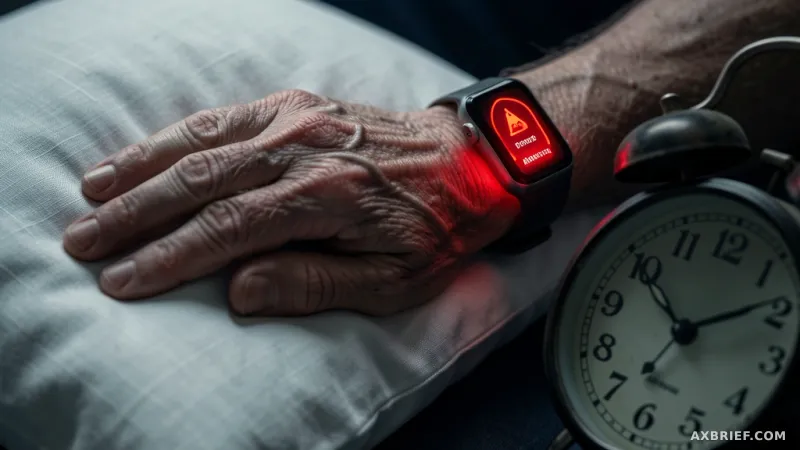
A quiet afternoon spent dozing on a living room sofa often looks like the picture of peaceful retirement. For many caregivers and family members, these brief lapses into sleep are viewed as a natural part of aging or a simple response to a slow day. However, the medical community is beginning to view these patterns through a different lens. The question is no longer whether a senior is tired, but whether that tiredness is a symptom of a deeper biological failure. This shift in perspective transforms a common habit into a critical diagnostic signal.
The Quantified Risk of Daytime Sleep
To uncover the relationship between sleep patterns and longevity, Dr. Chenlu Gao and his team at Mass General Brigham analyzed data from the Rush Memory and Aging Project (MAP), a long-term study tracking memory and aging. The research focused on 1,338 adults aged 56 and older residing in senior housing, retirement communities, and church groups across Northern Illinois. Unlike previous studies that relied on subjective self-reporting, which is often plagued by memory gaps and bias, this team utilized wrist actigraphy. By equipping participants with wearable devices that record precise movement for up to 14 days, the researchers could distinguish between actual sleep and mere sedentary rest.
The resulting data reveals a stark correlation between nap metrics and mortality. The study found that for every additional hour of napping, the risk of death increased by an amount equivalent to aging 1.1 years. Frequency also played a role, with each additional nap per day adding approximately 0.6 years to the mortality risk profile. The timing of the sleep proved even more telling. Individuals who napped between 9 AM and 1 PM faced a mortality risk increase equivalent to 2.5 years compared to those who napped in the early afternoon. Notably, this correlation vanished among participants with healthy cognitive function, suggesting that the risk is closely tied to existing neurological or systemic decline.
From Sleep Habit to Biological Warning Light
The critical insight lies in the distinction between a cultural habit and a biological collapse. Afternoon naps are often the result of a natural dip in alertness or cultural traditions like the siesta. However, napping in the morning suggests a fundamental disruption of circadian rhythms, the internal 24-hour clock that regulates nearly every system in the human body. When the body demands sleep during the peak of the morning, it is rarely a sign of simple fatigue; it is a signal that the system is struggling to maintain homeostasis.
This pattern acts as a biological warning light. The research team carefully controlled for obstructive sleep apnea to ensure that the results were not merely a byproduct of known sleep disorders. Even after adjusting for the quality of nighttime sleep, the mortality risk remained. This suggests that the napping is a symptom of undiagnosed chronic conditions. Systemic inflammation and cardiovascular dysfunction often manifest as extreme fatigue. When blood pressure fluctuates or inflammatory markers rise, the body triggers a state of exhaustion that forces the individual into frequent, unplanned sleep. In this context, the nap is not the cause of the risk, but the visible manifestation of an invisible pathology.
For the intersection of healthcare and wearable technology, this represents a paradigm shift in data utility. The transition from survey-based memory to actigraphy-based monitoring allows clinicians to identify high-risk patients long before they present with acute symptoms. By treating nap patterns as a digital biomarker, preventative medicine can move toward a model where a wearable device flags a change in sleep architecture as a trigger for a cardiovascular or neurological screening.
Wrist-worn devices are evolving from simple step counters into early diagnostic tools capable of predicting survival rates.