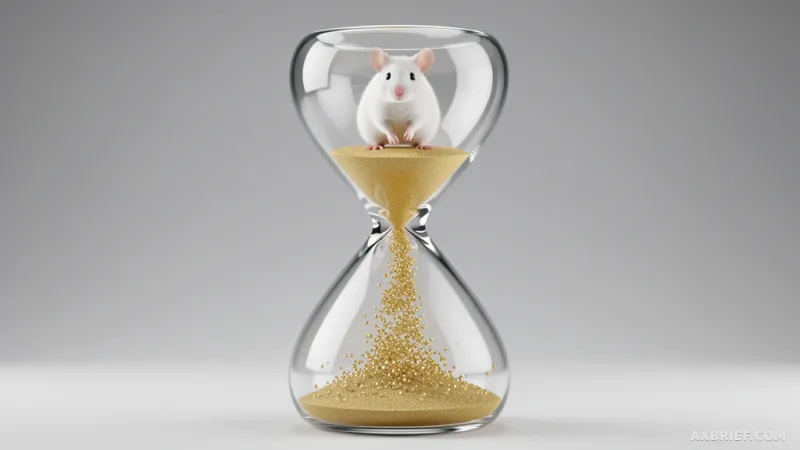
In a sterile laboratory setting, a group of 18-month-old mice lives out their final stages of life while consuming a Western-style diet. This environment serves as a biological mirror for the modern human condition, where calorie-dense nutrition accelerates the inevitable decay of cellular function. For years, the longevity community has chased a single magic bullet—a solitary molecule capable of halting the clock. However, the current shift in geroscience suggests that aging is too complex a system for a one-drug solution. This week, the focus has shifted toward synergistic cocktails that target multiple pathways of decay simultaneously, moving the conversation from simple life extension to the preservation of biological youth.
The Composition and Clinical Data of SRN-901
The research team developed SRN-901 as an oral compound designed specifically to delay the onset of age-related decline. Rather than relying on a single active ingredient, SRN-901 is a sophisticated blend of five distinct components. It combines Urolithin A, which is known to improve mitochondrial function within muscle cells, with Quercetin, a flavonoid prized for its antioxidant properties. To support cellular energy metabolism, the researchers added Nicotinamide Riboside, a derivative of vitamin B3, alongside Alpha-lipoic acid for additional antioxidant support. The final piece of the puzzle is SRN-820, a proprietary ingredient developed by Seragon.
To validate the efficacy of this combination, the study employed a sample size of 24 to 44 mice per group, a scale that exceeds the typical parameters of many aging studies. The results, published in a recent study available via doi.org/10.2147/DDDT.S594895, show a significant divergence between the treated group and the placebo group. Mice administered SRN-901 saw their median remaining lifespan increase by 33 percent. When the researchers applied the Cox proportional hazards model—a statistical standard for survival analysis—they found a hazard ratio of 0.54. This number indicates that the risk of death was reduced by 46 percent compared to the control group.
Beyond the mere extension of life, the study measured the quality of those additional days through a frailty score. In the control group, the frailty score reached 1.57, signaling a rapid decline in physical and biological resilience. In contrast, the SRN-901 group maintained a score of 1.17. This represents a 70 percent mitigation in the progression of frailty, suggesting that the compound does not just keep the organism alive longer, but keeps it healthier for a larger portion of its life.
Why Multi-Component Synergy Outperforms Single Agents
The significance of these findings emerges when SRN-901 is compared to the historical gold standards of longevity research. For a long time, the field was dominated by single-compound approaches, most notably Rapamycin, an immunosuppressant that regulates cell growth and metabolism, and Nicotinamide Mononucleotide (NMN), which targets cellular energy. While Rapamycin has shown success in extending the lives of adult mice, its effects are often narrow. Similarly, the study found that Nicotinamide Riboside and Nicotinamide Mononucleotide failed to produce statistically significant lifespan extensions when compared to placebo groups.
The failure of these single agents highlights the biological reality that aging is not a single broken gear, but a systemic collapse. SRN-901 succeeds because it operates as a multi-pronged attack. Gene expression analysis reveals that the compound simultaneously modulates pathways related to inflammation, apoptosis, and DNA repair. By addressing these diverse vectors of decay, the cocktail prevents the biological bottlenecks that often render single-drug therapies ineffective.
One of the most striking insights from the data is the compound's effect on the brain and cellular defense. The researchers observed changes in gene sets specifically associated with Alzheimer's disease and an upregulation of glutathione metabolism. Glutathione is the body's master antioxidant, and its enhancement suggests that SRN-901 strengthens the cell's internal defense mechanisms against oxidative stress. This systemic reinforcement is further evidenced by metabolic profiling. Despite their chronological age, the blood metabolites of the SRN-901 treated mice mirrored the patterns found in significantly younger mice, effectively shifting their metabolic signature backward in time.
This transition from single-molecule targets to systemic cocktails marks a pivot in how we approach the biology of aging. By coordinating the effects of Urolithin A and the proprietary SRN-820, the compound creates a synergistic effect where the total benefit exceeds the sum of its individual parts. The tension now lies in the complexity of these interactions; while the results are promising, the interplay between five different active ingredients introduces variables that are harder to map than a single chemical reaction.
Future research must now determine if these synergistic interactions remain stable across different genetic backgrounds or if certain components interfere with one another under different dietary conditions.